The Drum · Weekly AI news, freeSubscribe →

Share
Millions now take GLP-1 drugs or undergo bariatric surgery with little visibility into their progress between appointments. A new multi-year trial asks whether a ring on your finger can fill that gap.
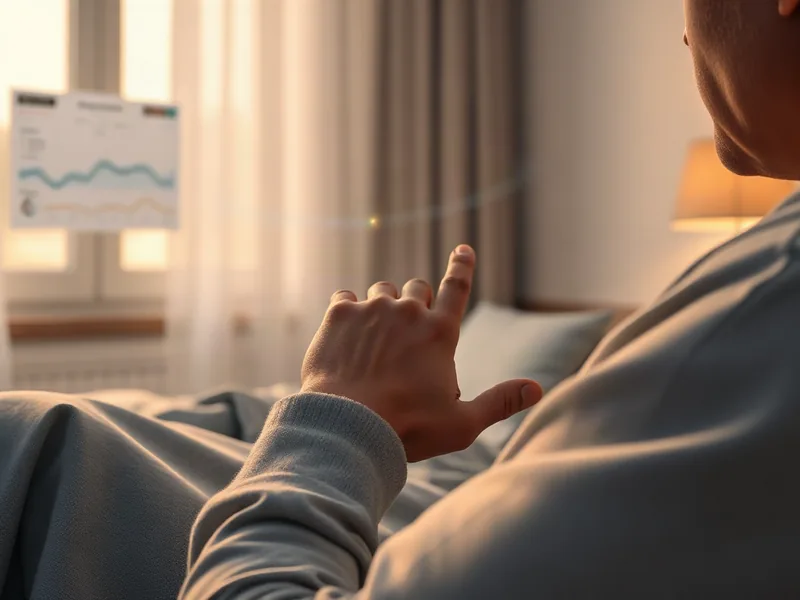
For the millions of people now on GLP-1 medications or recovering from bariatric surgery, the months between doctor visits can feel like a black box. Patients track their weight, maybe their mood, and wait for the next appointment to find out if the treatment is actually working. A new clinical trial wants to close that gap, using a device many people already wear to bed.
Oura, the Finnish company behind the popular smart ring, is partnering with UC San Diego Health on a study called SMART-BMI. It's the company's first clinical trial focused specifically on obesity treatment, and it marks a deeper step into the kind of rigorous clinical research that distinguishes a consumer gadget from a genuine medical tool.
The premise is straightforward. Oura's ring already tracks more than 50 health metrics, including sleep, heart rate, activity and markers tied to stress and metabolic health. Researchers want to know whether the subtle shifts in those numbers, sleep getting better or worse, recovery patterns changing, daily activity ticking up or down, actually tell us something useful about how a patient is responding to treatment for obesity. Think of it like a car's dashboard warning light: on its own it doesn't fix anything, but it can flag a problem long before the engine stalls.
The study will follow patients receiving GLP-1 drugs or bariatric surgery over several years, continuously collecting ring data between clinical visits. Researchers plan to look at associations between that data and outcomes including weight loss, HbA1c (a blood marker that reflects average blood sugar levels over roughly three months), and whether patients stick with their treatment over time. The trial is registered at ClinicalTrials.gov under the identifier NCT07736729.
"Longitudinal and surgical management of obesity can unlock the power of continuous monitoring and precision medicine offered by wearables," said Jeff Reeves, M.D., of UC San Diego Health. Alexander Khalessi, a neurosurgeon and the health system's chief innovation officer, framed the partnership as a natural fit. "UC San Diego Health is precisely where innovative technology and subject matter experts come together to advance human health," he said in a statement. "We are proud of the thought leadership of Dr. Reeves and Oura's engagement to take on these important clinical questions for our patients."
This trial doesn't exist in isolation. It's part of a larger strategy coordinated through Oura's Office of Regulatory and Clinical Affairs, a unit built over the past year under Chief Medical Officer Ricky Bloomfield. ORCA brings together scientific evidence, regulatory work, outcomes research and clinical informatics under one roof, essentially the infrastructure a consumer wearable company needs if it wants doctors and hospitals to trust its data the way they'd trust a lab result.
"Since I started at Oura, my focus has been on formalizing the clinical rigor behind the trust people already place in their ring," Bloomfield said. "As we take on a bigger role in healthcare with new use cases, partnerships and levels of clinical evidence, that trust has to be earned at every step. We do that by ensuring the right measurement, the right validation, the right outcomes data at every layer."
That push is showing up across several fronts at once. Oura is working with Maven Clinic on a fertility and pregnancy outcomes study designed to enroll at least 5,000 participants, comparing an Oura-only experience against one that pairs the ring with Maven's clinical support. Separately, the company is collaborating with Johns Hopkins School of Medicine to see whether wearable data can flag early warning signs of rehospitalization or recurrent acute kidney injury after a hospital stay. Oura Labs recently wrapped a large-scale blood pressure study too, aimed at informing future regulated features.
Beyond its own sponsored research, Oura's ring has already found its way into more than 150 independent studies run by hospital systems and academic medical centers, including NYU Langone, Mount Sinai, Cornell Tech, Weill Cornell and the University of Central Florida. Those researchers are examining everything from depression and heart failure to inflammatory arthritis. Altogether, the ring has appeared in over 200 peer-reviewed publications covering sleep, cardiovascular health, women's health, metabolic health, mental health and pregnancy.
Some of that research is already translating into actual care. Mount Sinai Doctors-Concierge Care's Healthspan Membership is integrating Oura Ring 5 data to give physicians a continuous view of patients' biometric trends between office visits. "The real opportunity is to understand what's happening between visits, how a patient is sleeping, recovering, moving and responding to changes in their daily life," said Fiorina Kyritsi, M.D., of Mount Sinai Doctors-Concierge Care. "By bringing those insights into the care relationship, we can have a much more informed conversation with our members."
The timing matters for Oura's business too. The company filed to go public in late September, aiming to raise $2.2 billion by offering 50 million shares priced between $40 and $44 each. Then in October, Oura postponed that IPO, citing "uncertainty in the IPO market," even as it insisted demand remained strong. Deepening its clinical research footprint, separate from any stock market timeline, signals that the company is betting its long-term value lies in being taken seriously as a healthcare partner, not just a fitness accessory.
Obesity treatment has entered a genuinely new era, with GLP-1 drugs reshaping how millions of people manage weight and metabolic disease. But drugs and surgery alone don't guarantee lasting success. What happens in someone's sleep, stress levels and daily movement between appointments can shape whether a treatment sticks or fades. If continuous wearable data can reliably flag early signs of trouble, or progress, clinicians could intervene sooner, adjust treatment faster, and give patients a more honest picture of how their bodies are actually responding. That's a meaningful shift from the current model, where most of what happens between visits simply goes unrecorded. Whether a ring can truly deliver on that promise still depends on years of careful study, but SMART-BMI is a real step toward finding out.
Tags
Original Sources
Oura, UC San Diego Health collaborate to study GLP-1 outcomes using continuous smart ring data
↗ https://www.fiercehealthcare.com/health-tech/oura-uc-san-diego-health-study-glp-1-outcomes-using-continuous-smart-ring-data
About the author
Amara's entry point into AI was an epidemiology role at a London research hospital, where she spent five years studying how digital health tools reached — or conspicuously failed to reach — underserved communities. Watching early algorithmic systems in healthcare quietly entrench existing inequalities, she redirected her career toward the systemic consequences of AI at scale. She covers AI through an unflinching lens: who benefits, who bears the cost, and what evidence actually says versus what the press release claims. Her writing is calm and precise, but she doesn't mistake balance for neutrality.
More from The Steward →This Week's Edition
30 October 2026
28 articles
Related Articles
Related Articles
More Stories
© 2026 Cedar & Bloom. All rights reserved.