The Drum · Weekly AI news, freeSubscribe →

Share
Governor Josh Shapiro signed a first-of-its-kind law requiring labels on AI-generated advertising. But vague terms like "significantly modified" and "evidently fictional" may leave consumers guessing about what's real.
Think about the last time you watched a commercial and wondered, even for a second, whether what you were seeing was real. Maybe it was a too-smooth face, an oddly perfect background, or a voice that sounded almost right but not quite. That flicker of doubt is exactly what Pennsylvania lawmakers say they're trying to address, and on Thursday, Governor Josh Shapiro signed the Artificial Intelligence Deceptive Advertising Act into law.
The law requires that any advertisement, whether it's a still image, video, audio clip, or block of text, carry a disclosure if it has been "significantly modified or generated by artificial intelligence." That label has to match the format of the ad itself. A video ad gets a video disclosure. A printed flyer gets a printed one. The rule applies broadly, from glossy TV spots produced by multi-billion-dollar corporations down to the hastily assembled flyers taped to a restaurant window advertising a wing special.
Pennsylvania is now among the first states in the country to mandate this kind of transparency around synthetic advertising content. That alone makes it worth watching. Consumer protection laws tend to spread once one state proves a concept workable, and advertising disclosure requirements have a long history of rippling outward once a precedent gets set.
There's also a geographic wrinkle that makes this law unusually far-reaching. It applies to ads regardless of where they were produced, as long as they're expected to air in Pennsylvania. That means a company based in California or New York, with no local Pennsylvania operations at all, could still be required to slap an AI disclosure on its national ad campaign simply because that campaign might reach Pennsylvania television sets. For advertisers who run spots across multiple states, this creates a strong incentive to just label everything everywhere rather than try to carve out Pennsylvania-specific versions.
Here's where things get complicated, and where the law's good intentions start to run into the messy reality of enforcement. The statute hinges on the phrase "significantly modified," but nowhere does it define what counts as significant. Is a touch of AI-assisted color correction significant? What about an AI tool used to remove a background object? The law doesn't say, and that ambiguity leaves both advertisers and regulators without a clear line to measure against.
The carve-outs make things murkier still. The law exempts content that qualifies as "parody, satire, commentary or criticism," along with anything "evidently fictional." Those exemptions sound reasonable on paper. Nobody wants a law that forces disclosure labels onto an obviously absurd meme or a clearly staged sketch. But "evidently fictional" is doing a lot of work in that sentence, and reasonable people are going to disagree about what qualifies. A dramatized testimonial that looks almost real? A product demo that uses exaggerated, cartoonish AI effects? The law offers no guidance.
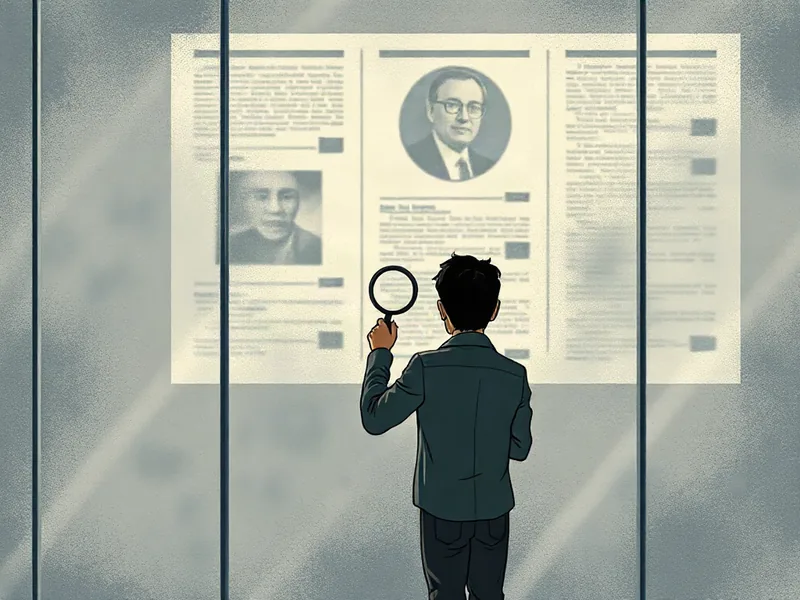
Perhaps the biggest loophole sits in how the law defines deception itself. Reading closely, the disclosure requirement seems to apply only when synthetic content "creates a false consumer perception" about a product or service. That's a meaningful qualifier. It suggests that AI-generated content doesn't automatically trigger a labeling requirement unless it actually misleads someone about what they're buying. But who decides what counts as false? Is it the Attorney General's office, a judge, or some yet-to-be-created regulatory body? The law, at least as currently written, doesn't spell that out.
These aren't just academic concerns. Consider the kind of AI-generated holiday commercials that have become increasingly common from major brands in recent years, the type of ad that blends real actors with synthetic backgrounds, AI-assisted animation, or digitally generated crowds. Under a strict reading of this law, such an ad might need a disclosure. Under a looser reading, if nothing about the ad creates a "false" impression of the product itself, it might not. That kind of interpretive gap is exactly what makes enforcement difficult, and it's exactly what makes a law like this easy to sidestep if a company's legal team decides to push back.
It's also worth asking who's supposed to be doing the pushing in the first place. Terrence O'Brien, who covered the law's passage, noted that the office of State Senator Nick Pisciottano, the bill's sponsor, did not immediately respond to a request for comment on how these ambiguities might be resolved. Without clarifying guidance, it's hard to know whether state regulators plan to interpret the law strictly, loosely, or somewhere in between, and that uncertainty itself has a cost.
Laws like this exist because trust is fragile, and advertising has always walked a careful line between persuasion and deception. When a wing-special flyer uses AI-generated food photography that makes a mediocre dish look irresistible, that's a minor annoyance. When a major brand uses synthetic actors or AI-manipulated footage to imply qualities a product doesn't actually have, that edges toward something more serious. Disclosure requirements are meant to give consumers the information they need to make informed choices, without demanding they become forensic media analysts every time they see a commercial.
The trouble with vague thresholds, though, is that they tend to favor whoever has the better lawyers. A small restaurant owner using an AI tool to spruce up a flyer probably doesn't have legal counsel reviewing whether their modifications count as "significant." A multinational advertiser almost certainly does, and will likely find ways to argue their content falls within the law's exemptions. That asymmetry could end up protecting the sophisticated actors this law was partly designed to check, while leaving smaller businesses confused about their obligations.
None of this means the law is pointless. Getting any state to formally acknowledge that AI-generated advertising deserves scrutiny is progress, and Pennsylvania's willingness to apply its rule to out-of-state advertisers shows some ambition. But without clearer definitions, consistent enforcement, and a regulatory body willing to answer hard questions, this law risks becoming more symbolic than substantive, a well-meaning first draft in a conversation that's only just beginning.
Tags
Original Sources
Pennsylvania will require labels on AI-generated ads
↗ https://www.theverge.com/ai-artificial-intelligence/1018187/pennsylvania-ai-deceptive-advertising-act
About the author
Amara's entry point into AI was an epidemiology role at a London research hospital, where she spent five years studying how digital health tools reached — or conspicuously failed to reach — underserved communities. Watching early algorithmic systems in healthcare quietly entrench existing inequalities, she redirected her career toward the systemic consequences of AI at scale. She covers AI through an unflinching lens: who benefits, who bears the cost, and what evidence actually says versus what the press release claims. Her writing is calm and precise, but she doesn't mistake balance for neutrality.
More from The Steward →This Week's Edition
25 October 2026
18 articles
Related Articles

New Study Finds Grok and ChatGPT Split Along Party Lines When Forced to Pick Candidates
Policy & Regulation · 6 min

China Pushes Back as US Moves to Widen Outbound Investment Curbs on Tech
Policy & Regulation · 5 min

IEEE Expands Smart City Advisory Services as Municipal Tech Budgets Grow
Products & Applications · 5 min
Related Articles
New Study Finds Grok and ChatGPT Split Along Party Lines When Forced to Pick Candidates
Policy & Regulation · 6 min
China Pushes Back as US Moves to Widen Outbound Investment Curbs on Tech
Policy & Regulation · 5 min
IEEE Expands Smart City Advisory Services as Municipal Tech Budgets Grow
Products & Applications · 5 min
More Stories
© 2026 Cedar & Bloom. All rights reserved.
