The Drum · Weekly AI news, freeSubscribe →

Share
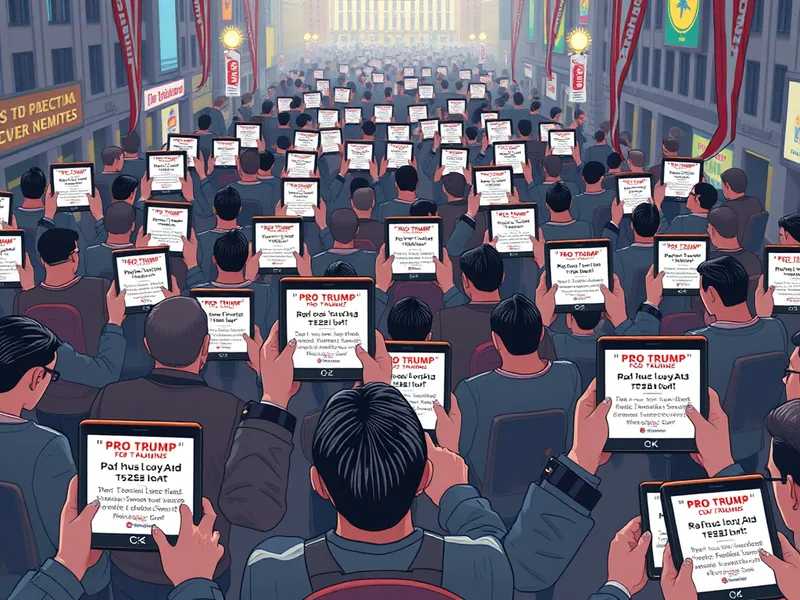
Fake pro-Trump AI influencers are flooding social media, potentially swaying conservative voters before midterms but also raising alarms about cyber risks and disinformation tactics.
The New York Times has uncovered a surge of hundreds of fake accounts on major social media platforms like Instagram, TikTok, and Facebook. These accounts are predominantly pro-Trump and appear to be part of a coordinated effort to mobilize conservative voters ahead of the mid-term elections. The accounts often use identical captions and exhibit awkward phrasing, suggesting they are AI-generated.
The proliferation of these fake AI influencers poses significant cyber-risks and disinformation challenges. As social media platforms continue to grapple with the spread of misinformation, the emergence of sophisticated AI avatars complicates efforts to maintain a secure and trustworthy digital environment. The difficulty in distinguishing between genuine human accounts and AI-generated ones can lead to widespread confusion and manipulation of public opinion.
Despite the risks, there are opportunities for both social media platforms and policymakers to mitigate the impact of AI-generated influencers:
Experts agree that creating such avatars is becoming easier and more accessible, especially for contractors and marketing companies that specialize in developing and deploying AI avatars in bulk for increasingly low prices. The anonymity and low cost associated with these services make it difficult to trace their origins or intentions.
"It’s not clear who created the A.I. accounts," said a cybersecurity analyst at a leading tech firm, "and determining whether they are the product of a hired content farm, a foreign influence operation, an experiment, or something else is complex."
The rise of pro-Trump AI influencers on social media underscores the evolving nature of cyber-risks and disinformation. While these accounts pose significant challenges, there are actionable steps that can be taken to mitigate their impact. By enhancing detection algorithms, educating users, and implementing robust regulatory frameworks, stakeholders can work towards a more secure and trustworthy digital landscape.
Tags
Original Sources
About the author
Marcus began tracking AI's market implications in 2016, noticing AI-related patent filings accelerating ahead of earnings upgrades before most of the sell-side had caught on. A former fixed-income quantitative analyst, he spent two decades building models that priced risk across emerging markets before pivoting to cover the economic impact of AI full-time. His writing translates opaque technical developments into clear risk/reward terms — and he's rarely diplomatic about the gap between AI valuations and underlying fundamentals. He believes most market participants still underestimate AI's long-run deflationary effect on knowledge work.
More from The Analyst →This Week's Edition
25 April 2026
29 articles
Related Articles

Seattle Children's Network Turns Data Trust Into Preventive Care Gains, With Lessons for Security Teams
Security & Risk · 6 min

Anthropic Gives Outside Safety Researchers the Same Access as Its Own Staff
Security & Risk · 5 min

Fitch Puts a Number on AI Risk: New Stress Test Flags Credit Exposure Across Four Sectors
Security & Risk · 5 min
Related Articles
Seattle Children's Network Turns Data Trust Into Preventive Care Gains, With Lessons for Security Teams
Security & Risk · 6 min
Anthropic Gives Outside Safety Researchers the Same Access as Its Own Staff
Security & Risk · 5 min
Fitch Puts a Number on AI Risk: New Stress Test Flags Credit Exposure Across Four Sectors
Security & Risk · 5 min
More Stories
© 2026 Cedar & Bloom. All rights reserved.
