The Drum · Weekly AI news, freeSubscribe →

Share
Researchers introduce Prompt2Fashion, using large language models to generate an inclusive fashion dataset that accommodates diverse styles and body types, breaking down barriers in personalized design.
The fashion industry is increasingly turning to AI for personalized and inclusive design solutions, but the lack of comprehensive datasets has been a significant bottleneck. In their recent paper, "Prompt2Fashion: An Automatically Generated Fashion Dataset," Georgia Argyro, Angeliki Dimitriou, Maria Lymperaiou, Giorgos Filandrianos, and Giorgos Stamou tackle this issue head-on by leveraging generative models to create a dataset tailored to various occasions, styles, and body types.
The core innovation in Prompt2Fashion is the use of Large Language Models (LLMs) and advanced prompting strategies to generate fashion images that are not only aesthetically pleasing but also highly relevant to user needs. Here’s a breakdown of the key technical details:
For AI researchers and practitioners in the fashion industry, Prompt2Fashion offers several significant advantages:
The team's approach involved several steps:
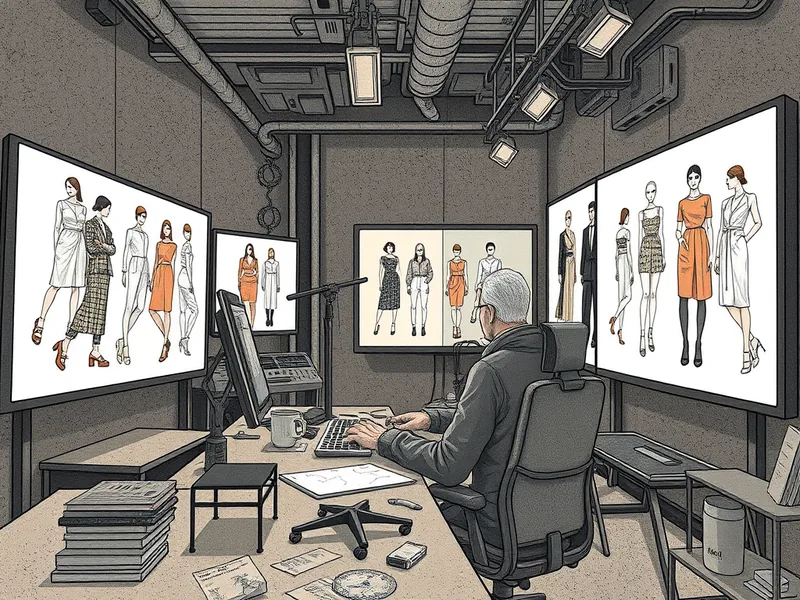
Model Training:
Evaluation:
The qualitative analysis showed promising results:
While the current evaluation has been conducted by non-experts, the authors stress the need for expert review to validate the artistic quality and practical utility of the generated images. They also plan to expand the dataset with more diverse prompts and further refine the prompting strategies to enhance personalization.
Prompt2Fashion represents a significant step forward in bridging the gap between personalized fashion needs and AI-driven design solutions. By leveraging advanced generative models and user feedback, the team has created a versatile and inclusive dataset that can be used for various applications in the fashion industry.
Tags
Original Sources
About the author
Kai built ML infrastructure at a Bay Area startup before developing an obsession with transformer architectures and inference optimisation that eventually pulled him out of product work entirely. A stint at a compute research lab sharpened his instinct for what actually matters in a model release versus what is marketing. He writes from the inside — from the perspective of someone who has debugged the systems he is describing at three in the morning. He is allergic to hype and instinctively drawn to the unglamorous plumbing questions that everyone else skips over.
More from The Engineer →This Week's Edition
12 September 2024
29 articles
Related Articles

Wharton's Fourth Annual AI Survey: Most Companies See Returns, Few See Big Ones
Models & Research · 6 min

Tensormesh Launches Enterprise KV Cache Platform to Cut Redundant LLM Compute
Models & Research · 6 min

Iambic Therapeutics Raises $150 Million in IPO to Fund AI-Designed Cancer Drugs
Finance & Markets · 5 min
Related Articles
Wharton's Fourth Annual AI Survey: Most Companies See Returns, Few See Big Ones
Models & Research · 6 min
Tensormesh Launches Enterprise KV Cache Platform to Cut Redundant LLM Compute
Models & Research · 6 min
Iambic Therapeutics Raises $150 Million in IPO to Fund AI-Designed Cancer Drugs
Finance & Markets · 5 min
More Stories
© 2026 Cedar & Bloom. All rights reserved.
