The Drum · Weekly AI news, freeSubscribe →

Share
New polling shows Americans trust the CDC and FDA less than at any point in decades, a warning sign for agencies tasked with protecting public health just as Congress debates their budgets and voters head to the polls.
Think about the last time you took your child in for a routine vaccine, or trusted a food label at the grocery store. Those everyday acts of faith depend on two agencies most people never think about until something goes wrong: the Centers for Disease Control and Prevention and the Food and Drug Administration. Right now, according to new survey data, a shrinking share of Americans believe those agencies are doing their jobs well.
A recent Gallup poll, which surveyed 1,000 people during the first half of September, found just 26% of respondents rating the CDC's performance as "excellent" or "good." That's down five percentage points from 2025, roughly 14 points below the ratings the agency received during the COVID-19 pandemic, and a steep drop from its 2017 high of 66%. The FDA fared barely better, at 25% favorable, continuing a longer slide from a mid-pandemic rating of 36% in 2022 and a 2017 peak of 46%.
To put that in perspective, both agencies scored lower than every other federal entity Gallup asked about. The U.S. Postal Service, not typically held up as a model of public enthusiasm, topped the list at 58%. The CDC and FDA were also the only two agencies in the survey to receive more "poor" ratings than "excellent" or "good" ones. These are the lowest marks either agency has ever posted in Gallup's tracking, which dates back to 2003 for the CDC and 2009 for the FDA.
It is tempting to read these numbers as abstract politics. They are not. When people stop trusting the agencies responsible for food safety, drug approval, and disease tracking, they may delay vaccinations, ignore recall notices, or dismiss outbreak warnings. Trust is the invisible infrastructure that makes public health work. Erode it, and even sound science has a harder time reaching the people who need it.
Gallup pointed to a string of rough headlines this year as context for the decline. The country saw a measles outbreak that pushed case counts past 4,000, including a sixth death in Pennsylvania. A multistate cyclospora outbreak tied to iceberg lettuce added to food safety worries. Both agencies have also weathered significant internal turmoil under Health and Human Services Secretary Robert F. Kennedy Jr., including the ousting of CDC Director Susan Monarez, the departure of FDA official Vinay Prasad, and workforce reductions that reportedly cut CDC staffing by 30% through layoffs, retirements, and resignations. Add to that controversial policy shifts, like attempts to overhaul the childhood vaccine schedule, and you have an agency environment that looks far less stable than it did even a few years ago.
Here's where the story gets more complicated, and more revealing. Gallup has tracked a pattern since the pandemic where views of these agencies shift depending on who holds the White House. That pattern is showing up again, but with a twist.
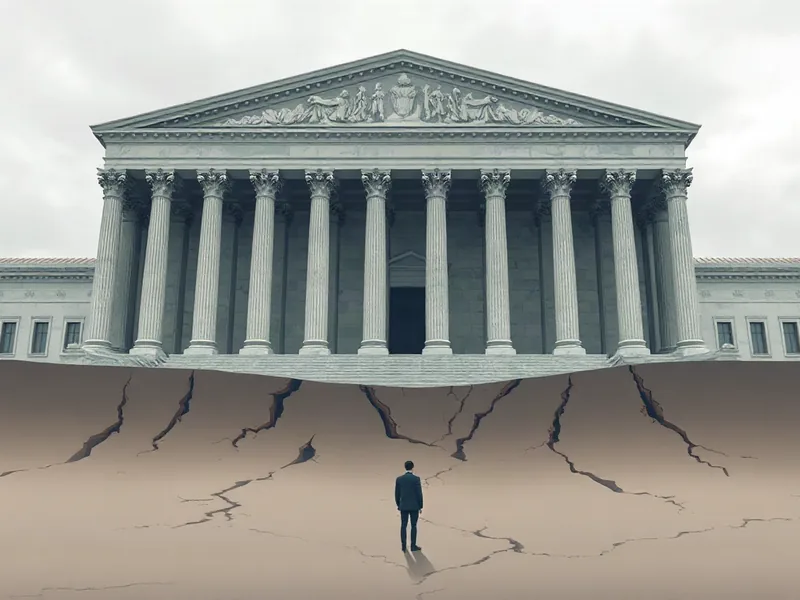
Since President Trump's second term began, Republican approval of both agencies has ticked up modestly from pandemic-era lows. Among Republican respondents, CDC approval rose from 19% in 2024 to 29% in 2025 and 32% in 2026. FDA approval among the same group climbed from 23% to 35% to 36% over that same period.
But that modest recovery has been swamped by a much sharper collapse in Democratic sentiment. CDC approval among Democrats fell from 65% in 2024 to just 20% in 2026. FDA approval dropped from 47% to 18% over the same stretch. Picture a see-saw where one side gains a little weight while the other side loses a lot. The agencies' overall approval sinks even as one political group warms up slightly, because the other group's confidence is falling off a cliff.
This kind of partisan whiplash is not new to American institutions, but it is particularly dangerous for health agencies. Diseases do not check party registration before spreading. A measles outbreak does not care whether the people around an unvaccinated child voted Republican or Democrat in the last election. When trust in public health guidance becomes just another front in partisan combat, the actual, physical consequences land on everyone, regardless of how they feel about the administration in charge.
Context matters here too. These ratings are not happening in a political vacuum. Congress is weighing proposals from the White House that would cut the HHS budget by as much as 12.5% in fiscal year 2027, alongside broader reorganization plans. Lawmakers have so far resisted the deepest of those cuts, but reports suggest some parts of the CDC and FDA are already operating with less financial support than originally planned. A workforce already stretched thin by turnover and restructuring is now also facing the prospect of fewer dollars to do the job.
The timing could hardly be more consequential. These findings land just weeks before a midterm election in which healthcare, especially affordability, ranks as a top concern for voters, according to separate survey data. Three-quarters of Americans say healthcare is a defining issue shaping how they'll vote. When the agencies charged with protecting the food supply and managing disease outbreaks are viewed less favorably than the Postal Service, that is not just an embarrassing statistic. It is a signal that the public safety net Americans assume is there, quietly working in the background, feels less dependable than it used to.
None of this means the CDC or FDA have stopped doing important work. Scientists inside both agencies continue tracking outbreaks, reviewing drug applications, and inspecting food facilities every day. But public health depends on more than technical competence behind closed doors. It depends on people believing the guidance they receive is sound, apolitical, and in their interest. Rebuilding that belief, after years of turnover, funding uncertainty, and partisan tug-of-war, will take more than a press release. It will take consistency, transparency, and time, three things that are in short supply heading into an election season where health policy is already under a microscope.
Tags
Original Sources
Few Americans say CDC, FDA are doing a good job: survey
↗ https://www.fiercehealthcare.com/regulatory/few-americans-say-cdc-fda-are-doing-good-job-survey
About the author
Amara's entry point into AI was an epidemiology role at a London research hospital, where she spent five years studying how digital health tools reached — or conspicuously failed to reach — underserved communities. Watching early algorithmic systems in healthcare quietly entrench existing inequalities, she redirected her career toward the systemic consequences of AI at scale. She covers AI through an unflinching lens: who benefits, who bears the cost, and what evidence actually says versus what the press release claims. Her writing is calm and precise, but she doesn't mistake balance for neutrality.
More from The Steward →This Week's Edition
23 October 2026
29 articles
Related Articles
Related Articles
More Stories
© 2026 Cedar & Bloom. All rights reserved.