The Drum · Weekly AI news, freeSubscribe →

Share
The SoftBank-backed data center developer is betting investors will look past a $3.21 billion net loss and zero operational capacity in exchange for exposure to AI's infrastructure buildout. The math is aggressive.
SB Energy wants public market investors to buy a story, not a balance sheet.
The SoftBank-backed data center developer filed paperwork Tuesday for a U.S. IPO that could value the company at more than $50 billion, according to Reuters reporting. The numbers in the prospectus tell two different stories at once. Revenue for the first half of 2026 jumped 66.4% to $138.7 million, up from $83.3 million a year earlier. Net losses, meanwhile, ballooned to $3.21 billion from $215.5 million over the same period.
That is not a typo. A company with revenue under $140 million posted a loss more than 23 times larger than its top line. For context, the loss itself grew roughly 15-fold year over year while revenue merely grew two-thirds. This is a business scaling costs far faster than income, and the filing does not shy away from why: SB Energy currently has zero operational data centers.
What SB Energy is actually selling is contracted future demand, and it is selling a lot of it. The company disclosed a backlog of roughly $439 billion, built on long-term leases and 8.8 gigawatts of total data center capacity either contracted or under construction. Founded in 2019, the Redwood City firm's core idea is pairing power generation directly with data centers, a response to the grid constraints now bottlenecking AI expansion across the country.
The backing is notable. Nvidia has committed $1.5 billion in a private placement tied to the IPO price. OpenAI holds warrants worth roughly $5.5 billion. SoftBank and OpenAI each put in $500 million earlier this year as part of the Stargate initiative, and private capital firm Ares Management has been a long-standing investor. SoftBank and OpenAI are also customers, leasing capacity at three of SB Energy's data center campuses under 20-year agreements. Those leases are expected to account for the bulk of near-term data center revenue.
Twenty years is an unusually long commitment for a technology sector that reinvents itself every 18 months. IPOX Research Associate Lukas Muehlbauer put it plainly: "OpenAI's 20-year leases are reassuring from a contractual perspective, but they also stretch across an unusually long horizon for an industry evolving this quickly. Few people can say with much confidence what the AI landscape will look like even five or ten years from now."
That tension sits at the center of the entire IPO thesis. SB Energy is substantially dependent on OpenAI as a customer, and the company and OpenAI are both highly dependent on Nvidia for the chips needed to power the sprawling Ohio campus SB Energy is building for the ChatGPT maker. Three points of concentration, one supply chain. Investors will need to decide how much single-customer and single-supplier risk they are willing to underwrite in exchange for growth exposure.
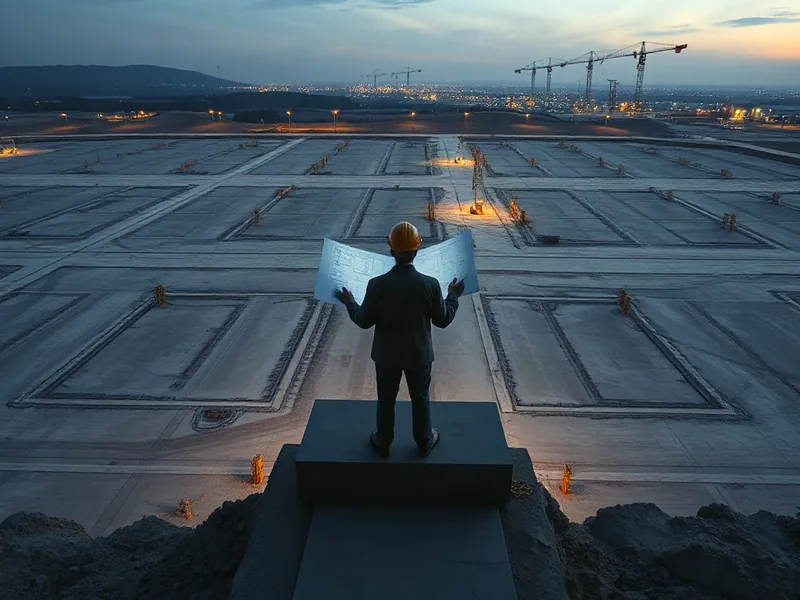
Muehlbauer's broader point cuts to the heart of valuation math: "Investors have to be convinced that hundreds of billions of contracted demand can be turned into cash flow over the coming years." A backlog is a promise, not a payment. SB Energy's filing shows the company plans to broaden its customer base and pursue acquisitions to accelerate growth, an implicit acknowledgment that concentration in OpenAI and SoftBank is a risk worth managing, not a permanent feature.
The circular financing question looms over all of this too. Nvidia funds SB Energy, which houses OpenAI, which is funded partly by SoftBank, which also backs SB Energy. The companies involved have said these are not circular arrangements but investments meant to accelerate AI buildout. Regulators and skeptical investors may see it differently, and the scrutiny is intensifying as more multi-billion-dollar AI, cloud and chip deals stack on top of each other across the sector.
Context matters here. AI infrastructure investment by the largest hyperscalers is projected to exceed $1.3 trillion by 2027, per S&P Global Ratings estimates. SB Energy's own filing notes that 92% of companies plan to increase AI spending over the next three years, yet just 1% of business leaders consider their organizations mature on the AI deployment curve. That is a wide gap between spending intent and deployment reality, and it is the gap SB Energy is positioning itself to fill.
Comparable listings offer a mixed signal. CoreWeave shares have more than doubled since their debut last year, evidence that public markets remain hungry for AI infrastructure exposure. Data center operator Switch has reportedly tapped banks for its own IPO as soon as the fourth quarter, at a potential valuation up to $80 billion. Samuel Kerr, global head of equity capital markets at Mergermarket, framed SB Energy's pitch this way: "SB Energy gives investors a great opportunity to take advantage of sector growth without having to try and pick AI winners and losers from the various leading hyperscalers."
SB Energy plans to sell new shares and list on the Nasdaq and Nasdaq Texas under the ticker "SBE." JPMorgan, Goldman Sachs, Morgan Stanley, Citigroup and Mizuho are running the book as joint lead managers.
This IPO is a proxy bet on the durability of AI capital spending, not a bet on an operating business with proven cash flow. The $439 billion backlog is impressive on paper, but it is contracted revenue that has not yet converted into deliverable capacity. Zero operational data centers today means the entire investment case rests on execution over the next several years, and on the assumption that OpenAI, SoftBank and Nvidia remain committed at scale.
Investors comfortable with concentration risk and multi-year payback horizons may find the sector exposure attractive, particularly given comparable valuations at CoreWeave and the rumored Switch offering. Those wary of circular financing structures, single-customer dependency and a widening loss profile should treat the $50 billion valuation target with caution until SB Energy shows it can convert backlog into actual, billable megawatts.
Tags
Original Sources
SoftBank-backed SB Energy files for US IPO as AI turbocharges infrastructure demand
↗ https://www.reuters.com/business/energy/softbank-backed-sb-energy-moves-closer-public-markets-with-us-ipo-filing-2026-09-01
About the author
Marcus began tracking AI's market implications in 2016, noticing AI-related patent filings accelerating ahead of earnings upgrades before most of the sell-side had caught on. A former fixed-income quantitative analyst, he spent two decades building models that priced risk across emerging markets before pivoting to cover the economic impact of AI full-time. His writing translates opaque technical developments into clear risk/reward terms — and he's rarely diplomatic about the gap between AI valuations and underlying fundamentals. He believes most market participants still underestimate AI's long-run deflationary effect on knowledge work.
More from The Analyst →This Week's Edition
5 September 2026
29 articles
Related Articles
Related Articles
More Stories
© 2026 Cedar & Bloom. All rights reserved.