The Drum · Weekly AI news, freeSubscribe →

Share
A silicon-anode supply agreement backed by a $1.4 billion Pentagon loan shows how battery investment logic has shifted from climate policy to supply-chain security, even as peers collapse.
After two straight years of bankruptcies and scrapped projects, the US battery materials sector has a data point worth taking seriously. Sila, a maker of silicon-carbon anode material, has signed a long-term supply agreement with Panasonic Energy that the company says could be worth more than $1 billion over its life. That is a meaningful contract for a company that has spent 14 years moving from lab curiosity to industrial supplier, and it arrives at a moment when the sector badly needs proof of commercial traction.
The mechanics matter here. Sila's anode material weighs a fifth as much as the graphite used in today's lithium-ion batteries and takes up half the volume, according to the company. Swap that material in, and you get batteries that pack more energy into the same footprint, charge faster, and deliver more power. For electric vehicles, that translates into longer range without added weight. Panasonic has committed to buying tens of thousands of tons of the material, though Sila is not disclosing the total contract value or the price per ton.
Founded in 2011, Sila first drew attention outside battery circles when its material showed up in Whoop fitness wearables in 2021. Since then, the company has scaled fast. A 2022 factory announcement in Moses Lake, Washington, came with $100 million from the Department of Energy, part of a broader Biden-era push to build out a domestic battery supply chain. The facility opened in September 2025 and is already producing material. Gene Berdichevsky, Sila's cofounder and CEO, says the Panasonic deal will help the company scale production to at least ten times current levels.
What makes this deal distinct from Sila's earlier government-backed support is where the big money is now coming from. A $1.4 billion loan from the Defense Department, issued under the Trump administration, is a central piece of the financing behind this production ramp. The department's own language frames the funding around a "significant technology sovereignty challenge," not emissions reduction.
That framing is a useful marker for where battery investment has gone. China controls more than 90% of global graphite production, the dominant anode material today, and Washington has spent years trying to chip away at that dependence across batteries, battery materials, and critical minerals like rare earths. The Trump administration has leaned into that effort harder than its predecessor, treating battery supply chains as a national security issue rather than a climate one.
Sila's own announcement of the Panasonic deal reflects the same pivot. It references EVs. It does not mention climate, emissions, or the energy transition. Instead, the messaging centers on American industrialization, with a nod to how a North American battery supply chain could also serve the AI data center buildout, a market hungry for reliable power and storage.
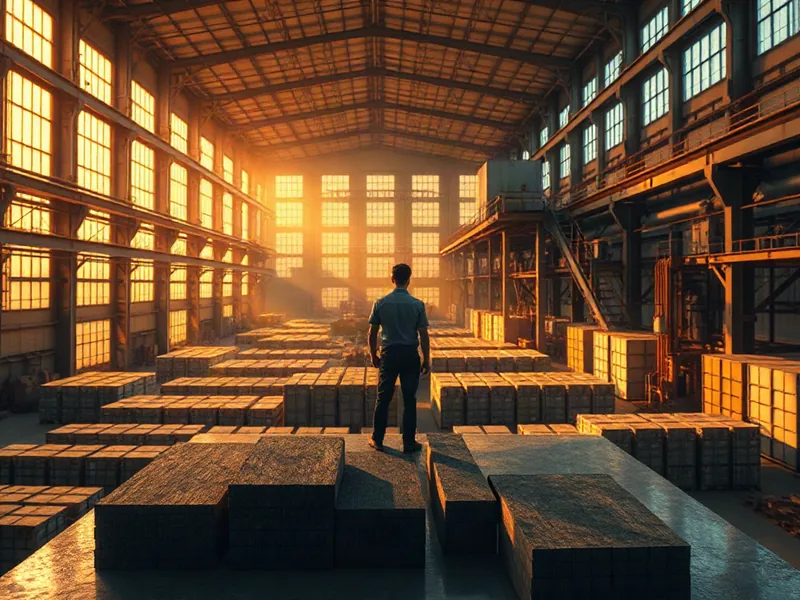
Berdichevsky, for his part, pushes back on the idea that the company's priorities have shifted along with the politics. "I think the politics of it has shifted around us much more than our motivations have shifted," he said. "It's really the energy efficiency that motivates engineers like myself and technologists at our company. And I still think that that's still at the heart of it." Whether that distinction matters to investors is a fair question. What matters more is that the capital is flowing, regardless of the rationale attached to it.
Context here is unflattering for the rest of the sector. Two billion-dollar battery companies, 24M and ESS Tech, have filed for bankruptcy and shut down operations in just the past year. Next-generation battery technology in the US has been, as the original reporting put it, largely on the ropes. Against that backdrop, a mass-market offtake agreement with a global manufacturer like Panasonic is a rare and notable signal of commercial validation, not just government largesse.
It also underscores a broader lesson for anyone tracking this space: political tailwinds, not just technical merit, now determine which battery companies survive the current cycle. Sila benefited from Democratic-era DOE grants to get its factory built. It is now benefiting from a Republican-era defense loan to scale it. The company's technology hasn't changed. The justification for funding it has.
For investors evaluating exposure to the battery materials space, the Sila-Panasonic deal offers a template worth watching rather than a guaranteed win. The headline $1 billion figure is a multi-year estimate, not a signed check, and Sila has not disclosed pricing or total tonnage, which limits how precisely outsiders can model the revenue trajectory. The real signal is structural: a major global battery manufacturer is willing to commit to a US-based, defense-financed anode supplier at commercial scale, something that hasn't happened often in this cycle.
The risk side of the ledger is just as real. Two peer companies with billion-dollar valuations have already gone to zero in the past twelve months, a reminder that next-generation battery materials remain a capital-intensive, execution-heavy business where technical promise does not reliably convert into profitable production. Government financing, whether from the DOE or the Pentagon, can bridge gaps but cannot substitute for sustained demand. Watch for whether Sila discloses actual shipment volumes and pricing as the Moses Lake facility ramps toward that promised tenfold increase in output. Watch too for whether other manufacturers follow Panasonic's lead, which would suggest a genuine market inflection rather than an isolated deal shaped by defense-loan incentives. Until then, this is a positive data point for a battered sector, not confirmation that the sector's troubles are behind it.
Tags
Original Sources
What a billion-dollar deal says about the US battery market
↗ https://www.technologyreview.com/2026/11/19/1148922/sila-panasonic-battery-deal
About the author
Marcus began tracking AI's market implications in 2016, noticing AI-related patent filings accelerating ahead of earnings upgrades before most of the sell-side had caught on. A former fixed-income quantitative analyst, he spent two decades building models that priced risk across emerging markets before pivoting to cover the economic impact of AI full-time. His writing translates opaque technical developments into clear risk/reward terms — and he's rarely diplomatic about the gap between AI valuations and underlying fundamentals. He believes most market participants still underestimate AI's long-run deflationary effect on knowledge work.
More from The Analyst →This Week's Edition
20 November 2026
29 articles
Related Articles

Anthropic's IPO Tests Whether a Safety Mission Survives Wall Street Pressure
Finance & Markets · 4 min

Fed's Jefferson: AI Buildout Is Fueling Inflation Now, Productivity Payoff Still Pending
Finance & Markets · 5 min

National Academies Report Calls for Faster, Tougher Retraction Standards
Models & Research · 5 min
Related Articles
Anthropic's IPO Tests Whether a Safety Mission Survives Wall Street Pressure
Finance & Markets · 4 min
Fed's Jefferson: AI Buildout Is Fueling Inflation Now, Productivity Payoff Still Pending
Finance & Markets · 5 min
National Academies Report Calls for Faster, Tougher Retraction Standards
Models & Research · 5 min
More Stories
© 2026 Cedar & Bloom. All rights reserved.
