The Drum · Weekly AI news, freeSubscribe →

Share
AMD users can now enjoy faster and more efficient Stable Diffusion thanks to optimizations for Radeon GPUs and Ryzen AI APUs, enhancing performance for creators and developers.
Stable Diffusion, the popular generative model family, has received a significant performance boost on AMD hardware. In collaboration with AMD, Stability AI has released ONNX-optimized versions of several key models, specifically tailored to run faster and more efficiently on AMD Radeon™ GPUs and Ryzen™ AI APUs. This update is crucial for developers and creators looking to leverage the latest advancements in generative AI without sacrificing speed or quality.
The following models have been optimized for AMD hardware:
The AMD optimizations yield significant speedups compared to the base PyTorch models:
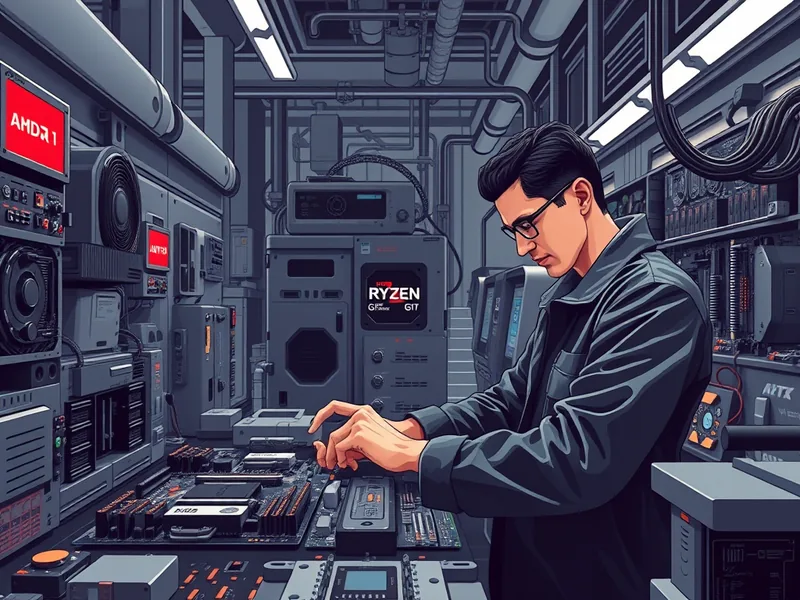
These performance gains are crucial for real-world applications, such as content creation and real-time processing, where speed is a critical factor.
Generative AI is becoming increasingly prevalent in various industries, from media and entertainment to scientific research. Optimizing these models for leading hardware platforms ensures that developers can deploy them efficiently, reducing latency and improving user experience. This collaboration between Stability AI and AMD is a step forward in making advanced AI more accessible and practical.
End users can try out the AMD-optimized models using Amuse 3.0, an AMD tool designed for testing and deploying optimized models. You can find more details on how to get started on the AMD Community Forum.
For a deeper dive into the technical aspects of these optimizations, check out AMD’s detailed blog post on GPUOpen.
The release of AMD-optimized Stable Diffusion models is a significant milestone in the ongoing effort to make generative AI more accessible and efficient. Whether you’re a developer looking to integrate these models into your projects or a creator exploring new creative possibilities, this update brings faster performance and better hardware support to the table.
Tags
Original Sources
About the author
Kai built ML infrastructure at a Bay Area startup before developing an obsession with transformer architectures and inference optimisation that eventually pulled him out of product work entirely. A stint at a compute research lab sharpened his instinct for what actually matters in a model release versus what is marketing. He writes from the inside — from the perspective of someone who has debugged the systems he is describing at three in the morning. He is allergic to hype and instinctively drawn to the unglamorous plumbing questions that everyone else skips over.
More from The Engineer →This Week's Edition
17 April 2025
29 articles
Related Articles
Related Articles
More Stories
© 2026 Cedar & Bloom. All rights reserved.