The Drum · Weekly AI news, freeSubscribe →
Share
A new experiment replacing almost half a mouse's brain with human cells could help us understand injury and disease, but it forces us to ask again how far chimera research should go.
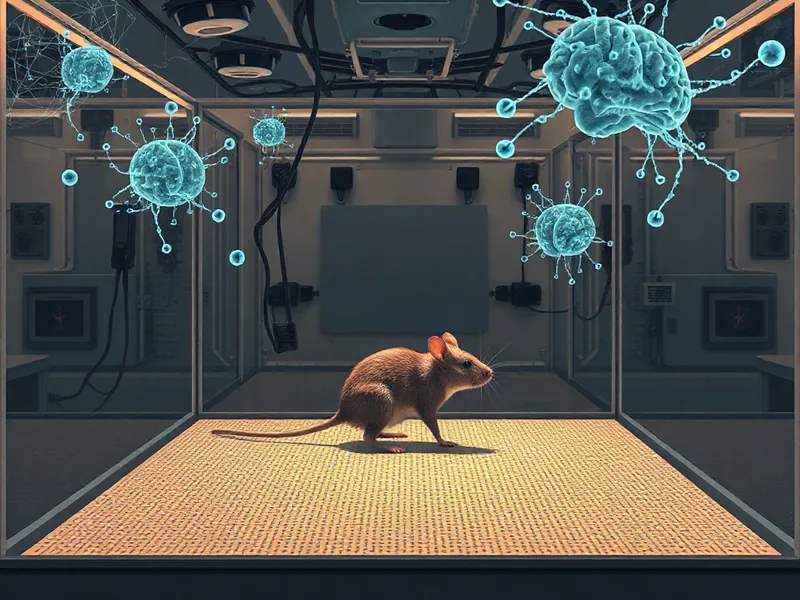
Picture a mouse in a small enclosure, cameras trained on it from every angle, a computer tracing its every step like a video game character darting across a screen. That image alone might not stop you in your tracks. What should is this: nearly half of that mouse's brain volume was made up of human cells.
Researchers at Stanford revealed this work this week, and it represents a significant escalation of a research program they've been building for years. The team had already shown that human brain organoids, clusters of human neurons grown in a lab dish, could survive and even function after being transplanted into the brains of baby rodents. Now they've pushed further, genetically engineering mice so their own brains don't fully develop in the first place, leaving room for human cells to take over much of the space.
Why do this at all? Brain injuries, strokes, and neurodegenerative diseases are notoriously hard to study because human brain tissue is nearly impossible to observe directly while it's alive and functioning. Mice are useful stand-ins for a lot of biomedical research, but a mouse brain isn't built the same way ours is, and drugs or treatments that work in rodents frequently fail in people. If scientists can grow living systems with substantial human brain tissue inside an animal that can still move, eat, and respond to its environment, they gain a tool that behaves more like a real patient than a petri dish ever could.
The mice with human-heavy brains weren't just alive, they were active. Cameras tracked their movement through test arenas, and the resulting data, plotted onto a monitor like something out of an old arcade game, suggested these animals could still navigate their surroundings. That's a meaningful signal. It means the human cells weren't simply surviving as inert tissue. They appeared to be integrating into functioning neural circuits well enough to support basic behavior.
This matters because the promise of chimera research has always hinged on function, not just survival. A brain organoid that grows but does nothing useful is a curiosity. One that helps direct an animal's movement and spatial awareness is a genuine model of how human neurons behave inside a living system. Scientists studying conditions like Alzheimer's, traumatic brain injury, or epilepsy could eventually use these mice to test treatments in a way that's far closer to human biology than a standard lab rodent allows.
Still, the scale of this particular achievement is what sets off alarm bells for a lot of observers, including some of the researchers themselves. Nearly half a mouse's brain is not a token graft. It's a substantial reworking of what makes that animal's neural architecture the animal's own. The Stanford team modified the mice genetically so their native brain tissue wouldn't fully form, essentially making room for the human cells to dominate a critical structure like the cortex, which handles higher-order processing.
Bioethicists have spent decades wrestling with exactly this kind of question, often summarized with a blunt shorthand: how human is too human? The concern isn't that a mouse might wake up reciting poetry. It's subtler than that. Researchers worry about where cognition, consciousness, and moral status begin to blur, even in an animal as biologically distant from us as a mouse. If a chimeric brain starts exhibiting patterns of activity or behavior that look meaningfully different from an ordinary mouse's, at what point does that animal deserve a different kind of ethical consideration?
The Stanford team has said publicly that they've drawn clear lines in how far they'll push this work, according to reporting on the study. Oversight committees at research institutions typically review this kind of research closely, weighing potential scientific benefit against welfare concerns for the animals involved. But as the technology to grow these chimeras becomes more refined and more widely available, the guardrails that exist today may need to evolve just as quickly.
There's also a practical layer to this conversation that often gets lost in the more philosophical debate. Human brain tissue behaves differently across different genetic backgrounds, and diseases that affect the brain, from Alzheimer's to autism spectrum conditions, often involve subtle cellular and circuit-level changes that are hard to model in animals whose brains are built entirely from a different species' genetic blueprint. A chimera model, done responsibly, could shorten the road between a promising lab finding and an actual treatment that helps real patients, particularly for conditions where current animal models have repeatedly let researchers down.
This isn't the first time human-animal chimera research has raised eyebrows, and it won't be the last. Scientists have grown human cells in pig embryos, engineered sheep with partial human tissue in their organs, and worked for years on ways to make lab animals better proxies for human biology without crossing lines that most people, scientists included, consider off-limits. What makes brain chimeras different is that the brain is where we tend to locate identity, awareness, and the qualities we associate most closely with being human.
The Stanford results don't answer the hardest questions here, they sharpen them. As these mice become more capable research tools, the scientific community will need clearer, more specific standards for how much human brain tissue is acceptable in an animal model, and what kind of monitoring should be required once that threshold is crossed. Patients waiting on better treatments for brain injuries and neurodegenerative disease have a real stake in this research moving forward. So do the rest of us, who get to decide, collectively, how comfortable we are with where that progress leads.
Tags
Original Sources
The Download: mice with part-human brains and climate tech innovators
↗ https://www.technologyreview.com/2026/09/17/1144314/the-download-mice-part-human-brains-climate-tech-innovators
About the author
Amara's entry point into AI was an epidemiology role at a London research hospital, where she spent five years studying how digital health tools reached — or conspicuously failed to reach — underserved communities. Watching early algorithmic systems in healthcare quietly entrench existing inequalities, she redirected her career toward the systemic consequences of AI at scale. She covers AI through an unflinching lens: who benefits, who bears the cost, and what evidence actually says versus what the press release claims. Her writing is calm and precise, but she doesn't mistake balance for neutrality.
More from The Steward →This Week's Edition
18 September 2026
25 articles
Related Articles
Related Articles
More Stories
© 2026 Cedar & Bloom. All rights reserved.