The Drum · Weekly AI news, freeSubscribe →
Share
Thirty-one states have passed laws targeting AI-generated deepfakes in campaigns, hoping to protect voters from manipulated media. But a wave of First Amendment challenges is forcing lawmakers back to the drawing board.
Imagine watching a video of a candidate confessing to a crime they never committed, days before an election, with just enough realism to make you believe it. Now imagine that video spreading across social media before anyone can prove it's fake. That scenario is no longer hypothetical. It is the exact problem state legislatures across the country have spent the last two years trying to solve, with mixed results.
Generative AI, the technology behind tools that can conjure realistic images, video and voice recordings from a simple text prompt, has become powerful enough to produce convincing deepfakes of political figures. Think of it like a very talented forger who can now work at the speed and scale of the internet. What once took a skilled film studio weeks to fake can now be generated by anyone with a laptop in minutes. State lawmakers noticed, and they acted fast.
According to the National Conference of State Legislatures, 31 states have enacted laws specifically regulating deepfakes in political messaging. The approaches split into two broad camps. Some states, like California, Minnesota and Texas, prohibit the publication of political deepfakes within a certain window before an election. California's law is narrower than a blanket ban: it only prohibits certain deceptive content while allowing other AI-generated material as long as it carries a disclosure. Maryland takes the strictest stance, banning deceptive election-related deepfakes year-round rather than just in the weeks before a vote.
The other 27 states have chosen a lighter touch: disclosure requirements. These laws function much like the "paid for by" tags required on traditional political ads. If a video or audio clip contains AI-generated content depicting a candidate, the law requires a label saying so. Colorado and Utah go a step further, requiring that disclosure information be embedded directly into a file's metadata, the behind-the-scenes data that records who created a file and when it was made or edited. That is a meaningful safeguard, since a visible disclaimer can be cropped out of a video clip, but metadata travels with the file even when it gets shared and reshared.
Some states are also leaning on older tools. Criminal impersonation statutes that predate the internet may technically apply to AI-generated impersonations of real people. But several states, including Wisconsin, decided the old laws were not a clean fit and passed deepfake-specific legislation instead. Many states have broader AI impersonation laws on the books too, though those statutes do not specifically address candidates or elections, which is why NCSL excludes them from its tally even though they could still come into play in a courtroom.
Passing a law is one thing. Making it survive a constitutional challenge is another matter entirely, and that is where things get complicated.
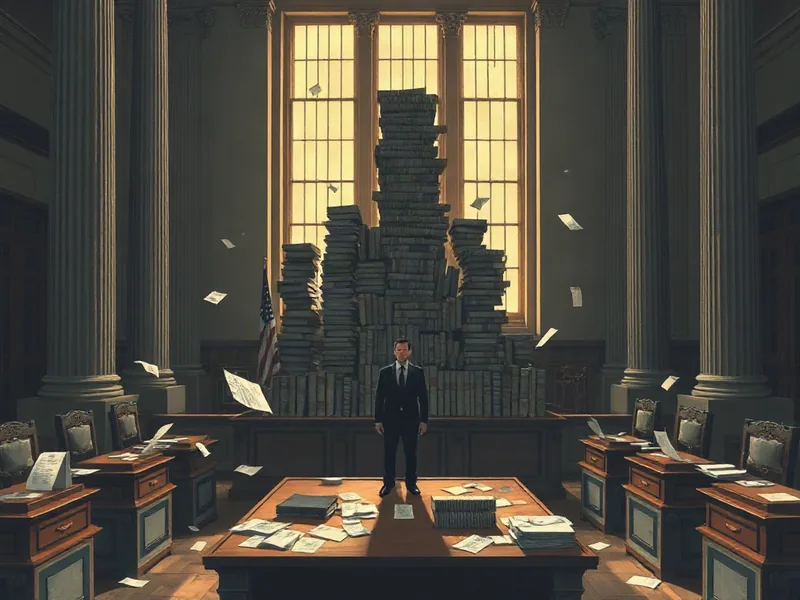
Several of these laws are now tangled up in litigation, and the results so far have not been encouraging for regulators. In Kohls v. Bonta, a federal district court in California struck down the state's deepfake law as unconstitutional in September 2025. Lawmakers scrambled to amend it that same month. In Hawaii, a federal court reached a similar conclusion in January 2026 in Babylon Bee, LLC v. Lopez, finding the state's law unconstitutional as well. Minnesota is fighting on two fronts, with Kohls v. Ellison and X Corp. v. Ellison both still pending in federal court, neither yet decided on the merits. Montana and Vermont have seen their laws hit with preliminary injunctions in September 2026, in Accountability in State Govt. v. Knudsen and Poitras v. Clark respectively. The Supreme Court has not yet weighed in on any of this, which means the legal ground remains unsettled from state to state.
The reasoning in the California case offers a useful window into what courts find objectionable. California's law barred any speech "reasonably likely" to harm a candidate's electoral prospects, but the court found that standard too vague to enforce fairly. Electoral prospects are notoriously hard to measure, and the law gave no clear definition of what counted as harm. The court suggested a narrower fix: restrict only deepfakes that cause concrete harm, like voter intimidation or coercion, rather than anything that might dent a candidate's polling numbers.
The court also took issue with California's treatment of satire and parody, which had to carry a separate disclaimer distinct from the one required for other political deepfakes. Judges found that requirement overly burdensome, arguing it drowned out the joke the satire was trying to make. And the law's enforcement mechanism, which let nearly any viewer of deceptive media sue, struck the court as far too broad. A tighter alternative, the court noted, would limit lawsuits to candidates who have suffered actual, demonstrable harm.
These rulings all circle back to the First and Fourteenth Amendments, the same constitutional territory that governs political speech and due process more broadly. Lawmakers now face a narrower path: write rules precise enough to survive judicial scrutiny, but still broad enough to catch genuinely harmful content before it spreads.
Legislators drafting new bills are wrestling with a handful of recurring questions. How exactly should "deepfake" be defined, by the type of AI model used, or more broadly to include older editing tools like Photoshop? Should the law apply only in the weeks before an election, or indefinitely? Who gets exempted, and does including a disclosure protect a publisher from liability altogether? And when someone breaks the rules, should the penalty be civil, criminal, or both, and who gets to bring the case?
Deepfakes are not just a technology problem. They strike at something more fundamental: whether voters can trust what they see and hear about the people asking for their vote. A well-crafted fake video dropped 48 hours before an election can spread faster than any fact-check can catch up to it, and by the time the truth surfaces, ballots may already be cast. States are right to worry about this, but the current wave of court rulings shows that good intentions alone will not produce durable law. Lawmakers will need to write rules narrow enough to survive constitutional review while still giving voters real protection against deception, a balancing act that is proving far harder in practice than it sounded in committee hearings.
Tags
Original Sources
Artificial Intelligence (AI) in Elections and Campaigns
↗ https://www.ncsl.org/elections-and-campaigns/artificial-intelligence-ai-in-elections-and-campaigns
About the author
Amara's entry point into AI was an epidemiology role at a London research hospital, where she spent five years studying how digital health tools reached — or conspicuously failed to reach — underserved communities. Watching early algorithmic systems in healthcare quietly entrench existing inequalities, she redirected her career toward the systemic consequences of AI at scale. She covers AI through an unflinching lens: who benefits, who bears the cost, and what evidence actually says versus what the press release claims. Her writing is calm and precise, but she doesn't mistake balance for neutrality.
More from The Steward →This Week's Edition
14 October 2026
23 articles
Related Articles
Related Articles
More Stories
© 2026 Cedar & Bloom. All rights reserved.