The Drum · Weekly AI news, freeSubscribe →

Share
The University of Texas at Austin's new system blends Blackwell GPUs, Vera CPUs, and 400PB of flash storage into what TACC calls a balanced engine for AI and simulation. Here's what's actually under the hood.
The Texas Advanced Computing Center just handed early users the keys to Horizon, a 4,000-GPU system that now ranks #24 on the November 2026 TOP500 list with 132 petaflops on the HPL benchmark. That's the headline number, but the more interesting story is architectural: this is TACC's first system built from the ground up to treat AI workloads and traditional simulation as equally first-class citizens, rather than bolting GPUs onto a CPU-centric design.
Horizon is the centerpiece of the NSF Leadership-Class Computing Facility (NSF LCCF), and with its arrival TACC now controls roughly 5,500 GPUs across its fleet, the largest concentration of compute at any U.S. university. For context, that puts an academic center in the same conversation as hyperscalers on raw accelerator count, even if the total system scale is nowhere near a Meta or Microsoft data center.
That storage number is worth sitting with for a second. 400PB of all-solid-state storage at 12TB/s read bandwidth isn't just "big," it's built specifically so that AI training runs and massive simulation datasets can share the same data plane without stepping on each other, which is exactly the multi-tenancy problem that trips up a lot of shared HPC clusters.
The architectural bet here traces back to Vista, TACC's smaller AI-focused prototype system built on 600 NVIDIA Grace Hopper Superchips. Vista marked the center's first move away from x86 in nearly two decades, and it's been running as a live testbed: porting applications, tuning performance projections, and validating the VAST storage stack that now underpins Horizon.
The Arm-based Grace Blackwell and Vera chips pair CPU and GPU far more tightly than a traditional x86-plus-PCIe-GPU setup. For researchers running mixed workloads, like coupling a numerical simulation with an AI surrogate model for inference, that tighter coupling cuts down on the data-movement overhead that normally eats into real-world throughput even when peak flops look great on paper.
Dan Stanzione, TACC's executive director, framed the design philosophy directly: "We have built an engine for discovery, a balanced system for both AI and simulation, which will unlock entirely new approaches to scientific problems." That "balanced" framing is the thing to watch. A lot of recent supercomputer announcements lean heavily into AI exaflop numbers because FP4 and BF16 throughput scales dramatically higher than FP64, the precision simulations typically need. TACC is explicitly trying not to sacrifice one for the other, and Horizon's 10x simulation speedup over Frontera (the system it replaces) suggests they're serious about that balance rather than just chasing an AI benchmark headline.
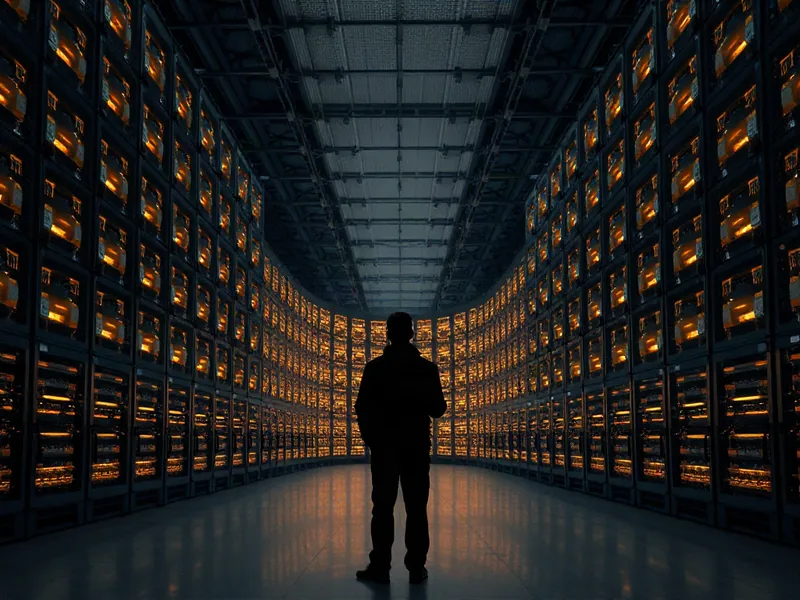
Horizon succeeds Frontera, which TACC retired in October 2026 after seven years and more than eight million completed jobs, making it the longest-running system in the center's history. Frontera was the first phase of the NSF LCCF and was designed purely around simulation performance; Horizon was explicitly spec'd to hit 10x Frontera's simulation throughput while adding AI capability Frontera never had.
Power efficiency got a real upgrade too. Horizon runs in a new 20-megawatt data center in Round Rock, Texas, using advanced liquid cooling, and TACC claims up to 6x better energy efficiency than prior systems. That efficiency gain matters more than it might seem: as GPU-dense systems keep getting denser, power and cooling increasingly become the limiting factor on how much compute a university can actually deploy, not just budget.
The target workloads span earthquake science, quantum materials, lattice QCD, biophysics, and astronomy, the kind of problems where you genuinely need both high-fidelity simulation and AI-driven pattern recognition working on the same dataset. TACC's prior systems have already produced Nobel-caliber results, Francis Halzen's 2026 Physics Nobel for contributions to the NSF IceCube Neutrino Observatory being the most recent example, so there's a real track record behind the "science enabler" pitch.
Vendor partners are leaning into the collaborative framing too. Ian Buck of NVIDIA called it "accelerated computing and simulation together at transformative scale," while Dell's Arun Narayanan positioned Dell's infrastructure as "the compute backbone" for the system. VAST Data co-founder Jeff Denworth noted that this is the third generation of TACC-VAST collaboration, following Stampede3 and Vista, with the VAST AI Operating System now serving as Horizon's unified data layer across simulation and AI pipelines.
Horizon is less interesting as a raw TOP500 ranking than as a statement about system design: balanced AI/simulation capability, tightly coupled Arm-based CPU-GPU nodes, and storage infrastructure built to serve both workload types from a single pool without contention. The CPU phase lands in early 2027, which will push the combined system to a projected 180 petaflops and complete the design TACC has been prototyping on Vista for the past year or so.
For practitioners outside TACC's user base, the real signal is architectural: in-network computing on InfiniBand, unified AI-ready storage at exabyte-adjacent scale, and Arm-based tight CPU-GPU coupling are becoming the default blueprint for leadership-class systems, not experimental extras. Expect similar design choices to show up in the next wave of national lab and hyperscale systems over the next 12-18 months as FP4 inference and large-scale simulation keep converging onto the same hardware.
Tags
Original Sources
TACC Opens Horizon Supercomputer to Early Users - HPCwire
↗ https://www.hpcwire.com/off-the-wire/tacc-opens-horizon-supercomputer-to-early-users
About the author
Kai built ML infrastructure at a Bay Area startup before developing an obsession with transformer architectures and inference optimisation that eventually pulled him out of product work entirely. A stint at a compute research lab sharpened his instinct for what actually matters in a model release versus what is marketing. He writes from the inside — from the perspective of someone who has debugged the systems he is describing at three in the morning. He is allergic to hype and instinctively drawn to the unglamorous plumbing questions that everyone else skips over.
More from The Engineer →This Week's Edition
18 November 2026
29 articles
Related Articles

The Data Center Backlash Has Gone From Local Fights to National Policy
Tools & Engineering · 5 min

Google Built a Fake Internet to Train Chrome's AI Agents Without Breaking the Real One
Tools & Engineering · 5 min

TACC Stands Up Sagebrush, a Persistent AI Inference Layer for Open Science
Tools & Engineering · 6 min
Related Articles
The Data Center Backlash Has Gone From Local Fights to National Policy
Tools & Engineering · 5 min
Google Built a Fake Internet to Train Chrome's AI Agents Without Breaking the Real One
Tools & Engineering · 5 min
TACC Stands Up Sagebrush, a Persistent AI Inference Layer for Open Science
Tools & Engineering · 6 min
More Stories
© 2026 Cedar & Bloom. All rights reserved.
