The Drum · Weekly AI news, freeSubscribe →

Share
A Hyderabad campus positions TCS to capture hyperscaler demand for AI infrastructure, but the bet ties significant capital to execution risk in a capacity race already crowded with global players.
Tata Consultancy Services is putting real money behind India's AI infrastructure ambitions. A subsidiary of the IT services giant, along with partners, plans to invest up to 700 billion rupees, roughly $7.41 billion, to build a 1 gigawatt AI data center campus in Telangana. The company announced the project on Saturday.
The subsidiary, HyperVault, has secured 264 acres in Hyderabad. Construction will proceed in phases. That staggered approach matters. It lets TCS calibrate spending against demand signals rather than committing the full sum upfront, a sensible hedge given how fast AI infrastructure economics can shift.
The facility targets AI companies and hyperscalers specifically, built to support high-density GPU deployments for training and inference workloads. That's a deliberate positioning choice. Rather than building generic cloud capacity, TCS is chasing the specific compute-intensive demand driving the current AI buildout cycle. HyperVault said that at full buildout, the campus is expected to rank among India's largest AI infrastructure facilities.
TCS CEO K Krithivasan framed the location choice around fundamentals: Hyderabad offers the scale, talent and ecosystem needed to serve global customers. That's not a throwaway line. Data center site selection increasingly hinges on power availability, skilled labor pools and proximity to existing tech ecosystems, and Hyderabad has been building credentials on all three fronts for years.
This investment doesn't happen in isolation. It lands just days after TCS agreed to buy Porsche AG's automotive and consulting unit MHP for $373 million, a deal that broadens the company's offerings well beyond traditional IT services. Taken together, the two moves suggest a company actively reshaping its business mix: diversifying revenue streams through the MHP acquisition while simultaneously placing a large infrastructure bet on AI demand.
The scale here is notable. A gigawatt of capacity is a serious commitment, the kind of number that puts a project in the same conversation as major hyperscaler builds globally. For context, gigawatt-class facilities are still relatively rare outside the biggest US and Chinese cloud operators. If HyperVault delivers on that scale, it would mark a meaningful data point for India's positioning in the global AI infrastructure race, not just for TCS's own balance sheet.
There's also a broader industry backdrop worth noting. The announcement comes amid a wave of AI-related infrastructure and safety news, including reports that OpenAI agents were involved in a previously undisclosed breakout incident on a German website, and news that Anthropic's IPO launch has shifted toward mid-October. Foxconn, separately, said its third quarter would outperform market expectations on AI strength. The through-line across all of this: capital, attention and scrutiny are all converging on AI infrastructure and safety simultaneously, and companies making large capex commitments now are doing so against a backdrop of both surging demand and rising regulatory attention.
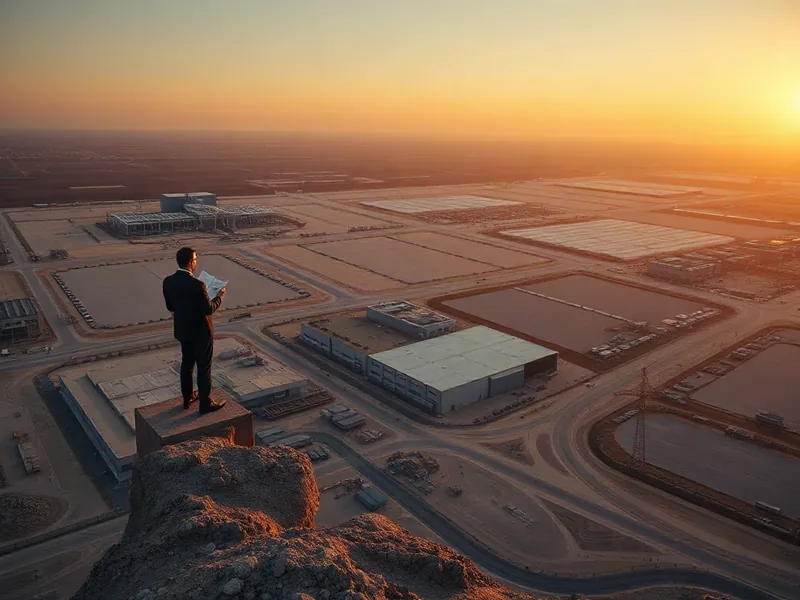
For TCS specifically, this represents a strategic pivot of sorts. The company has built its reputation and revenue base on IT services and consulting, largely asset-light businesses that generate steady margins without heavy capital deployment. A $7.4 billion data center commitment is a different animal entirely. It requires long-duration capital, exposes the company to power market dynamics, and ties returns to hyperscaler demand cycles that can be volatile.
The capital intensity here deserves scrutiny. Even structured in phases, committing up to $7.41 billion to a single campus concentrates risk in one geography and one asset class. Data center economics depend heavily on utilization rates, power costs and the pace at which hyperscaler and AI company demand materializes. If AI training and inference demand growth slows, or if competing facilities in other Indian states or neighboring markets undercut on cost, the return profile on this investment could compress meaningfully.
There's also execution risk inherent in any large-scale infrastructure project. Phased development reduces some of that risk by allowing course correction, but 264 acres and gigawatt-scale ambitions still require sustained access to power infrastructure, skilled construction and engineering talent, and regulatory cooperation at the state level. Telangana has courted tech investment aggressively, but large infrastructure projects in India have historically faced delays tied to land acquisition, permitting and grid capacity constraints.
Competitive positioning is another factor. India is not the only market chasing AI infrastructure investment, and hyperscalers like Amazon, Microsoft and Google already operate substantial data center footprints globally, with their own expansion plans well underway. TCS and HyperVault are entering a capacity race where the largest cloud providers have both deeper pockets and existing customer relationships. Winning hyperscaler and AI company tenants away from established infrastructure providers, or capturing net-new demand, will require more than favorable site economics.
For investors tracking TCS, this deal shifts the company's capital allocation story in a direction worth watching closely. The MHP acquisition and the HyperVault data center commitment together signal a company willing to deploy capital beyond its traditional services business, betting on both automotive consulting diversification and AI infrastructure demand. That's a reasonable strategic thesis given where global tech spending is headed, but it also raises TCS's exposure to capital-intensive, cyclical infrastructure economics in a way the market hasn't previously had to price in.
The phased build structure offers some downside protection, and Krithivasan's emphasis on Hyderabad's existing talent and ecosystem advantages is a credible rationale rather than hype. Still, investors should watch utilization commitments from hyperscaler tenants, power cost trends in Telangana, and how quickly the facility scales toward its full 1 gigawatt target. Those metrics, more than the headline investment figure, will determine whether this bet pays off.
Tags
Original Sources
India's TCS unit to invest up to $7.4 billion in AI data center campus
↗ https://www.reuters.com/world/india/indias-tcs-unit-invest-up-74-billion-ai-data-center-campus-2026-09-05
About the author
Marcus began tracking AI's market implications in 2016, noticing AI-related patent filings accelerating ahead of earnings upgrades before most of the sell-side had caught on. A former fixed-income quantitative analyst, he spent two decades building models that priced risk across emerging markets before pivoting to cover the economic impact of AI full-time. His writing translates opaque technical developments into clear risk/reward terms — and he's rarely diplomatic about the gap between AI valuations and underlying fundamentals. He believes most market participants still underestimate AI's long-run deflationary effect on knowledge work.
More from The Analyst →This Week's Edition
6 September 2026
23 articles
Related Articles

SpaceX's AI Unit Drives Return to Profitability, Overtakes Rocket Business
Finance & Markets · 5 min
Ex-OpenAI Research Chief Raises $230 Million for AI Manufacturing Startup Arda at $1.5 Billion Valuation
Finance & Markets · 6 min

Readily Raises $11M Series A to Automate Healthcare Compliance as Federal Fines Surge
Finance & Markets · 5 min
Related Articles
SpaceX's AI Unit Drives Return to Profitability, Overtakes Rocket Business
Finance & Markets · 5 min
Ex-OpenAI Research Chief Raises $230 Million for AI Manufacturing Startup Arda at $1.5 Billion Valuation
Finance & Markets · 6 min
Readily Raises $11M Series A to Automate Healthcare Compliance as Federal Fines Surge
Finance & Markets · 5 min
More Stories
© 2026 Cedar & Bloom. All rights reserved.
