The Drum · Weekly AI news, freeSubscribe →

Share
Rising electricity bills and strained water supplies are turning red-state voters against data centers, forcing Texas Republicans like Greg Abbott and Ken Paxton to distance themselves from the industry, and from President Trump's pro-AI stance.
Imagine your power bill creeping up every month, your tap water tasting a little different, and then learning the culprit isn't a drought or aging pipes but a massive server farm humming away outside town. That's the story taking hold across Texas right now, and it's rewriting political alliances in ways few saw coming.
Less than a year ago, Texas Governor Greg Abbott called his state the "epicenter of AI development." Today, running for re-election, he's pushing for sweeping new restrictions on data centers. He's not alone. Across the country, Republicans are increasingly breaking from President Donald Trump's full-throttle embrace of artificial intelligence infrastructure, even as Democrats capitalize on a wave of local frustration ahead of November's elections.
Republican candidates in at least five states, including Michigan, Wisconsin and Pennsylvania, have recently sharpened their rhetoric on data centers or floated concrete restrictions on new construction. It's a fault line few would have predicted inside a party that has long championed unfettered corporate growth.
"It's pitting pro-growth instincts and the push to beat China in the AI race against a populist backlash over affordability," said Brad Dayspring, a Republican strategist with Purple Strategies.
Nowhere is that tension more visible than in Texas. The state has spent years rebranding itself as a tech hub, luring companies like SpaceX and Oracle, and entrepreneurs like Elon Musk, with cheap land and light regulation. But that same hospitality is now colliding with resident anger. Critics say data centers drive up electric and water bills, flood the night sky with light pollution, and deliver too few jobs or tax dollars to justify the public incentives they receive.
The numbers back up the frustration. An August poll by the Texas Politics Project found only 30% of respondents would support a data center being built in their community. That's a striking figure in a state that has marketed itself as open for business.
Big tech isn't sitting still. Companies have poured more than $300 million into this year's midterms, according to election records and disclosures, alongside a sprawling ad campaign meant to convince voters that data centers are worth the tradeoffs. Whether that message is landing is another question entirely.
Abbott, meanwhile, is calling for expansive new rules on data centers, the repeal of construction tax incentives, and limits on development in rural communities. On August 3, he announced a state audit that has effectively paused approvals for new grid connections, a move with real consequences for companies waiting to plug in.
Attorney General Ken Paxton, locked in a tight Senate race, has followed a similar arc. Late last month he unveiled a plan his campaign says will keep America competitive while curbing what it calls the "negative impact of data centers." That's a notable pivot for a man who, as a state senator in 2013, voted for the very tax incentive that helped jumpstart Texas's data center boom.
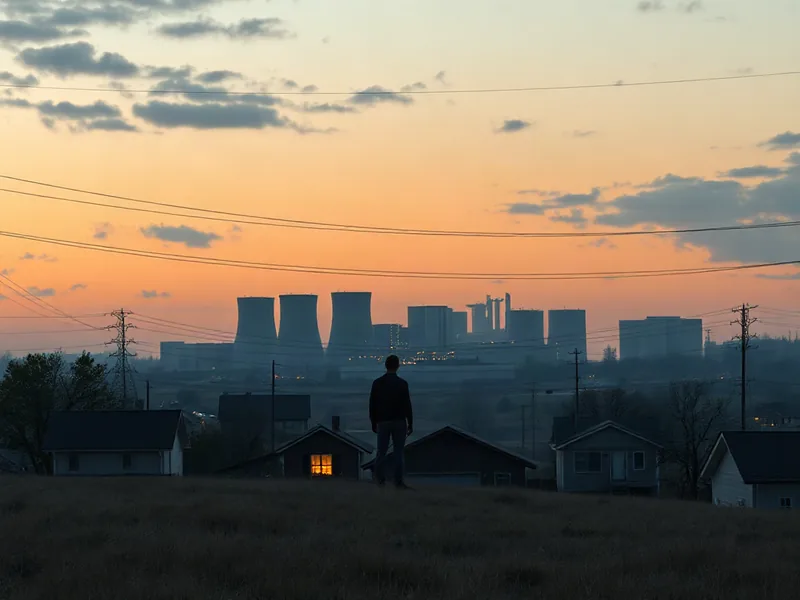
This rhetorical shift puts Abbott and Paxton at odds with the head of their own party. Trump warned in a Truth Social post this week that Americans fighting data centers risk ending up "backwards and poor." Republican officials have tried to smooth over the disagreement. "We're going to advise our candidates to do what's best for them and their communities," said Natalie Baldassarre, national press secretary for the Republican National Committee. "It's not a one-size-fits-all approach."
Texas remains one of the country's largest and fastest-growing data center markets, home to OpenAI's flagship Stargate campus in Abilene. In February, commissioners in Hood County asked Paxton for a legal opinion on whether they had authority to temporarily halt data center development. Six months later, that request is still pending.
Paxton's Democratic opponent, James Talarico, has accused him of political opportunism, pointing to campaign contributions Paxton has taken from the tech industry. "He's scared his ties to big data center companies will lose him the election, so he's making a sad attempt to reverse course," Talarico said in a statement. Paxton's campaign fired back, accusing Talarico of accepting money from some of the same corporate interests and noting he voted for a sales tax incentive for large data centers as a state senator in 2023. "He's a hypocrite who's bought and paid for by his coastal billionaire donors," the campaign said.
Both men trying to cast themselves as populists standing up to deep-pocketed donors says something about how far the ground has shifted. David Karol, a political scientist at the University of Maryland, put it plainly: Republicans who have long been champions of corporate America now see value in "putting some distance between themselves and the big tech companies behind these data centers."
In the governor's race, Abbott's Democratic challenger Gina Hinojosa has called data centers "the fight of this election season." She's pointed out that Abbott's grid connection pause conveniently expires November 4, the day after the election. Abbott's campaign press secretary, Eduardo Leal, said the governor has directed regulators to ensure data centers "do not take water needed by communities or power needed by the Texas grid," while lowering electricity costs and requiring companies to pay for their own infrastructure.
Political strategist Kevin Madden, a former adviser to Mitt Romney, said the industry largely has itself to blame for how quickly this turned into a campaign flashpoint. "Two years of local opposition and the industry wasn't necessarily engaging at the level they needed to," he said.
AI companies are now scrambling to catch up. Two super PACs tied to Anthropic have spent more than $2.6 million in Texas so far, while PACs linked to OpenAI co-founder Greg Brockman have spent over $4.8 million statewide. Meta has given roughly $1.4 million to a super PAC focused on Texas state races.
What's happening in Texas isn't just a regional squabble over server farms. It's a preview of a bigger reckoning between the promise of AI-driven growth and the everyday costs communities are being asked to absorb, higher utility bills, strained water systems, and light pollution among them. When both parties start finding common ground against an industry, as Karol noted, "it's striking at a time when the parties seem to disagree on everything." That kind of bipartisan pushback tends to signal a shift that policymakers, and the companies building this infrastructure, can't afford to ignore.
Tags
Original Sources
Texas Republicans turn against data centers, putting big tech on notice
↗ https://www.reuters.com/legal/government/texas-republicans-turn-against-data-centers-putting-big-tech-notice-2026-09-03
About the author
Amara's entry point into AI was an epidemiology role at a London research hospital, where she spent five years studying how digital health tools reached — or conspicuously failed to reach — underserved communities. Watching early algorithmic systems in healthcare quietly entrench existing inequalities, she redirected her career toward the systemic consequences of AI at scale. She covers AI through an unflinching lens: who benefits, who bears the cost, and what evidence actually says versus what the press release claims. Her writing is calm and precise, but she doesn't mistake balance for neutrality.
More from The Steward →This Week's Edition
8 September 2026
23 articles
Related Articles

AI Giants Move to Govern Themselves, and Decide Who Gets the Winnings
Policy & Regulation · 5 min

FDA Weighs Treating Generative AI Medical Tools Like Physicians, Not Devices
Policy & Regulation · 5 min

Ottawa Expands AI Funding for B.C. Businesses Under $700-Million National Strategy
Policy & Regulation · 5 min
Related Articles
AI Giants Move to Govern Themselves, and Decide Who Gets the Winnings
Policy & Regulation · 5 min
FDA Weighs Treating Generative AI Medical Tools Like Physicians, Not Devices
Policy & Regulation · 5 min
Ottawa Expands AI Funding for B.C. Businesses Under $700-Million National Strategy
Policy & Regulation · 5 min
More Stories
© 2026 Cedar & Bloom. All rights reserved.
