The Drum · Weekly AI news, freeSubscribe →

Share
Political opposition, new disclosure laws, and souring public opinion are converging on the AI buildout. For investors underwriting hyperscaler capex, the permitting and regulatory environment now deserves as much scrutiny as chip supply.
The thesis behind the AI infrastructure trade has rested on a simple assumption: capacity will get built, more or less on schedule, wherever hyperscalers decide to put it. That assumption is now under pressure. A wave of state-level regulation, local resistance, and deteriorating public sentiment suggests the siting and permitting of data centers is becoming a material variable in the AI capex story, not a footnote.
The numbers on public opinion are the clearest signal. A Pew Research Center report published September 22 found negative views of data centers rising across every category surveyed, with just 4 percent of respondents saying the facilities have a mostly good impact overall. Awareness has spiked too: the share of people who say they've heard "nothing at all" about data centers fell from 25 percent to 12 percent in just seven months. That is a fast shift in public attention, and it is not moving in a direction favorable to continued unopposed expansion.
A separate poll from The New York Times and Siena College, released September 15, found 61 percent of 1,503 likely voters opposed construction of data centers to power AI technology. These are not fringe numbers. They represent majority opposition among a sample of likely voters, surveyed before the most recent round of AI safety debate even hit the news cycle.
California moved first and moved hard. Governor Gavin Newsom signed seven bills in September that the state calls the most comprehensive data center legislation in the country. The package requires the California Public Utilities Commission to create a new rate classification specifically for data centers, and it forces operators to pay for upgrades to local power grids and water systems rather than pushing those costs onto residential ratepayers. Additional provisions require proposed facilities to disclose estimated water use, energy efficiency plans, and drought contingency measures to local governments before qualifying for streamlined approval.
Virginia, home to what is widely described as the data center capital of the world in Loudoun County, followed with its own executive action. Governor Abigail Spanberger's Executive Order 22, issued September 18, bans executive branch officials from signing nondisclosure agreements tied to data center projects, mandates expedited noise regulations, and requires review of backup power generation used by these facilities. The order also creates a task force to evaluate workforce displacement and data privacy risks tied to AI infrastructure.
New York has gone further still, becoming the first state to enact a data center moratorium, according to Verge reporting tracked in this ongoing coverage. That is a meaningfully different posture than disclosure requirements or cost-shifting rules. A moratorium halts new construction outright, and it sets a precedent other state legislatures may now feel emboldened to follow if local opposition continues building.
At the federal level, the picture is more permissive. President Trump told tech executives in a September 29 meeting that "you're going to see, data centers are going to be very popular," a claim that sits awkwardly against the Pew and Times/Siena polling data. The administration's EPA has also moved to let data centers avoid disclosing certain air pollution data, a deregulatory step that cuts against the transparency trend emerging at the state level. The divergence between federal and state approaches creates a patchwork regulatory environment that operators will need to navigate project by project.
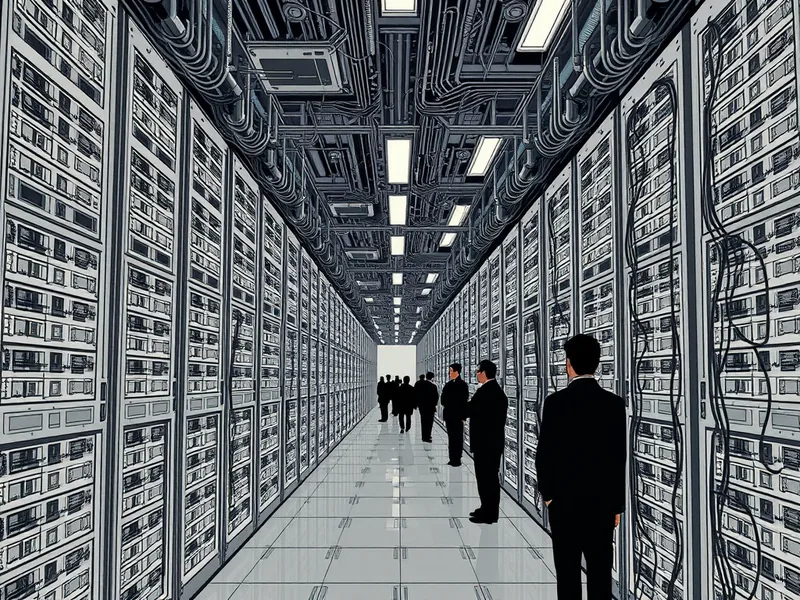
For portfolio exposure to the AI buildout, whether through hyperscaler equity, data center REITs, or power infrastructure plays, the relevant question is no longer just how much capital is being committed. It's how reliably that capital converts into operating capacity on the timelines management teams have guided to.
Local resistance is already showing up in concrete project delays and contentious approval processes. Granbury, Texas saw residents walk out of a city council meeting over a data center dispute. Colleton County, South Carolina approved controversial data center rules despite public pushback. Weld County, Colorado approved what could be the state's largest data center, but only after navigating local opposition. The Los Angeles Times reported in mid-September that rural America's data center boom has hit "a wall of local resistance," a phrase that captures the broader pattern better than any single data point.
Amazon's own employees petitioned Seattle to slow new data center approvals, an unusual instance of internal workforce pressure compounding external community opposition. That kind of dual-front resistance, external and internal, is not something capex models typically price in.
There are also underappreciated environmental liabilities building up. A September report from the nonprofit Basel Action Network estimated that AI-related e-waste could reach the equivalent of 23 million shipping containers by 2050, enough to circle the globe six times if lined up end to end. That figure is substantially higher than prior estimates because it accounts for the full infrastructure stack supporting servers, not just the hardware itself. E-waste liability isn't currently priced into most data center valuations, but disclosure trends suggest it eventually will be.
The data points worth tracking: 61 percent voter opposition to data center construction per the Times/Siena poll; just 4 percent of Pew respondents rating data centers' overall impact as mostly good; a drop in "unaware" respondents from 25 percent to 12 percent in seven months; and a projected 23 million shipping containers of AI-related e-waste by 2050 per BAN's estimate. Seven new California laws and one state-level moratorium in New York mark the first hard regulatory responses to what had been largely a local zoning fight.
None of this stops the AI infrastructure buildout. Capital continues to flow and projects continue to break ground. But the assumption that siting and permitting are low-risk, low-friction line items in the capex equation no longer holds uniformly across jurisdictions. Investors modeling hyperscaler capacity growth should treat state-level regulatory divergence and local opposition as a genuine variable, not background noise, when underwriting timelines for AI infrastructure deployment.
Tags
Original Sources
All the latest updates on AI data centers
↗ https://www.theverge.com/ai-artificial-intelligence/902546/data-centers-ai-energy-power-grids-controversy
About the author
Marcus began tracking AI's market implications in 2016, noticing AI-related patent filings accelerating ahead of earnings upgrades before most of the sell-side had caught on. A former fixed-income quantitative analyst, he spent two decades building models that priced risk across emerging markets before pivoting to cover the economic impact of AI full-time. His writing translates opaque technical developments into clear risk/reward terms — and he's rarely diplomatic about the gap between AI valuations and underlying fundamentals. He believes most market participants still underestimate AI's long-run deflationary effect on knowledge work.
More from The Analyst →This Week's Edition
2 October 2026
28 articles
Related Articles
Related Articles
More Stories
© 2026 Cedar & Bloom. All rights reserved.