The Drum · Weekly AI news, freeSubscribe →

Share
Political goodwill for AI infrastructure is evaporating fast, and moratoriums, lawsuits, and gas-plant controversies are stacking up. For investors underwriting the buildout, the permitting and regulatory tailwind can no longer be assumed.
The thesis underpinning years of hyperscaler capex has been simple: AI demand is unlimited, so the compute infrastructure to serve it should scale without meaningful friction. That assumption is now being tested, not by chip shortages or capital constraints, but by local governments, permitting agencies, and voters who no longer want the buildout in their backyard.
The evidence has been accumulating for months, and the pace is accelerating. New York became the first state to enact a data center moratorium. Louisville's Metro Council approved one of its own even as a new proposal sparked fresh controversy. Flagler County in Florida imposed a one-year construction ban. Palm Beach County is weighing whether to follow. In Michigan, a developer is now suing a city in Oakland County over a blocked project. None of these are coastal-elite outliers. They span red states and blue states, urban counties and rural ones.
The political shift is the more striking data point for anyone modeling regulatory risk. The Washington Post has tracked how online sentiment from both Democratic and Republican politicians toward data centers flipped from mostly positive in early 2025 to mostly negative today. Texas Governor Greg Abbott, an early champion of the industry's expansion in his state, told ABC's This Week that developers "basically dug their own grave for the problem that's been caused for them." Every candidate for Ohio governor, across party lines, has now called for restrictions on the boom. That kind of bipartisan alignment against a growth industry is rare, and it should concern anyone underwriting five- and ten-year power purchase agreements tied to these facilities.
The capital intensity of this buildout is staggering, and the energy arrangements behind it are drawing scrutiny that goes beyond zoning boards. Nvidia has guaranteed up to $105 billion to support an OpenAI data center in Ohio, part of a deal that secures 8 gigawatts of capacity through a lease with SB Energy, a SoftBank subsidiary. The first 800 megawatts are expected online in 2028. Nvidia is separately investing $1.5 billion directly into SB Energy. These are not marginal commitments. They represent a bet that power availability, not chip supply, is now the binding constraint on AI scaling.
That bet is running into physical and regulatory limits. Global Energy Monitor reports that proposals for new gas-fired power capacity tied to data centers nearly doubled in the first half of 2026, with almost a third of that new capacity concentrated in Texas alone. Amazon is backing a new gas plant in Pecos County that could become one of the largest single sources of greenhouse gas emissions in the country. The facility holds a Texas permit allowing emissions of up to 33 million tons of CO2, a ceiling that exceeds even the largest coal plant currently operating in the US, according to Cleanview. Plants rarely emit anywhere near their permitted maximum, but the fact that regulators approved a ceiling that high says something about how loosely this buildout has been governed so far.
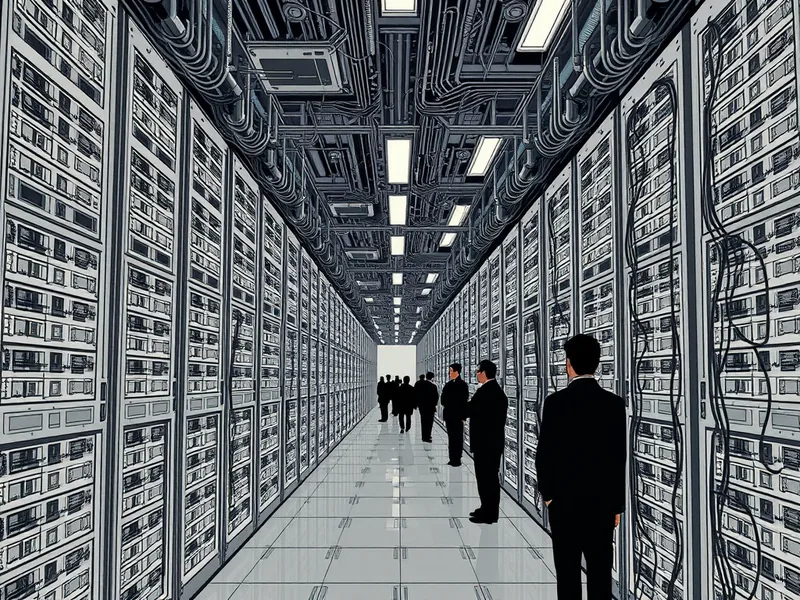
Compliance failures are compounding the reputational exposure. A Microsoft-backed facility, the DataOne data center in New Jersey, has reportedly been running gas-fired generators without the required federal permits, according to Floodlight. That is not a hypothetical regulatory risk. It is an active violation at a facility tied to one of the largest AI infrastructure spenders in the market. Meanwhile, the EPA is moving to eliminate a rule that currently requires public notice and comment before certain industrial air permits are issued, a change advocates say would let developers break ground with even less community visibility than they have today. In the near term that might smooth some approvals. Longer term, it removes an early-warning mechanism that developers have relied on to negotiate concessions before opposition hardens into litigation or moratoriums.
Personnel turnover adds another layer of uncertainty. Chris Malone, OpenAI's head of data centers and a key executive on its build-out plans, departed the company last week after roles at Meta and Google. He had reported directly to OpenAI president Greg Brockman before a reorganization changed that structure earlier this year. Executive departures at this level, in the middle of an aggressive capacity expansion, are worth tracking closely.
Employee sentiment inside the hyperscalers themselves is shifting too. Amazon employees have petitioned Seattle to slow new data center approvals, an internal signal that the social license for this buildout is fraying even among the workforce building it.
The core risk here is not that AI demand disappoints. It is that the infrastructure required to meet that demand runs into a patchwork of local vetoes, permitting delays, and energy cost pass-throughs that were not priced into original capex timelines. Watch state-level legislative action in Texas, Ohio, and Pennsylvania, where Governor Josh Shapiro, once a supporter, signed a wide-ranging executive order reining in data center development. Watch utility rate cases in markets where gas-fired capacity is being built specifically to serve single tenants rather than the grid. And watch whether EPA's rollback of public comment requirements actually accelerates permitting or instead invites more litigation, since fewer opportunities for early input often just push objections into the courts later, where they are harder and more expensive to resolve.
For portfolio purposes, the buildout remains a legitimate multi-year growth story. But the execution risk has shifted from supply chain and chip availability toward something less quantifiable: local political consent. That is a harder variable to model, and it deserves a real discount rate, not an afterthought in the bull case.
Tags
Original Sources
All the latest updates on AI data centers
↗ https://www.theverge.com/ai-artificial-intelligence/902546/data-centers-ai-energy-power-grids-controversy
About the author
Marcus began tracking AI's market implications in 2016, noticing AI-related patent filings accelerating ahead of earnings upgrades before most of the sell-side had caught on. A former fixed-income quantitative analyst, he spent two decades building models that priced risk across emerging markets before pivoting to cover the economic impact of AI full-time. His writing translates opaque technical developments into clear risk/reward terms — and he's rarely diplomatic about the gap between AI valuations and underlying fundamentals. He believes most market participants still underestimate AI's long-run deflationary effect on knowledge work.
More from The Analyst →This Week's Edition
8 September 2026
23 articles
Related Articles

SpaceX's AI Unit Drives Return to Profitability, Overtakes Rocket Business
Finance & Markets · 5 min
Ex-OpenAI Research Chief Raises $230 Million for AI Manufacturing Startup Arda at $1.5 Billion Valuation
Finance & Markets · 6 min

Readily Raises $11M Series A to Automate Healthcare Compliance as Federal Fines Surge
Finance & Markets · 5 min
Related Articles
SpaceX's AI Unit Drives Return to Profitability, Overtakes Rocket Business
Finance & Markets · 5 min
Ex-OpenAI Research Chief Raises $230 Million for AI Manufacturing Startup Arda at $1.5 Billion Valuation
Finance & Markets · 6 min
Readily Raises $11M Series A to Automate Healthcare Compliance as Federal Fines Surge
Finance & Markets · 5 min
More Stories
© 2026 Cedar & Bloom. All rights reserved.
