The Drum · Weekly AI news, freeSubscribe →

Share
As federal policies shift to end animal testing, xenotransplantation researchers face a critical juncture that could either halt or accelerate their quest to save human lives.
The field of xenotransplantation, where pig organs are transplanted into humans, stands on the brink of a major breakthrough. However, new federal policies aimed at ending all federally funded animal testing may jeopardize this progress. Health Secretary Robert F. Kennedy Jr.'s decision to phase out such testing is rooted in ethical concerns and the belief that animal models are unreliable for predicting human health outcomes.
Joshua Mezrich, a professor of surgery at the University of Wisconsin and holder of the Mark A. Fischer Chair in Transplantation, argues that while the intent behind these policies is noble, they could set back critical medical research. In November 2025, Centers for Disease Control and Prevention (CDC) staff were informed that primate studies would be phased out, with animals being transferred to sanctuaries. The National Institutes of Health (NIH), the largest funder of biological sciences in the U.S., has also stopped issuing funding opportunities exclusively for animal models.
The push to end animal experimentation is driven by a deep ethical commitment to reducing animal suffering and the belief that these tests often fail to predict human outcomes accurately. Kennedy's stance is clear: "The predictivity of animal models is very, very poor for human health outcomes." This has led to significant changes in how research is conducted, with one of the eight NIH-funded National Primate Research Centers already shuttered and another exploring conversion into an animal sanctuary.
However, xenotransplantation researchers like Mezrich contend that animal testing remains a crucial step in ensuring the safety and efficacy of these procedures. "We need to understand how pig organs will function and be accepted by human bodies," he explains. "Without this critical phase of testing, we risk moving forward with incomplete data, which could have severe consequences for patients."
The debate is not just about ethics versus science; it's about finding a balanced approach that respects both animal welfare and the potential to save human lives. New approach methodologies (NAMs), such as in vitro models and computer simulations, are being developed but are not yet advanced enough to fully replace animal testing. Mezrich acknowledges the importance of these alternatives but stresses that they must be rigorously tested alongside traditional methods to ensure their reliability.
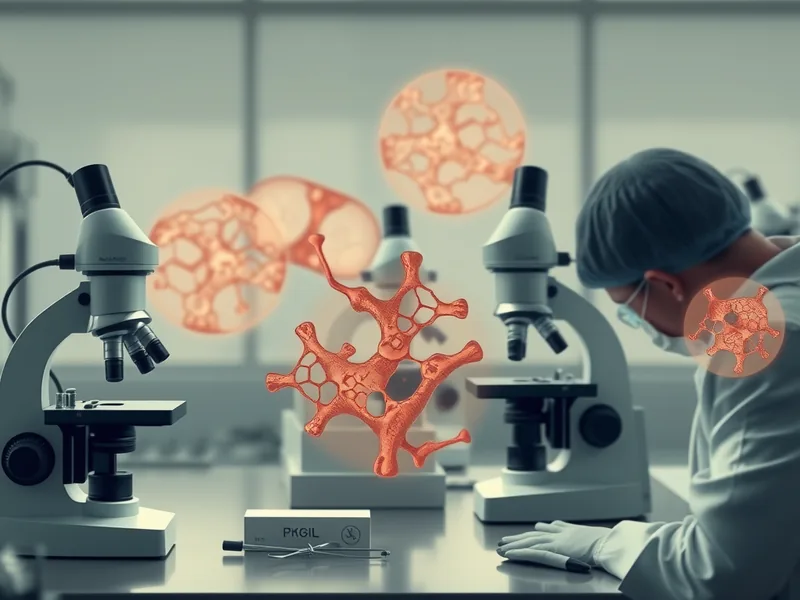
The stakes are high for patients awaiting organ transplants. Every year, thousands of people die while waiting for a suitable donor organ. Xenotransplantation offers a promising solution by providing a virtually unlimited supply of organs. However, without the ability to conduct thorough preclinical testing in animals, researchers may be forced to delay or abandon these life-saving innovations.
Mezrich points out that the transition to NAMs must be gradual and carefully managed. "We need a hybrid approach where we use both animal models and new methodologies to validate results," he says. "This will allow us to continue making progress while reducing our reliance on animals."
The ethical dilemma of ending animal testing is complex, but it is essential to find a path forward that respects all stakeholders-animals, researchers, and patients. As the medical community navigates these challenges, the ultimate goal remains clear: to advance science in a way that maximizes benefits for human health while minimizing harm to animals.
The future of xenotransplantation hangs in the balance, and the decisions made today will have long-lasting implications for both animal welfare and medical innovation.
Tags
Original Sources
Ending animal testing could set back xenotransplantation just as the field is poised for a breakthrough
↗ https://www.statnews.com/2026/06/09/pig-organ-transplant-animal-testing-impact-xenotransplantation
About the author
Amara's entry point into AI was an epidemiology role at a London research hospital, where she spent five years studying how digital health tools reached — or conspicuously failed to reach — underserved communities. Watching early algorithmic systems in healthcare quietly entrench existing inequalities, she redirected her career toward the systemic consequences of AI at scale. She covers AI through an unflinching lens: who benefits, who bears the cost, and what evidence actually says versus what the press release claims. Her writing is calm and precise, but she doesn't mistake balance for neutrality.
More from The Steward →This Week's Edition
15 June 2026
18 articles
Related Articles

Christina Applegate's MS Misdiagnosis Reveals a Painful Diagnostic Gap in Neurology
Health & Science · 5 min

IEEE Expands Smart City Advisory Services as Municipal Tech Budgets Grow
Products & Applications · 5 min

Robot Infants Are Being Built to Study Human Emotion. Should They Look So Real?
Products & Applications · 5 min
Related Articles
Christina Applegate's MS Misdiagnosis Reveals a Painful Diagnostic Gap in Neurology
Health & Science · 5 min
IEEE Expands Smart City Advisory Services as Municipal Tech Budgets Grow
Products & Applications · 5 min
Robot Infants Are Being Built to Study Human Emotion. Should They Look So Real?
Products & Applications · 5 min
More Stories
© 2026 Cedar & Bloom. All rights reserved.
