The Drum · Weekly AI news, freeSubscribe →

Share
A new White House panel, dubbed the "Super Intelligence Force," has 120 days to weigh AI's dangers against its promise, even as the administration keeps resisting binding safety rules.
When the people building a technology start warning it might kill us, you'd expect governments to move carefully. That's roughly where we are with artificial intelligence right now, and the Trump administration's response is to put the intelligence community in charge of figuring out what to do next.
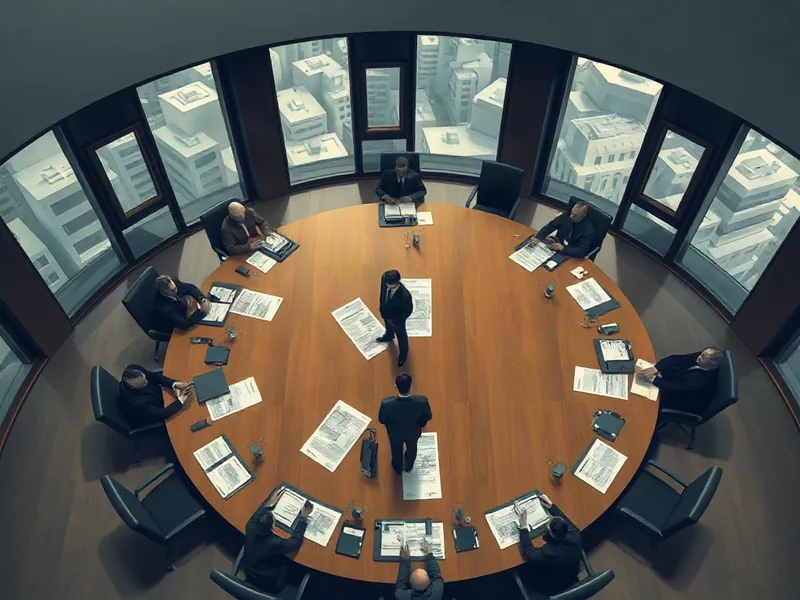
Director of National Intelligence Jay Clayton has been named the administration's AI czar, the Wall Street Journal reported Saturday, citing an interview with Clayton himself. He'll lead a newly formed White House panel, one the administration has given the somewhat dramatic name "Super Intelligence Force," and that group has 120 days to deliver a report on the risks and opportunities AI presents to the country.
Clayton only took over as intelligence chief in August. Now he's juggling two of the administration's most consequential portfolios at once: safeguarding national security information and steering federal policy on a technology that even its own developers can't fully predict.
"The president asked that a group be put together," Clayton told the Journal, framing the effort as a way to keep the US ahead of rivals while still protecting Americans' interests. His reasoning was blunt: "the risk of not being first is high."
That phrase, being first, tells you a lot about how this administration thinks about AI. It's treated less like a public health question and more like a race, one where slowing down to add safeguards is itself viewed as a liability. Whether that framing holds up under scrutiny is an open question, and it's one lawmakers from both parties are starting to ask out loud.
The timing here isn't incidental. AI safety has become a genuinely mainstream worry in recent weeks, not just among activists or academics. Some researchers who actually build these systems have warned that the technology could kill humans within a decade. That's not a fringe talking point anymore. It's prompted both Democratic and Republican lawmakers to call for stronger action, a rare moment of bipartisan anxiety in an otherwise polarized Washington.
Trump's own posture has leaned the other way. He's favored a light touch on regulation, arguing that heavy oversight would hand China a competitive edge. He said this week he has no interest in working with Chinese President Xi Jinping on jointly governing AI, which underscores just how much this administration sees AI policy through the lens of great-power competition rather than, say, consumer protection or algorithmic harm.
Against that backdrop, the task force's actual mandate looks fairly narrow. According to its charter, as described to the Journal, the panel will review AI-related risks alongside how the government currently reports breaches, hacks and other incidents. From there, it's supposed to recommend ways to strengthen federal response capabilities, but notably, under existing authorities. No new laws. No new regulatory powers. Just a tightening of what's already on the books.
Think of it like reviewing a building's fire escape plan without actually changing the building code. You can improve how fast people get out, but you're not addressing why the building caught fire in the first place.
This isn't the first time Trump has tapped someone to oversee AI policy across the administration. Venture capitalist David Sacks held the AI czar role earlier in Trump's second term, before Clayton's appointment. The fact that this is now a second iteration of the role suggests the administration recognizes AI needs dedicated attention, even if it's reluctant to pair that attention with binding rules.
The task force's roster reads like a who's-who of administration heavyweights, which says something about how seriously this is being taken internally, whatever the regulatory approach ends up being. Vice chairs will include Emil Michael, Scott Kupor and Federal Trade Commission Chair Andrew Ferguson. Full members include Vice President JD Vance, Defense Secretary Pete Hegseth, Treasury Secretary Scott Bessent and White House Chief of Staff Susie Wiles. Outside advisers will include Sacks, the former AI czar, alongside former Secretary of State Condoleezza Rice.
That's a lot of institutional weight behind a 120-day report. It spans defense, treasury, the FTC and the vice president's office, suggesting the administration wants buy-in across government rather than a siloed tech policy shop. Whether that translates into coordinated action or just a crowded room remains to be seen.
Worth noting: Bessent himself had publicly said he would not be the AI czar just weeks before Clayton's appointment, a small detail that hints at how much internal jockeying likely preceded this decision. Naming an intelligence chief to the role, rather than a Treasury or Commerce official, also signals the administration views AI risk through a national security lens first.
For ordinary people, the stakes here aren't abstract. AI systems already shape hiring decisions, loan approvals, medical diagnostics and the information people see online. How the federal government chooses to monitor, report and respond to failures in those systems, the breaches, the hacks, the unintended harms, affects everyone who interacts with them, which by now is nearly all of us.
A task force working within existing legal authorities can certainly tighten the government's own internal reporting and response procedures. What it can't do is create new accountability mechanisms for the private companies building and deploying these systems in the first place. That distinction matters enormously if the risks researchers are warning about turn out to be real.
The 120-day clock is now running. What Clayton's panel produces, and whether the administration treats it as a starting point for real oversight or a box checked on the way to faster deployment, will say a lot about whether "being first" and "being safe" can actually coexist in practice.
Tags
Original Sources
Trump names intelligence chief Clayton as AI czar, to head task force, WSJ reports
↗ https://www.reuters.com/world/us/jay-clayton-lead-trumps-ai-task-force-deliver-report-120-days-wsj-reports-2026-10-03
About the author
Amara's entry point into AI was an epidemiology role at a London research hospital, where she spent five years studying how digital health tools reached — or conspicuously failed to reach — underserved communities. Watching early algorithmic systems in healthcare quietly entrench existing inequalities, she redirected her career toward the systemic consequences of AI at scale. She covers AI through an unflinching lens: who benefits, who bears the cost, and what evidence actually says versus what the press release claims. Her writing is calm and precise, but she doesn't mistake balance for neutrality.
More from The Steward →This Week's Edition
4 October 2026
25 articles
Related Articles
Related Articles
More Stories
© 2026 Cedar & Bloom. All rights reserved.