The Drum · Weekly AI news, freeSubscribe →

Share
As the US ramps up chip production with the CHIPS Act, China pushes forward despite sanctions, sparking a high-stakes competition that could reshape global tech leadership and economic stability.
The global semiconductor industry has become a strategic battleground between the United States and China, with both nations vying for dominance in chip manufacturing. The U.S. government's recent initiatives under the CHIPS Act aim to bolster domestic production while simultaneously implementing sanctions to hinder China's progress. Despite these efforts, China continues to expand its semiconductor capabilities, presenting significant challenges and opportunities for both countries.
The semiconductor industry is critical to economic security and technological advancement. Shortages of chips have led to factory shutdowns worldwide, contributing to inflationary pressures. Additionally, the growing demand for advanced chips in remote work and artificial intelligence (AI) has further underscored the importance of a stable and robust supply chain. The U.S. government's two-pronged strategy-supporting domestic manufacturing and imposing sanctions on China-aims to secure America's position in this vital sector.
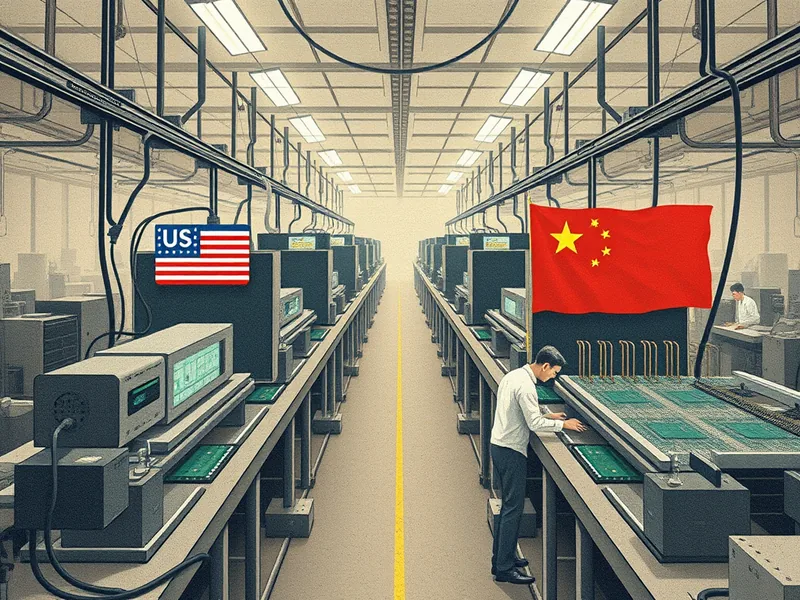
The CHIPS Act, passed by Congress, provides billions of dollars in subsidies to incentivize semiconductor manufacturers to build cutting-edge fabricators within the United States. This initiative has led to a significant increase in construction spending and the establishment of new manufacturing facilities. Early projects are already contributing to higher chipmaking employment and production levels.
To hinder China's progress, the U.S. has implemented substantial sanctions and export restrictions on semiconductor technology and equipment. These measures aim to limit China's access to advanced chips and manufacturing capabilities, thereby slowing its technological advancement in critical areas such as AI and high-performance computing.
Despite the sanctions, China continues to invest heavily in its semiconductor industry. The country has launched several large-scale projects to build new fabrication plants and is actively recruiting global talent to bolster its R&D efforts. China's long-term strategy involves achieving self-sufficiency in chip production, reducing its reliance on foreign suppliers.
The U.S.-China semiconductor race is a complex and dynamic competition with significant implications for both nations' economic and technological futures. While the U.S. has taken proactive steps to enhance domestic manufacturing and impose sanctions, China's resilient efforts pose ongoing challenges. The outcome of this race will likely shape the global technology landscape for years to come.
Tags
Original Sources
About the author
Marcus began tracking AI's market implications in 2016, noticing AI-related patent filings accelerating ahead of earnings upgrades before most of the sell-side had caught on. A former fixed-income quantitative analyst, he spent two decades building models that priced risk across emerging markets before pivoting to cover the economic impact of AI full-time. His writing translates opaque technical developments into clear risk/reward terms — and he's rarely diplomatic about the gap between AI valuations and underlying fundamentals. He believes most market participants still underestimate AI's long-run deflationary effect on knowledge work.
More from The Analyst →This Week's Edition
15 August 2024
29 articles
Related Articles
Related Articles
More Stories
© 2026 Cedar & Bloom. All rights reserved.