The Drum · Weekly AI news, freeSubscribe →

Share
A drone strike on a German airport has sharpened NATO's fears about covert sabotage. The US ambassador says the alliance must respond firmly, but the burden of defense still falls on individual nations.
Imagine waking up to news that a drone tried to hit your local airport, and the country responsible for it might be a foreign power testing how far it can push before anyone pushes back. That's the reality facing NATO members right now, and it's why the alliance's top American diplomat is drawing a clear line.
Matthew Whitaker, the U.S. ambassador to NATO, said Saturday that member states should not tolerate deliberate acts of hybrid warfare, a term for the gray-zone tactics that fall short of open military conflict but still aim to destabilize, intimidate, or damage a country. Sabotage, cyberattacks, and drone incursions all fall under this umbrella. Speaking on the sidelines of a business conference in Cernobbio, Italy, Whitaker said the United States will stand behind allies as they respond.
His comments came just days after an attempted drone attack at Germany's Leipzig/Halle Airport, an incident Berlin has publicly blamed on Russia. For Whitaker, that attack represents something different from the drone incursions NATO has grown almost accustomed to over the past few years, the kind where Russian drones aimed at Ukraine occasionally stray across borders into Poland or Romania. Those incidents, however alarming, have largely been treated as collateral effects of a war next door.
Leipzig felt different. "Then you have what I would call the more concerning hybrid actions like we saw in Leipzig, like we have seen in Poland," Whitaker said. The distinction matters. A stray drone suggests carelessness or bad luck. A targeted strike suggests intent, and intent changes how an alliance built on collective defense has to respond.
Think of it like the difference between a car accidentally drifting into your lane and someone deliberately swerving toward you. Both are dangerous. Only one is an attack. NATO's challenge has been figuring out, in real time, which category a given incident falls into, and doing so fast enough to respond credibly.
Whitaker suggested Germany's own investigation into the Leipzig incident is a model for how that should work. "If we can identify who's doing it, which Germany did, we make sure we express strongly that is unacceptable and we will not tolerate it," he said. Identification, in other words, is the first step toward accountability. Without it, allegations of hybrid warfare risk becoming diplomatic noise rather than actionable intelligence.
That's a harder task than it sounds. Hybrid warfare works precisely because it's designed to leave room for deniability. A drone can be shot down, but proving who launched it and why takes time, forensic evidence, and often intelligence-sharing between multiple governments. Germany's willingness to publicly name Russia as the responsible party is itself notable, since many governments prefer ambiguity over confrontation when hard proof is thin.
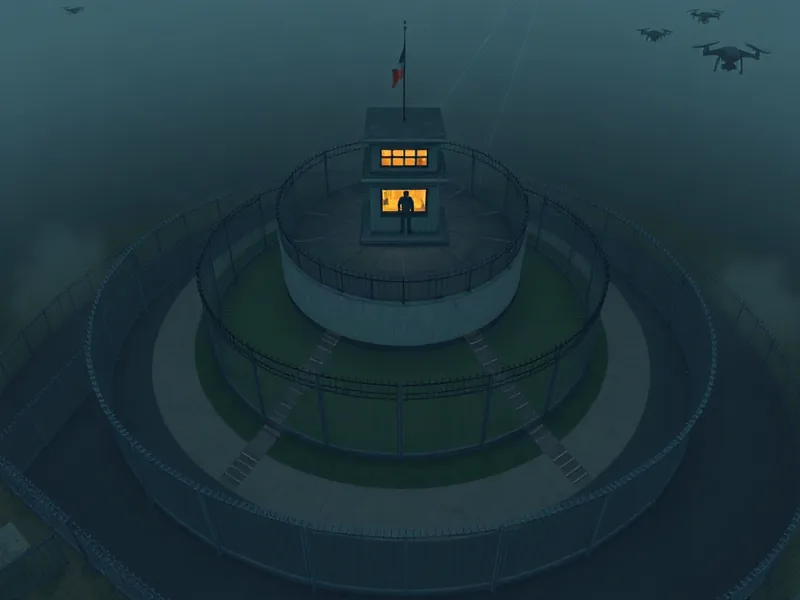
Whitaker also flagged a broader vulnerability: critical infrastructure. Energy assets, in particular, sit near the top of the list of likely targets, he said, and national authorities need to be watching them closely. This isn't a hypothetical concern. Pipelines, power grids, and fuel depots have long been recognized as soft targets in hybrid conflict scenarios, precisely because disrupting them causes outsized economic and social pain without requiring a single conventional weapon to cross a border.
The energy angle also connects to a pattern NATO officials have been tracking for months. Drone incursions tied to the war in Ukraine have already tested air defenses across Poland and other eastern member states. Layering deliberate hybrid attacks on top of that ongoing low-level pressure raises the stakes considerably. It's one thing to intercept a wayward drone. It's another to defend against an adversary actively probing for weaknesses in energy security and critical systems.
Whitaker was careful to frame the response as primarily a national responsibility. Each NATO member is expected to lead its own defense against hybrid threats within its borders, whether that means beefing up drone detection near airports or tightening security around power infrastructure. But he stressed that the United States sees itself as a partner in that effort, not a bystander. "The response to these challenges is primarily national, but the United States supports countries when they are dealing with these acts," he said.
That balance, national responsibility paired with allied support, reflects how NATO has generally approached threats that don't trigger its Article 5 mutual defense clause outright. Hybrid attacks are often designed to stay below that threshold, making them a persistent irritant rather than a clear act of war. That ambiguity is part of the strategy. It forces alliance members to respond individually and unevenly, rather than triggering the kind of unified military response a conventional attack would demand.
The Leipzig incident, paired with the pattern of drone activity over Poland, suggests this ambiguity is being tested more frequently. Whitaker's remarks signal that Washington wants allies to treat these incidents with the seriousness they deserve, rather than writing them off as isolated nuisances.
For ordinary people living near airports, power plants, or border regions, hybrid warfare isn't an abstract geopolitical concept. It's the drone that might disrupt their flight, the potential blackout, the quiet erosion of a sense of safety that used to feel like a given. These attacks are designed to unsettle without triggering outright war, which makes them harder to counter and easier for the public to underestimate.
NATO's credibility rests partly on showing it can identify these threats and respond decisively when it does. Whitaker's comments make clear that Washington views a firm, coordinated response as essential, both to deter further incidents and to reassure citizens that their governments are taking the threat seriously. Whether that resolve holds as incidents multiply will say a lot about the alliance's staying power in a conflict that increasingly plays out in shadows rather than open battlefields.
Tags
Original Sources
NATO will not tolerate hybrid actions against members, US envoy says
↗ https://www.reuters.com/world/nato-will-not-tolerate-hybrid-actions-against-members-us-envoy-says-2026-09-05
About the author
Amara's entry point into AI was an epidemiology role at a London research hospital, where she spent five years studying how digital health tools reached — or conspicuously failed to reach — underserved communities. Watching early algorithmic systems in healthcare quietly entrench existing inequalities, she redirected her career toward the systemic consequences of AI at scale. She covers AI through an unflinching lens: who benefits, who bears the cost, and what evidence actually says versus what the press release claims. Her writing is calm and precise, but she doesn't mistake balance for neutrality.
More from The Steward →This Week's Edition
6 September 2026
23 articles
Related Articles

AI Giants Move to Govern Themselves, and Decide Who Gets the Winnings
Policy & Regulation · 5 min

FDA Weighs Treating Generative AI Medical Tools Like Physicians, Not Devices
Policy & Regulation · 5 min

Ottawa Expands AI Funding for B.C. Businesses Under $700-Million National Strategy
Policy & Regulation · 5 min
Related Articles
AI Giants Move to Govern Themselves, and Decide Who Gets the Winnings
Policy & Regulation · 5 min
FDA Weighs Treating Generative AI Medical Tools Like Physicians, Not Devices
Policy & Regulation · 5 min
Ottawa Expands AI Funding for B.C. Businesses Under $700-Million National Strategy
Policy & Regulation · 5 min
More Stories
© 2026 Cedar & Bloom. All rights reserved.
