The Drum · Weekly AI news, freeSubscribe →

Share
A newly surfaced intelligence memo describes Iranian lethal plotting against US citizens as far along, prompting staffing pullbacks across Gulf embassies and raising hard questions about who protects civilians caught in a widening regional conflict.
For the families of American diplomats and government workers stationed across the Middle East, the past week has delivered a gut-check. A senior intelligence official in the Trump administration has warned that Iran has significantly escalated its efforts to target US personnel, and that lethal plots against American citizens have moved into what officials call "advanced stages." That phrase matters. It is the difference between a vague threat assessment and something closer to an active countdown.
The warning came in a memo from Director of National Intelligence Jay Clayton, addressed to Secretary of State Marco Rubio and copied to CIA Director John Ratcliffe. Dated October 23 and first reported by Axios, the document was unclassified but unambiguous. "Through various channels, we have received intelligence that Iran has substantially increased efforts to target US personnel," Clayton wrote. He added that the plotting efforts "have reached advanced stages in both the Middle East and certain other countries."
Think of an intelligence memo like this as a smoke detector going off in a house where everyone already smelled something burning. The region has been living under the shadow of an Iran war for nearly eight months now. What changed this week is the specificity and urgency of the warning, not the underlying tension itself.
The timing is not coincidental. Washington scaled back staffing at its mission in Saudi Arabia earlier this week, responding to intensified attacks by Iran-allied Houthi forces. Those attacks, part of one front in the broader regional conflict, have coincided with a surge in strikes on commercial shipping in the Strait of Hormuz, a narrow waterway that carries a huge share of the world's oil exports. When ships start getting hit more often in a chokepoint like that, it is usually a sign that the actors involved feel emboldened, or cornered, or both.
Earlier this month, sources told Reuters that Iran was preparing a more forceful response should the United States resume large-scale military attacks on its territory. Put together, the picture is one of a conflict that has not de-escalated so much as it has diversified, spreading pressure across multiple fronts: shipping lanes, embassy staffing, and now, apparently, direct plots against individual Americans.
On Wednesday, the State Department ordered non-emergency government employees and their family members to leave US diplomatic missions in Saudi Arabia. Officials told Reuters the plan extends further, with family members being withdrawn from a number of other missions across the region as well. This is not evacuation in the dramatic, cinematic sense. It is a quieter, more procedural drawdown, the kind of move that rarely makes headlines on its own but signals a serious shift in risk calculus behind closed doors.
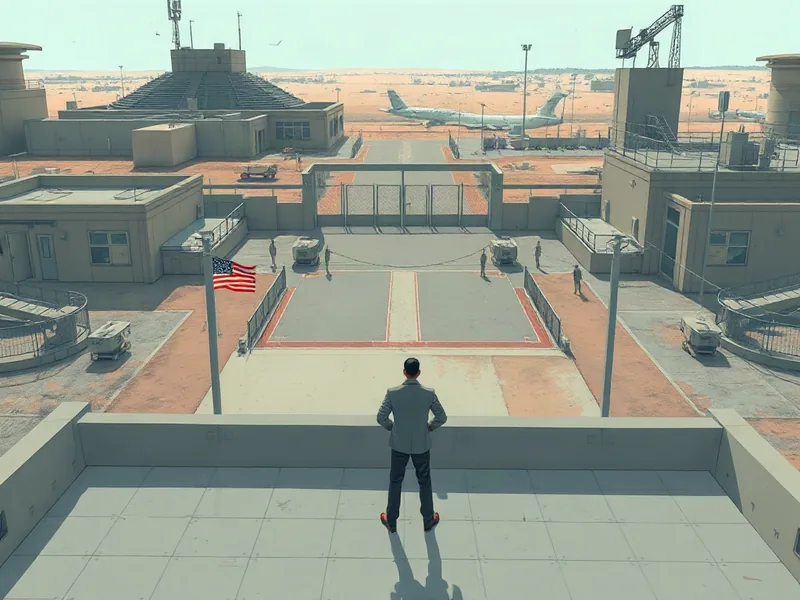
On Saturday, the State Department updated travel advisories for more than a dozen countries across the Gulf and Middle East, including Saudi Arabia, Qatar, the United Arab Emirates, Iraq and Israel. The stated reason was an increased threat from Iran-aligned Houthi forces. A US official described the process in plain terms: "When it comes to our staffing at embassies, we constantly evaluate new information about the security environment." The official added that the threat of Houthi attacks, combined with Iranian terror plots targeting US officials, is directly informing staffing adjustments at embassies currently under what is called Restricted Operations Status.
That designation is worth unpacking briefly, because the terminology can obscure something fairly important. Restricted Operations Status gives the State Department flexibility to adjust personnel levels without having to publicly announce a formal change in a mission's status. In practical terms, it means the government can quietly thin out embassy staffing in response to threats, without triggering the kind of public alarm that a full evacuation order would. It is a tool for managing risk incrementally, rather than reactively.
For the people actually working inside these missions, though, incremental risk management still feels like living under threat. Families get pulled out. Colleagues disappear from the building. The sense of normalcy erodes a little more each week, even if no single announcement feels dramatic on its own. That slow accumulation of caution is its own kind of cost, one that does not show up in casualty figures but shapes daily life for thousands of government employees and their relatives stationed abroad.
The broader conflict shows no sign of cooling. The Iran war is approaching its ninth month, and it has visibly weighed on domestic politics in the United States, with President Trump's approval ratings taking a hit ahead of midterm elections on November 3. Foreign policy crises have a way of bleeding into domestic political calculations, and this one appears to be no exception. Voters weighing their choices at the ballot box are doing so against a backdrop of ongoing military tension, embassy drawdowns, and now, direct warnings about plots against American citizens.
Intelligence memos like this one rarely translate into immediate, visible action for most people outside government circles. But they matter because they reflect a shift in how seriously officials are treating a threat that has, until now, remained somewhat abstract for the general public. When a Director of National Intelligence uses language like "advanced stages," it suggests the window for prevention may be narrowing. For the diplomats, government workers, and families affected by these staffing changes, the stakes are immediate and personal. For everyone else, it is a reminder that regional conflicts rarely stay contained to the battlefield. They ripple outward, into embassy hallways, shipping lanes, and eventually, into the decisions voters make about who should be steering foreign policy next.
Tags
Original Sources
Iran has ramped up efforts to target US personnel, intelligence memo warns
↗ https://www.reuters.com/world/middle-east/iran-has-ramped-up-efforts-target-us-personnel-intelligence-memo-warns-2026-10-24
About the author
Amara's entry point into AI was an epidemiology role at a London research hospital, where she spent five years studying how digital health tools reached — or conspicuously failed to reach — underserved communities. Watching early algorithmic systems in healthcare quietly entrench existing inequalities, she redirected her career toward the systemic consequences of AI at scale. She covers AI through an unflinching lens: who benefits, who bears the cost, and what evidence actually says versus what the press release claims. Her writing is calm and precise, but she doesn't mistake balance for neutrality.
More from The Steward →This Week's Edition
25 October 2026
18 articles
Related Articles

Survivor Describes Gunman Pointing Handgun at Him During Deadly Jordan Church Attack
Security & Risk · 5 min

The PHP Meltdown Is a Preview of How AI Will Weaponize Ordinary Bugs
Security & Risk · 5 min

IEEE Expands Smart City Advisory Services as Municipal Tech Budgets Grow
Products & Applications · 5 min
Related Articles
Survivor Describes Gunman Pointing Handgun at Him During Deadly Jordan Church Attack
Security & Risk · 5 min
The PHP Meltdown Is a Preview of How AI Will Weaponize Ordinary Bugs
Security & Risk · 5 min
IEEE Expands Smart City Advisory Services as Municipal Tech Budgets Grow
Products & Applications · 5 min
More Stories
© 2026 Cedar & Bloom. All rights reserved.
