The Drum · Weekly AI news, freeSubscribe →

Share
This project blends ancient philosophy with cutting-edge tech, using React and Three.js to visualize concepts like duality and impermanence through mesmerizing geometric patterns inspired by Lao Tzu's teachings.
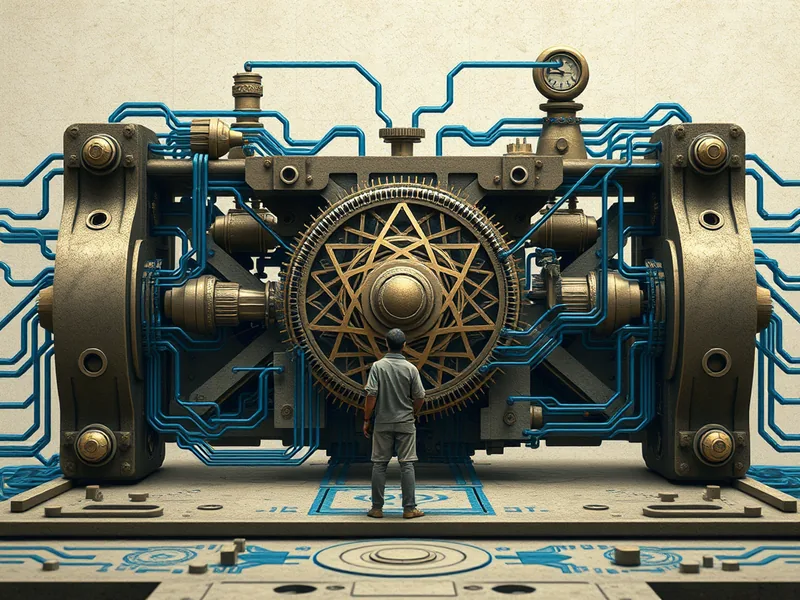
In a unique blend of ancient wisdom and modern technology, the concept of "Vibe Coding" has found a new expression through a fascinating React and Three.js project. This project, inspired by Lao Tzu and adapted by music producer Rick Rubin, explores the philosophical themes of duality, form vs. formlessness, and the eternal versus the temporal through interactive visualizations.
The core of this project is a React component named HankiesInTheWind, which uses Three.js to create intricate geometric patterns that emerge from mathematical formulas. These patterns symbolize how the nameable arises from the unnameable-a central theme in Lao Tzu’s philosophy.
The HankiesInTheWind component is designed to be flexible, allowing for customization of the initial zoom level. Here’s a breakdown of how it works:
interface HankiesInTheWindProps {
  initialZoom?: number;
}
const containerRef = useRef<HTMLDivElement>(null)
const [currentZoom, setCurrentZoom] = useState(initialZoom)
The useEffect hook is crucial for setting up and tearing down the Three.js scene. It ensures that the scene is properly initialized when the component mounts and cleaned up when it unmounts.
useEffect(() => {
  if (!containerRef.current) return
let animationFrameId: number | null = null let scene: any = null let camera: any = null let renderer: any = null let lineGroups: any[] = [] let cameraZoom = currentZoom // Control camera zoom distance (lower number = closer)
// Initialize Three.js scene, camera, and renderer const initScene = () => { scene = new THREE.Scene() camera = new THREE.PerspectiveCamera(75, window.innerWidth / window.innerHeight, 0.1, 1000) renderer = new THREE.WebGLRenderer({ antialias: true }) renderer.setSize(window.innerWidth, window.innerHeight) containerRef.current.appendChild(renderer.domElement)
// Set initial camera position
camera.position.z = cameraZoom

// Add ambient light to the scene
const ambientLight = new THREE.AmbientLight(0xffffff, 0.5)
scene.add(ambientLight)
}
// Create wave sources in a circular pattern const createWaveSources = (time: number, scale: number): WaveSourceProps[] => { const result: WaveSourceProps[] = [] const count = 5
for (let i = 0; i < count; i++) {
  const angle = (i / count) * Math.PI * 2
  const radius = scale * (1 + Math.sin(angle * 3) * 0.2)

  result.push({
    position: [
      Math.cos(angle) * radius,
      0,
      Math.sin(angle) * radius
    ],
    frequency: 2 + Math.sin(angle * 2),
    amplitude: 0.3 + Math.cos(angle) * 0.1,
    phase: time * 3 + angle
  })
}

// Add central source
result.push({
  position: [0, 0, 0],
  frequency: 3,
  amplitude: 0.4,
  phase: time * 4
})

return result
}
// Create interference field geometry const createInterferenceField = (sources: WaveSourceProps[], size: number, resolution: number, time: number) => { const step = size / resolution const heightMap: number[][] = []
for
Tags
Original Sources
↗ https://www.thewayofcode.com/?utm_source=tldrai
About the author
Kai built ML infrastructure at a Bay Area startup before developing an obsession with transformer architectures and inference optimisation that eventually pulled him out of product work entirely. A stint at a compute research lab sharpened his instinct for what actually matters in a model release versus what is marketing. He writes from the inside — from the perspective of someone who has debugged the systems he is describing at three in the morning. He is allergic to hype and instinctively drawn to the unglamorous plumbing questions that everyone else skips over.
More from The Engineer →This Week's Edition
26 May 2025
29 articles
Related Articles
Related Articles
More Stories
© 2026 Cedar & Bloom. All rights reserved.