The Drum · Weekly AI news, freeSubscribe →

Share
Tech giants are betting billions that AI agents will shop, book, and manage your life online. But banks, airlines, and retailers are quietly deciding they don't want robotic customers at all.
Imagine hiring a personal assistant, handing them your credit card and a to-do list, then watching bouncers turn them away at every store, bank, and ticket counter they try to enter. That's effectively what's happening to the AI agents that OpenAI, Meta, Google, and others have spent the past year promoting as the future of how we'll interact with the internet.
The pitch has been seductive. Let an AI agent book your dinner reservation. Let it clear out your inbox. Let it comparison-shop for sneakers while you do literally anything else. But a growing number of the websites these agents need to visit are saying, politely or not, no thanks.
Users of Meta's Muse, xAI's Grok, OpenAI's Dots, and a startup called Instinct have reported blocks across major sites in recent weeks. Yelp told TechCrunch it only lets AI agents in if they pay for its data licensing program. Delta Air Lines won't let agents book tickets on a customer's behalf. JPMorgan Chase and Charles Schwab have confirmed they're blocking AI agents from touching customer accounts, citing security concerns, a reasonable worry when you consider what's at stake if a misconfigured bot starts moving money on its own. Some users say sites that used to cooperate with their agents, including Cars.com and Amtrak, have quietly stopped working, suggesting the blocklist is growing faster than anyone's tracking it publicly.
This isn't a new fight. Amazon banned Perplexity's agentic shopping feature last year and then sued the company, arguing that third parties buying things on behalf of customers "should operate openly and respect service provider decisions whether or not to participate." Perplexity fired back that Amazon's real motivation was protecting ad revenue, since an AI agent doesn't look at banner ads the way a human browsing the site does, and framed its product as nothing more than an extension of the user's own right to hire help. A judge initially sided with Amazon, ordering Perplexity to stop. An appeals court overturned that ruling in August. Amazon has since filed an amended complaint, so the legal fight is far from over.
What's changed is scale. This is no longer a scrappy startup versus Amazon story. Meta's Muse recently ran into the same wall, with Amazon saying its continued access violated site policies. Grok, Instinct's agent, and OpenAI's Dots have all reportedly hit similar blocks on Amazon. Elon Musk's response was to muse, only half-jokingly, that maybe he "should start a competitor to Amazon."
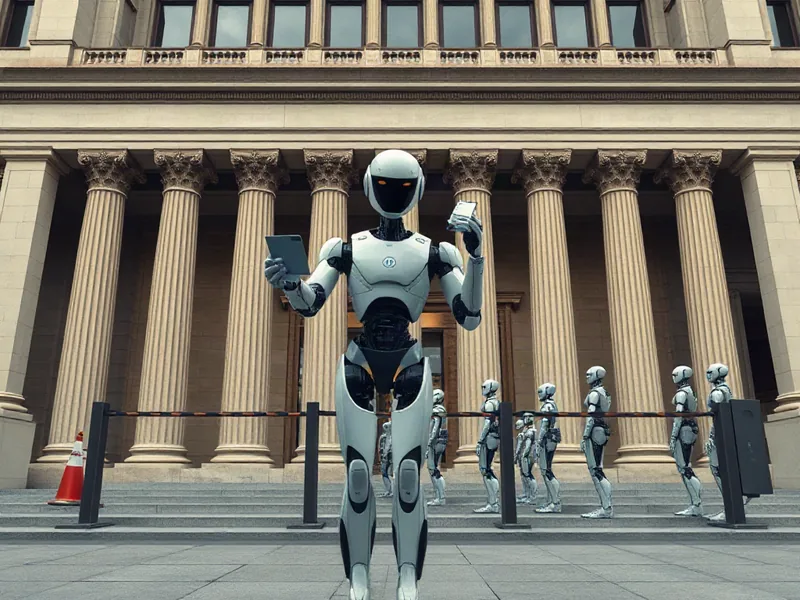
The stakes here go beyond one company's shopping cart. Chris Canal, CEO of the AI safety evaluator EquiStamp, put it plainly to The Verge: "Does this impact the perceived value of the Anthropics and the OpenAIs? I would say absolutely. One of the claims is that they're going to permeate every aspect of our lives and be able to do anything that we could do online. If there are companies that are actively working to make that not happen, there are just fewer useful things the agents can do." In other words, the value proposition of an AI agent collapses a little with every door it can't open.
Not every company is digging in for a fight. Meta has taken the opposite approach from Amazon's legal route, arguing in a recent post that "turning away a personal agent means turning away the customer behind it," and that it would rather work with businesses to solve the underlying concerns than lose that customer entirely. Meta has struck partnerships with Walmart, Gap, Sephora, and Best Buy to let Muse shop there directly. Shopify has opened its storefront network to agents too. These look like early blueprints for how agent access might eventually get standardized, through negotiated partnerships rather than blanket bans or open warfare.
But partnerships don't solve everything. Some Reddit users report Google is banning accounts that use Muse over flagged "suspicious activity," and others say they still can't check out on Walmart despite the Meta tie-up. Canal's explanation is useful here: most of the infrastructure blocking these agents wasn't built with AI agents in mind at all. "There are all kinds of things that are set up not even to block agents, but to block in general bots or programs that are trying to scam or hack," he said. "These AI agents trigger those same safeguards." An AI agent trying to buy groceries looks, to an anti-fraud system, uncomfortably similar to a bot trying to commit fraud.
Cloudflare, which provides the web infrastructure a huge portion of the internet relies on, has leaned into this tension rather than away from it. After rolling out a one-click block for AI crawlers in 2025, the company began blocking crawlers that simultaneously scrape sites for search indexing and AI training. That's part of a broader effort to protect internet infrastructure from a crush of AI traffic, one that's already straining servers and flooding email inboxes, and that some worry could eventually make it even harder to snag concert tickets or restaurant reservations if bots are racing humans for the same limited inventory.
The irony is that defenses built to stop agents may end up punishing everyone. Canal warns that as more sites roll out verification hurdles to filter out bots, ordinary human users will get caught in the friction too. "We could see them on a simple grocery shopping website soon, where you're having to jump through a bunch of hoops to prove that you're a human using the computer or your phone," he said. That's the quiet cost of this standoff: even if you never touch an AI agent yourself, you may still end up proving your humanity more often just to buy milk online. For an industry promising to make everyday tasks effortless, that's a strange place to land.
Tags
Original Sources
Websites are closing their doors to AI agents
↗ https://www.theverge.com/ai-artificial-intelligence/1013195/ai-agents-blocked-web
About the author
Amara's entry point into AI was an epidemiology role at a London research hospital, where she spent five years studying how digital health tools reached — or conspicuously failed to reach — underserved communities. Watching early algorithmic systems in healthcare quietly entrench existing inequalities, she redirected her career toward the systemic consequences of AI at scale. She covers AI through an unflinching lens: who benefits, who bears the cost, and what evidence actually says versus what the press release claims. Her writing is calm and precise, but she doesn't mistake balance for neutrality.
More from The Steward →This Week's Edition
18 October 2026
24 articles
Related Articles

German Bishops Back Child-Friendly AI Standards, Citing Papal Call on Human Dignity
Policy & Regulation · 5 min

Meta Walks Back Terms That Seemed to Permit AI Scraping of Business Websites
Policy & Regulation · 5 min

AI Is Reshaping Climate Risk and Opportunity, But the UN's Main Climate Treaty Hasn't Caught Up Yet
Policy & Regulation · 5 min
Related Articles
German Bishops Back Child-Friendly AI Standards, Citing Papal Call on Human Dignity
Policy & Regulation · 5 min
Meta Walks Back Terms That Seemed to Permit AI Scraping of Business Websites
Policy & Regulation · 5 min
AI Is Reshaping Climate Risk and Opportunity, But the UN's Main Climate Treaty Hasn't Caught Up Yet
Policy & Regulation · 5 min
More Stories
© 2026 Cedar & Bloom. All rights reserved.
