The Drum · Weekly AI news, freeSubscribe →
Share
As health systems consolidate onto single electronic health records, leaders at Intermountain, Northwell and OCHIN reveal the quiet danger: patient histories that look complete but are missing the details that actually keep people safe.
Imagine waking up in an emergency room, unable to speak for yourself. The physician treating you has one job: figure out, fast, what medications you can't tolerate, what's already been tried and failed, and what in your history might kill you if missed. Now imagine that her computer screen shows a tidy, complete-looking chart that is quietly missing half the story.
That's the hidden risk lurking inside one of healthcare's biggest technology projects: merging electronic health records, or EHRs, when hospitals and health systems combine. On paper, the goal is simple and good. Give every clinician, at every location, the same view of the same patient. In practice, pulling off that merger without losing clinically important history is one of the hardest problems in health IT today.
Three organizations who've lived through it, Intermountain Health, Northwell Health and the nonprofit health IT collaborative OCHIN, recently walked through how they protected continuity of care during their own EHR consolidations. Their experiences offer a useful lesson for an industry still consolidating at a rapid pace, and for patients who may never know how much depends on these behind-the-scenes decisions.
There are two broad ways to switch a health system onto a single EHR. You can flip the switch everywhere at once, known as a "big bang" approach. Or you can do it in phases, moving one hospital or clinic at a time.
Intermountain Health, a 33-hospital system based in Salt Lake City, chose the big bang. Ryan Smith, the system's chief digital and information officer, said the appeal was immediate: a single source of truth across the whole organization, starting day one. "That improves continuity of care, strengthens collaboration among care teams, and eliminates many of the challenges that come with operating multiple records simultaneously," he explained.
But concentrating that much change into a single moment comes with a cost. "The trade-off is that risk becomes concentrated into a much shorter period of time," Smith said. Every device. Every workflow. Every integration. Every user account. All of it had to be ready simultaneously, which meant preparing a massive fleet of devices and making sure thousands of caregivers had both the access and the training they needed before go-live.
Northwell Health, New York's largest health system and private employer, took the opposite route. With 28 hospitals and more than 1,000 care locations, Northwell moved to Epic in waves. That introduced its own complications, since patients often receive care across sites that transition at different times, and many providers themselves work across locations on different implementation schedules.
"Maintaining a complete and accurate clinical picture throughout the transition was therefore a critical priority," said Kristin Myers, Northwell's chief digital officer. Teams from the health information exchange, data conversion, informatics, interfaces and clinical leadership worked together to keep information accessible, whether natively inside Epic or through defined pathways like the HIE Clinical Viewer and legacy systems still in use.
Northwell had a head start here. The system already operated a robust internal Clinical Viewer, built originally to maintain connectivity across its many separate legacy EHRs. That foundation let the team migrate a substantial amount of discrete clinical data into Epic: active problems, allergies, medications, selected immunizations, histories, encounters and results, scoped according to data type and source system.
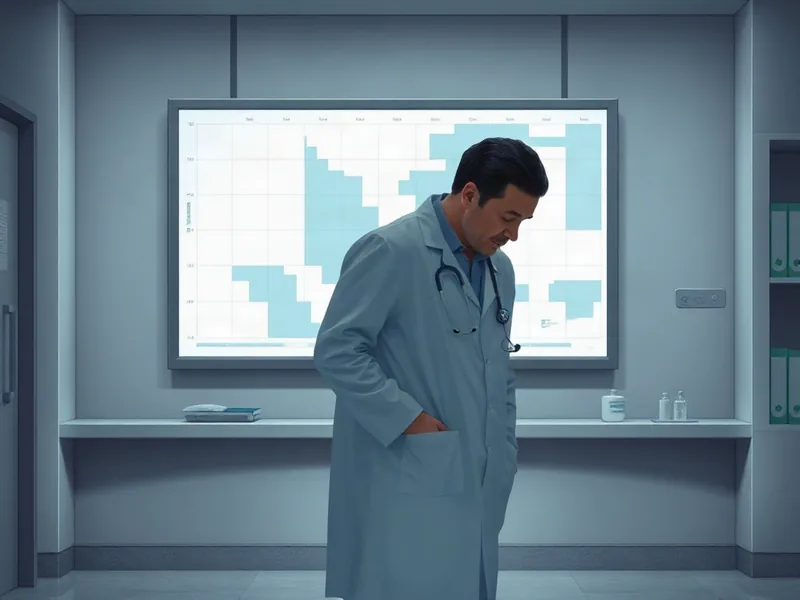
Notably, Northwell didn't try to recreate entire legacy charts inside Epic. Instead, the team used defined lookback periods for different kinds of clinical data. Anything that couldn't or shouldn't convert as structured data, like scanned documents and PDFs, was migrated into a separate repository called OnBase, still reachable from within Epic.
That distinction, between what gets fully converted and what simply gets made accessible, turns out to matter enormously. And it's where the real danger hides.
Dr. David K. Butler, chief health information officer at OCHIN, which supports community health centers, rural hospitals and other underserved providers, put it bluntly: the information clinicians actually rely on in an old chart is rarely the current medication list. It's the negative history. The ACE inhibitor that was stopped because it caused dangerous swelling. The statin a patient couldn't tolerate. "Most conversions prioritize what's active, so what was discontinued, and why, gets left behind," he said.
He points to other quiet failure points too. Was a diagnosis of congestive heart failure on the problem list actually confirmed, or was it a rule-out note from an emergency visit six years ago that never got corrected? Lab results sometimes split into two disconnected trend lines because old and new systems map the same test to different components, so a graph that should show a clear pattern over years instead shows two broken fragments.
"Accessible" sounds like a solved problem to an IT team. It isn't, Butler argued. A data team can reconcile every row, match every table to the source system, and sign off cleanly. The archive can still fail the only test that actually counts: can a covering physician at 2 a.m., caring for a patient she's never met, find what she needs before she has to make a decision. "Technical validation proves the data arrived," he said. "It doesn't prove anyone can use it."
His solution is low-tech but effective. Put nontechnical clinicians, physicians, physician assistants, nurses, in a room with real patient charts. Pick the hardest cases: fifteen years of history, three name changes, a transplant patient, a child with a tangled immunization record. Then ask the kinds of questions clinicians actually ask in practice. Find the last ejection fraction. Which blood pressure medications already failed. Pull up the last note from a given visit. Time how long it takes and count every click.
There's a newer wrinkle complicating all of this: artificial intelligence. Clinicians increasingly open a chart and ask the EHR's built-in AI to summarize years of history in seconds. Good AI tools show their work, listing the specific notes they drew from. But Butler warns that when you check those citations on a converted chart, you may find the AI only partially read old notes, or in some cases couldn't read them at all because only a skeleton came across during migration, a diagnosis, a date, a medication name, nothing more. The summary looks complete. The citations tell a different story.
Epic's own AI feature, Chart Insights, tries to address this by giving clinicians a consolidated patient history with clickable citations back to the original source material, according to Myers. The goal isn't to replace clinical judgment with an algorithm's summary. It's to let clinicians quickly spot discrepancies and confirm details directly with patients, treating the AI output as a starting point rather than a final answer.
That distinction may be the most important lesson here. Technology can move mountains of data overnight. It cannot, on its own, guarantee that the right piece of information surfaces at the right moment for the right decision. As more health systems merge and consolidate their records in the years ahead, that gap between data transferred and knowledge preserved will keep determining whether patients get safer care, or just a cleaner-looking screen.
Tags
Original Sources
When health systems merge EHRs, clinical context is on the line
↗ https://www.healthcareitnews.com/news/when-health-systems-merge-ehrs-clinical-context-line
About the author
Amara's entry point into AI was an epidemiology role at a London research hospital, where she spent five years studying how digital health tools reached — or conspicuously failed to reach — underserved communities. Watching early algorithmic systems in healthcare quietly entrench existing inequalities, she redirected her career toward the systemic consequences of AI at scale. She covers AI through an unflinching lens: who benefits, who bears the cost, and what evidence actually says versus what the press release claims. Her writing is calm and precise, but she doesn't mistake balance for neutrality.
More from The Steward →This Week's Edition
23 October 2026
29 articles
Related Articles

Dallas Conference Puts a Spotlight on Health Tech Innovations With Real Patient Stakes
Health & Science · 6 min

Why Programs Addressing Social Drivers of Health Keep Missing the Mark, and What Would Fix Them
Health & Science · 5 min

Minnesota's Rural Hospitals Warn They're Running Out of Road
Health & Science · 6 min
Related Articles
Dallas Conference Puts a Spotlight on Health Tech Innovations With Real Patient Stakes
Health & Science · 6 min
Why Programs Addressing Social Drivers of Health Keep Missing the Mark, and What Would Fix Them
Health & Science · 5 min
Minnesota's Rural Hospitals Warn They're Running Out of Road
Health & Science · 6 min
More Stories
© 2026 Cedar & Bloom. All rights reserved.
