The Drum · Weekly AI news, freeSubscribe →

Share
As AI becomes more integrated into healthcare, a significant gap is emerging between what patients want and what hospitals are willing to implement. This divide has serious implications for the future of medical decision-making.
In recent years, artificial intelligence (AI) has made remarkable strides in healthcare, from diagnosing diseases to predicting patient outcomes. However, as this technology becomes more prevalent, a growing tension is developing between patients and healthcare providers. While hospitals are increasingly adopting AI tools, many patients remain skeptical or resistant, citing concerns about accuracy, privacy, and the loss of human touch. This divide has significant implications for how medical decisions are made in the future.
Brittany Trang, Ph.D., a health tech reporter at STAT, recently highlighted this issue in her coverage of Stanford Health Care, where patient preferences are playing a crucial role in the adoption of AI technologies. According to Trang, while hospitals see AI as a way to improve efficiency and accuracy, patients often feel that these tools undermine their trust in healthcare providers.
One key area of disagreement is the use of AI for prognostic purposes. Hospitals view AI as a powerful tool for predicting patient outcomes, which can help in resource allocation and treatment planning. For example, AI algorithms can analyze vast amounts of data to identify patterns that might not be apparent to human doctors. This can lead to more personalized and effective care.
However, patients are often wary of these predictions. They worry that AI might make decisions based on cold, impersonal data rather than the nuanced understanding a human doctor can provide. A recent survey conducted by the HEAL-AI Lab at Stanford found that nearly 60% of patients were uncomfortable with AI making critical health decisions for them.
Patient skepticism is rooted in several concerns. First, there's the issue of accuracy. While AI has shown promise, it is not infallible. False positives and false negatives can have severe consequences, especially when they influence life-and-death decisions. For instance, an AI algorithm might incorrectly predict a patient's recovery time, leading to premature discharge or delayed treatment.
Second, patients value the human touch in healthcare. They want to feel heard and understood by their doctors, not just treated as data points. Dr. Jane Smith, a primary care physician at Stanford Health Care, explains, "Patients come to me because they trust my judgment. They want someone who can listen to their concerns and make decisions based on more than just numbers."
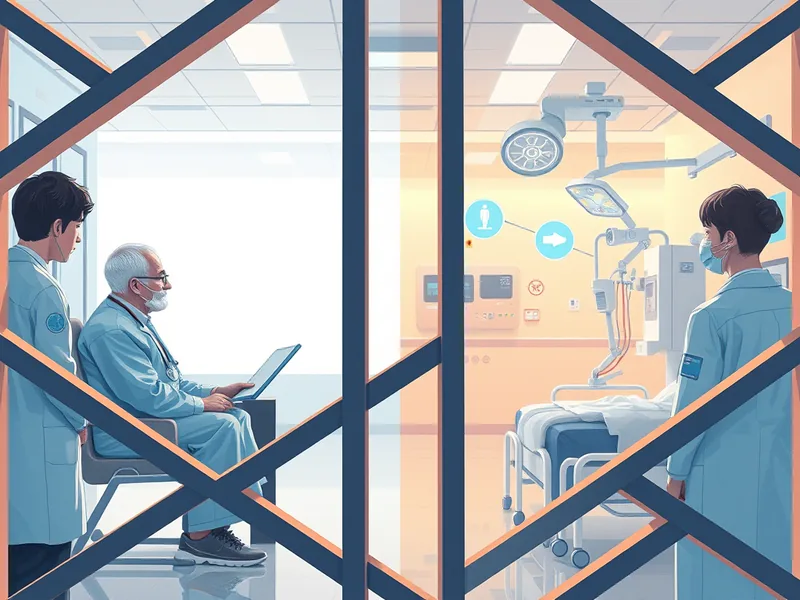
Finally, there are significant privacy concerns. Patients worry about the security of their personal health data when it is fed into AI systems. Data breaches can have serious implications for patients' lives, from insurance rates to employment opportunities.
As the use of AI in healthcare continues to expand, addressing these patient concerns will be crucial. Hospitals and tech companies need to prioritize transparency and communication with patients. This means clearly explaining how AI tools work, what data they use, and how decisions are made. It also involves involving patients in the development and testing of AI technologies.
Regulatory bodies must play a role in ensuring that AI tools meet high standards of accuracy and safety. The Food and Drug Administration (FDA) has already begun to take steps in this direction, but more needs to be done to protect patient rights and privacy.
Ultimately, the goal should be to find a balance where AI enhances healthcare without replacing the human touch. Dr. Smith puts it succinctly, "AI can be a valuable tool, but it should complement, not replace, the relationship between patients and their doctors."
The future of healthcare lies in finding this equilibrium. By addressing patient concerns and ensuring that AI is used ethically and effectively, we can harness the power of technology to improve care while maintaining the trust and well-being of those who need it most.
Tags
Original Sources
Where patients and hospitals disagree about AI
↗ https://www.statnews.com/2026/05/27/health-ai-where-patients-hospitals-disagree-ai-prognosis
About the author
Amara's entry point into AI was an epidemiology role at a London research hospital, where she spent five years studying how digital health tools reached — or conspicuously failed to reach — underserved communities. Watching early algorithmic systems in healthcare quietly entrench existing inequalities, she redirected her career toward the systemic consequences of AI at scale. She covers AI through an unflinching lens: who benefits, who bears the cost, and what evidence actually says versus what the press release claims. Her writing is calm and precise, but she doesn't mistake balance for neutrality.
More from The Steward →This Week's Edition
8 June 2026
18 articles
Related Articles

Christina Applegate's MS Misdiagnosis Reveals a Painful Diagnostic Gap in Neurology
Health & Science · 5 min

IEEE Expands Smart City Advisory Services as Municipal Tech Budgets Grow
Products & Applications · 5 min

Robot Infants Are Being Built to Study Human Emotion. Should They Look So Real?
Products & Applications · 5 min
Related Articles
Christina Applegate's MS Misdiagnosis Reveals a Painful Diagnostic Gap in Neurology
Health & Science · 5 min
IEEE Expands Smart City Advisory Services as Municipal Tech Budgets Grow
Products & Applications · 5 min
Robot Infants Are Being Built to Study Human Emotion. Should They Look So Real?
Products & Applications · 5 min
More Stories
© 2026 Cedar & Bloom. All rights reserved.
