The Drum · Weekly AI news, freeSubscribe →

Share
The wearable breast pump maker's third acquisition in two years signals a broader bet that fragmented maternal health startups are worth more combined than separate. The terms stayed private, but the strategy is clear.
Willow Innovations announced Tuesday that it has acquired two maternal health companies, Swehl and Momtech, in a deal that extends the Mountain View, California-based company's push to consolidate a historically fragmented industry. Terms were not disclosed.
The acquisitions, detailed in a Business Wire release, bring together a breastfeeding education and community platform with a feeding technology company under Willow's roof. Swehl focuses on maternal wellness and breastfeeding support through community and culturally relevant content. Momtech is the parent of mõmi, whose patented feeding technology is designed to mimic breastfeeding mechanics so babies can move more easily between breast and bottle.
Founded in 2014, Willow built its business on wearable breast pumps and related accessories, including a breast milk cooler, alongside a connected app offering maternal care and wellness services. The company has not disclosed revenue or user figures publicly, a gap that makes it harder for outside observers to size the business or benchmark these deals against comparable transactions.
CEO Carolin Archibald framed the acquisitions as a response to structural fragmentation in maternal care. "Motherhood isn't experienced in silos, and the brands supporting mothers shouldn't operate that way either," she said in an email. "We acquired Swehl and Momtech because each brings something that complements what Willow has built." She added that Swehl "reimagined how brands connect with mothers through community, education, and culturally relevant conversations," while Momtech "brings innovative feeding technology that helps us expand how we support families."
Swehl co-founders Betsy Riley and Elizabeth Myer will join Willow following the deal. Hal Eason of mõmi will stay on as a strategic advisor rather than an employee, a structure that suggests Willow wants continuity of expertise without full integration of every founder into its operating team.
This is not Willow's first acquisition, and that matters for how investors should read this move. In 2025, the company bought UK-based Elvie, a maker of wearable breast pumps and pelvic floor trainers, primarily to expand its footprint outside the United States. More recently, Willow partnered with Australian company Lactamo, whose device addresses common breastfeeding complications, bringing that product to the U.S. market for the first time.
Three deals in roughly two years is not a one-off. It is a stated strategy. Archibald said as much: "We see an opportunity to change that. These acquisitions help us expand beyond pumping into a more connected postpartum experience, bringing feeding innovation, education and community together." She also signaled more is coming. "We want to continue identifying opportunities to solve unmet needs, deepen our relationship with mothers and build a brand that grows alongside them."
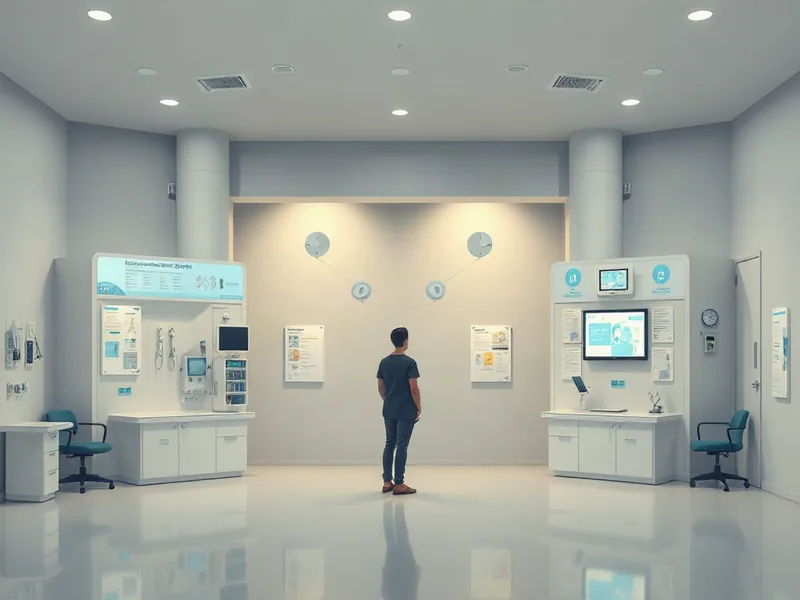
The logic echoes a familiar playbook in consumer health and femtech: acquire adjacent capabilities, bundle them into a single platform, and use that breadth to deepen customer relationships and lifetime value. Willow's new education hub, Willow World, is one visible result. Swehl's content and community expertise feeds directly into that hub, giving Willow owned media assets rather than relying solely on hardware sales.
The maternal health market itself supports the thesis that bundling adds value. Mothers today often juggle separate apps and products for pumping, feeding, postpartum recovery, and community support. Consolidating those functions under one brand could reduce friction and increase retention, assuming execution matches ambition. Veradigm, a healthcare data firm, has noted in its own research that women's health data spans distinct clinical phases including adolescence, reproductive years, and peri- and post-menopause, each with different comorbidity profiles and treatment patterns. That complexity underscores why single-point solutions struggle to serve the full maternal health journey and why platform plays like Willow's have commercial logic.
The undisclosed deal terms are the first thing worth flagging. Without purchase price, revenue multiples, or integration costs, it is difficult to assess whether Willow is paying a premium for strategic fit or picking up distressed assets at a discount. Femtech and maternal health startups have faced a tougher fundraising environment over the past two years, and some smaller players may have had limited alternatives to an acquisition offer.
Integration risk deserves attention too. Willow is absorbing two companies with different cultures, Swehl's community-first model and Momtech's hardware-engineering background, into a single organization in short order after the Elvie deal. Three acquisitions in two years is an aggressive pace for a company of Willow's size, and execution missteps, whether in product integration or retaining acquired talent, could offset the strategic upside.
There is also the question of competitive response. If Willow's bundling strategy proves effective, larger players in consumer health or even traditional medical device companies could pursue similar consolidation, either by acquiring competing femtech startups or building comparable features internally. Willow's first-mover advantage in assembling this particular bundle of pumping, feeding, and education assets is real, but it is not guaranteed to be durable.
Finally, watch for revenue disclosure or any funding round that accompanies these deals. Private acquisitions in this space rarely come with transparent financials, but a future raise, partnership announcement, or IPO filing would offer the first hard numbers to validate whether this consolidation strategy is translating into actual financial performance rather than just strategic narrative. Until then, the thesis remains plausible but unproven, a bet on fragmentation being the industry's core problem rather than a symptom of something harder to fix.
Tags
Original Sources
Willow Acquires 2 Women’s Health Companies - MedCity News
↗ https://medcitynews.com/2026/10/willow-acquires-2-womens-health-companies
About the author
Marcus began tracking AI's market implications in 2016, noticing AI-related patent filings accelerating ahead of earnings upgrades before most of the sell-side had caught on. A former fixed-income quantitative analyst, he spent two decades building models that priced risk across emerging markets before pivoting to cover the economic impact of AI full-time. His writing translates opaque technical developments into clear risk/reward terms — and he's rarely diplomatic about the gap between AI valuations and underlying fundamentals. He believes most market participants still underestimate AI's long-run deflationary effect on knowledge work.
More from The Analyst →This Week's Edition
28 October 2026
30 articles
Related Articles
Related Articles
More Stories
© 2026 Cedar & Bloom. All rights reserved.