The Drum · Weekly AI news, freeSubscribe →

Share
As wildfires rage and infrastructure crumbles, a new type of AI could provide real-time, integrated forecasts. But with great power comes the need for robust governance.
It's 2 a.m., and a wildfire is rapidly closing in on a densely populated suburb. The incident commander is racing against time to answer critical questions: Which evacuation routes are still passable? Which hospitals can be reached? Where will the power grid fail next? Current support systems, including AI-enabled modeling and physics-based simulations, offer real-time forecasts but remain siloed. Conditions change faster than analysts can track.
Enter world models-AI systems that build and maintain a dynamic representation of an environment to predict how conditions may evolve. In this scenario, a world model could integrate forecasts about roads, the power grid, and hospital capacity into one continuously updated picture. This comprehensive view would enable the commander to reroute crews, redirect resources, and make life-saving decisions more effectively.
World models are not just theoretical constructs; they have the potential to revolutionize various sectors by lowering the cost of high-quality simulation. From infrastructure planning and crisis response to experimentation and embodied AI training, these systems could transform how we understand and interact with complex environments. However, realizing this potential requires addressing significant challenges.
One major hurdle is the lack of an adequate benchmark for policymakers to evaluate world models for safety-critical deployment. Existing benchmarks do not provide a comprehensive basis for assessing the reliability and accuracy of these systems in real-world scenarios. To bridge this gap, public investment in measurement science is essential. This would involve developing robust metrics and standards to ensure that world models can be trusted when lives are on the line.
Another challenge is the scarcity of action-labeled interaction data-robot trajectories and fleet logs that cannot be easily obtained from the web. The risk here is concentrated control over these critical datasets, which could lead to a monopolization of power in the hands of a few entities. To mitigate this, public datasets should be an explicit target of federally funded research. By making these datasets widely available, we can foster innovation and ensure that the benefits of world models are distributed equitably.
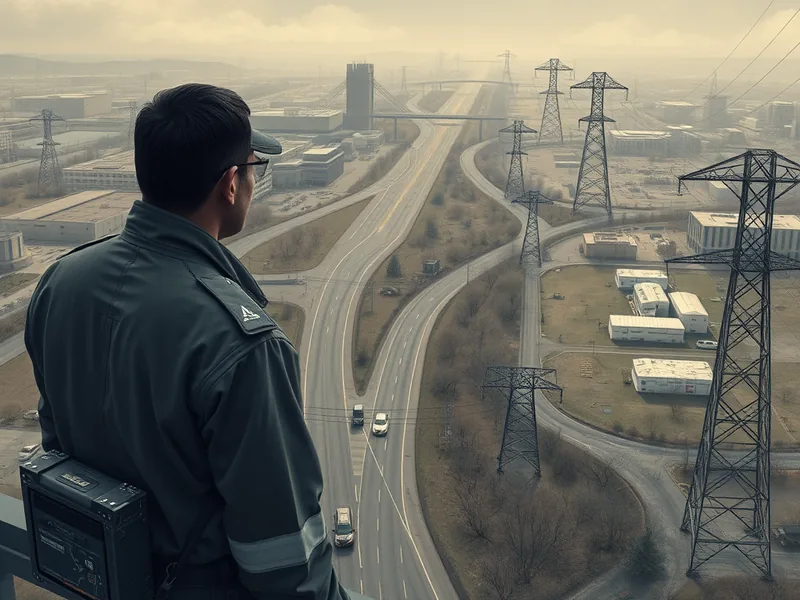
World models are dual-use technology with significant national security implications. By lowering the cost of capable autonomous systems, they could democratize military advantage, allowing less-resourced actors to gain a strategic edge. This scenario underscores the importance of early leadership in world-model research, development, and governance as an urgent national security priority.
The ethical considerations of world models are also paramount. As these systems become more sophisticated, there is a risk that they could be used for nefarious purposes or exacerbate existing social inequalities. Policymakers must address these concerns by establishing clear guidelines and regulations to ensure that world models are developed and deployed responsibly.
The distinctive question in governing world models is whether a simulated environment matches physical reality closely enough to train or test another system or guide real-world decisions. This requires a nuanced approach that balances innovation with safety and ethical considerations. Policymakers need to work closely with researchers, industry leaders, and stakeholders to develop a regulatory framework that fosters responsible development and deployment of world models.
As the technology continues to evolve, it is crucial for policymakers to stay ahead of the curve. This means investing in research to understand the capabilities and limitations of world models, developing robust evaluation metrics, and creating public datasets to prevent concentrated control. It also means engaging with a broad range of stakeholders to ensure that the benefits of these systems are realized while minimizing risks.
The stakes are high. World models have the potential to save lives, improve infrastructure, and enhance our ability to respond to crises. But achieving this potential requires a thoughtful, evidence-driven approach to governance. By working together, we can harness the power of world models to create a safer, more resilient future for all.
Tags
Original Sources
The World Model and Spatial Intelligence Era: Governing AI Beyond Language | Stanford HAI
↗ https://hai.stanford.edu/policy/the-world-model-and-spatial-intelligence-era-governing-ai-beyond-language
About the author
Amara's entry point into AI was an epidemiology role at a London research hospital, where she spent five years studying how digital health tools reached — or conspicuously failed to reach — underserved communities. Watching early algorithmic systems in healthcare quietly entrench existing inequalities, she redirected her career toward the systemic consequences of AI at scale. She covers AI through an unflinching lens: who benefits, who bears the cost, and what evidence actually says versus what the press release claims. Her writing is calm and precise, but she doesn't mistake balance for neutrality.
More from The Steward →This Week's Edition
6 August 2026
25 articles
Related Articles
Related Articles
More Stories
© 2026 Cedar & Bloom. All rights reserved.