The Drum · Weekly AI news, freeSubscribe →

Share
A massive stockpile of Nvidia's H200 processors is stuck at the border, caught between Chinese tech firms hungry for compute and a government wary of deepening reliance on US silicon.
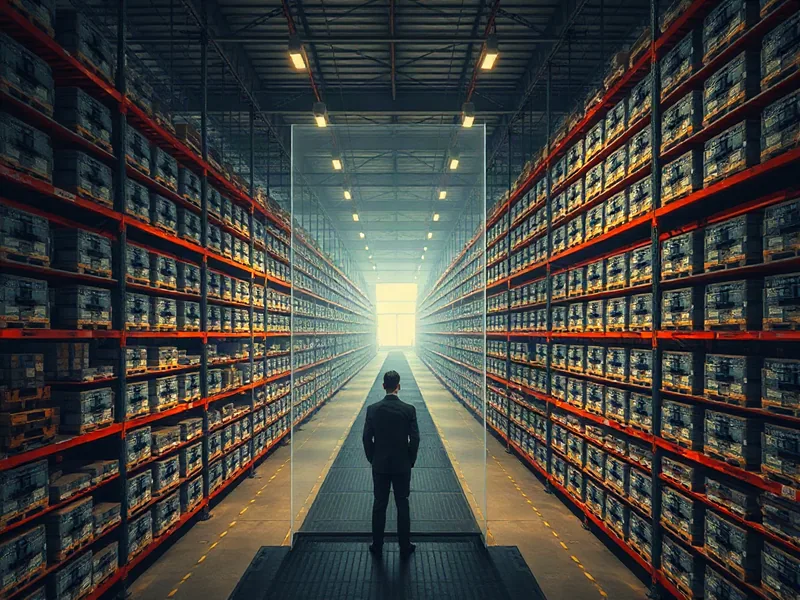
Roughly 600,000 of Nvidia's H200 artificial intelligence chips are sitting in Hong Kong warehouses, unable to reach mainland China, according to two people familiar with the matter. The holdup is not a US export restriction. It is Beijing's own reluctance to approve large-scale imports, even as domestic tech giants scramble for the computing power to build AI products.
The figure has not been previously reported. It is a striking number given how badly Chinese internet companies say they need this hardware. The H200 is not Nvidia's newest chip, but it remains more capable than domestic alternatives for training large AI models, particularly when paired with Nvidia's software stack. That combination is hard to replicate quickly, and it is why demand has stayed strong even as the chip ages in Nvidia's product lineup.
Some chips have trickled through. Three people familiar with the matter said major Chinese internet firms have each secured about 10,000 H200 units over the past few months, with small additional quantities moving through intermediaries and indirect routes. None of the sources specified exact volumes for those side-channel shipments. Beijing, Alibaba, ByteDance, DeepSeek, Tencent and Nvidia all declined or did not respond to requests for comment.
The H200 saga is a case study in how a single product line can become a pressure point in a broader geopolitical contest. Washington first barred the chip's export to China outright. The Trump administration later reversed course, granting Nvidia permission to sell H200 units to approved Chinese customers, a shift that followed trade negotiations between the two governments. Reuters reported in May that the US had cleared H200 sales to ten Chinese firms, including Alibaba, Tencent and ByteDance.
That clearance from Washington did not translate into a green light from Beijing. Chinese regulators have imposed their own constraints, reflecting a strategic preference for building self-sufficiency rather than entrenching dependence on American technology. The Information reported in July that Chinese officials had told companies, including Alibaba, ByteDance and DeepSeek, they could receive permission to buy limited quantities of H200 chips for training purposes. Total approvals, according to that report, could land below 200,000 chips, with Beijing pushing firms to prioritize homegrown processors for inference work, the less compute-intensive task of actually running trained AI models.
The math here matters. If approvals cap out near 200,000 units and the Hong Kong stockpile already runs to roughly 600,000, there is a structural mismatch between what Chinese firms want and what Beijing is willing to let in. That gap is the story.
Price action in the gray market tells its own story. An eight-card H200 server was recently offered in mainland China for more than 6 million yuan, around $900,000, roughly three times its price a year earlier, according to one person familiar with pricing. Servers built on Nvidia's newer Blackwell chips, which remain under US export controls, were quoted above 20 million yuan apiece. Constrained authorized supply has pushed buyers toward intermediaries, and that scarcity premium shows up directly in these figures.
Chinese firms are not waiting passively for the H200 bottleneck to resolve. Reuters reported last month that ByteDance, Alibaba and Tencent had placed orders for more than 3 million Nvidia RTX Pro 5500 graphics cards, a less powerful but export-compliant product, with combined sticker value exceeding $35 billion. That order size dwarfs the H200 stockpile in unit terms, though the RTX Pro 5500 is not a like-for-like substitute for training frontier models. It suggests Chinese buyers are hedging across product tiers rather than betting everything on one chip family clearing customs.
Why it matters for Nvidia's China exposure is straightforward: revenue recognition depends on actual delivery, not inventory sitting in a Hong Kong warehouse. A 600,000-unit pile that cannot clear mainland approval is demand on paper, not revenue on the books. For Chinese internet companies, the risk cuts the other way. Alibaba, ByteDance, Tencent and DeepSeek are all racing to train and deploy AI models in a market where compute access has become a competitive moat. Being capped at roughly 10,000 chips per firm, by one account, while rivals in other markets scale freely, is a real constraint on product timelines.
There is also a policy risk dimension worth flagging. Washington's export regime has already proven it can swing from outright ban to conditional approval within the space of roughly a year, driven by trade negotiations rather than purely technical considerations. That volatility cuts both ways. A future shift in US policy could tighten access again, and a shift in Beijing's posture, perhaps driven by progress in domestic chip manufacturing, could either open the floodgates or close them further. Investors pricing Nvidia's China revenue trajectory need to treat both capitals as independent variables, not a single trade relationship.
The gray market premium is itself a signal. A tripling in unofficial H200 server prices over twelve months indicates that official channels are nowhere close to meeting demand, regardless of which government is responsible for the bottleneck. That dynamic typically persists until either supply loosens or substitute products mature enough to blunt demand. Neither looks imminent based on current reporting.
Three data points deserve close tracking in the months ahead. First, any change in the pace or scale of Beijing's H200 import approvals, since the reported cap near 200,000 units would leave the bulk of the Hong Kong stockpile stranded indefinitely. Second, gray market pricing trends, which offer a real-time proxy for the severity of the supply-demand gap outside official channels. Third, the delivery timeline and actual deployment of the 3 million RTX Pro 5500 units ordered by ByteDance, Alibaba and Tencent, since that order's fulfillment will show whether Chinese firms are successfully substituting away from the more constrained H200 line. None of these resolve the underlying tension between Washington's export policy and Beijing's self-sufficiency drive, but together they will indicate which side of that tension is currently binding tighter.
Tags
Original Sources
EXCLUSIVE: Nvidia chips pile up in Hong Kong as China withholds import approval
↗ https://www.reuters.com/world/china/nvidia-chips-pile-up-hong-kong-china-withholds-import-approval-2026-11-05
About the author
Marcus began tracking AI's market implications in 2016, noticing AI-related patent filings accelerating ahead of earnings upgrades before most of the sell-side had caught on. A former fixed-income quantitative analyst, he spent two decades building models that priced risk across emerging markets before pivoting to cover the economic impact of AI full-time. His writing translates opaque technical developments into clear risk/reward terms — and he's rarely diplomatic about the gap between AI valuations and underlying fundamentals. He believes most market participants still underestimate AI's long-run deflationary effect on knowledge work.
More from The Analyst →This Week's Edition
6 November 2026
28 articles
Related Articles

Clover Health Posts First Profitable Run Rate as Membership Jumps 49%, Lifts Full-Year Guidance
Finance & Markets · 5 min

AI Trade Unravels as Chip Stocks Crater, Margin Calls Spread Across Asia
Finance & Markets · 5 min

Google Commits $17 Billion to Wyoming Data Center as Political Headwinds Build
Finance & Markets · 4 min
Related Articles
Clover Health Posts First Profitable Run Rate as Membership Jumps 49%, Lifts Full-Year Guidance
Finance & Markets · 5 min
AI Trade Unravels as Chip Stocks Crater, Margin Calls Spread Across Asia
Finance & Markets · 5 min
Google Commits $17 Billion to Wyoming Data Center as Political Headwinds Build
Finance & Markets · 4 min
More Stories
© 2026 Cedar & Bloom. All rights reserved.
