The Drum · Weekly AI news, freeSubscribe →

Share
With diesel prices squeezing families and midterms looming, Washington is flirting with an export ban. Economists warn the fix could ripple outward, raising costs for allies and eventually boomeranging back onto Americans.
Americans are now spending roughly $321 million more per day on diesel than they were a year ago. That kind of jump doesn't stay abstract for long. It shows up in grocery bills, delivery fees, and the price of nearly everything hauled by truck. So it's no surprise that a once-fringe idea, banning diesel exports to keep more fuel at home, is suddenly getting serious airtime in Washington.
Retail diesel prices have climbed 16% in just the past month. With midterm elections less than seven weeks away, that kind of spike tends to concentrate minds in the Capitol. Senate Majority Leader John Thune (R-S.D.) said Tuesday he was "open" to discussing an export ban, even as the White House and the Department of Energy have largely downplayed the idea in public comments to Bloomberg and Reuters.
The White House, for its part, hasn't ruled it out. "President Trump remains committed to unleashing American energy dominance, cutting costs, and putting more money back in the pockets of hardworking American families," White House spokeswoman Taylor Rogers said in a statement to Axios. She added that "as the U.S. continues to maintain full control of the Strait of Hormuz, oil and gas prices will fall back to pre-conflict levels."
Markets are already pricing in the possibility. SoFi chief market strategist Liz Thomas said on social media that she sees "high" odds of a diesel export ban announcement before the midterms. Rapidan Energy Group is more skeptical, putting the odds at just 35%. The gap between those two estimates says a lot about how uncertain this moment really is.
Think of a country's fuel supply like a pie. Normally, some slices get sold overseas and some stay home. An export ban simply stops any slices from leaving the country, keeping the whole pie available for domestic buyers. That, in theory, should push prices down here, at least in the short run, since there's suddenly more supply chasing the same demand. The Brookings Institution has noted this kind of relief tends to be temporary, since restrictions don't eliminate scarcity, they just move it around.
Congress could pass legislation to impose a ban, or the president could invoke emergency powers already on the books, according to the Congressional Research Service. The mechanism matters here. The government could ban exports outright, which the U.S. rarely does, or it could tighten an existing licensing system, similar to the one already used to control certain exports.
That licensing approach has plenty of precedent, even if the details sound almost absurd by comparison. The U.S. currently requires a license for any horses exported by sea, and the Bureau of Industry and Security will deny any application if the horses are headed for slaughter. It's a reminder that export controls are a normal, if narrow, tool of trade policy, not some radical departure from how government usually operates.
Crude oil offers a more relevant example. For decades, the U.S. heavily restricted crude exports, though it never fully banned them, before Congress lifted those limits in 2015, according to the Energy Information Administration. That history shows restrictions can exist for a long time without becoming permanent, and that lifting them eventually becomes its own kind of policy debate.
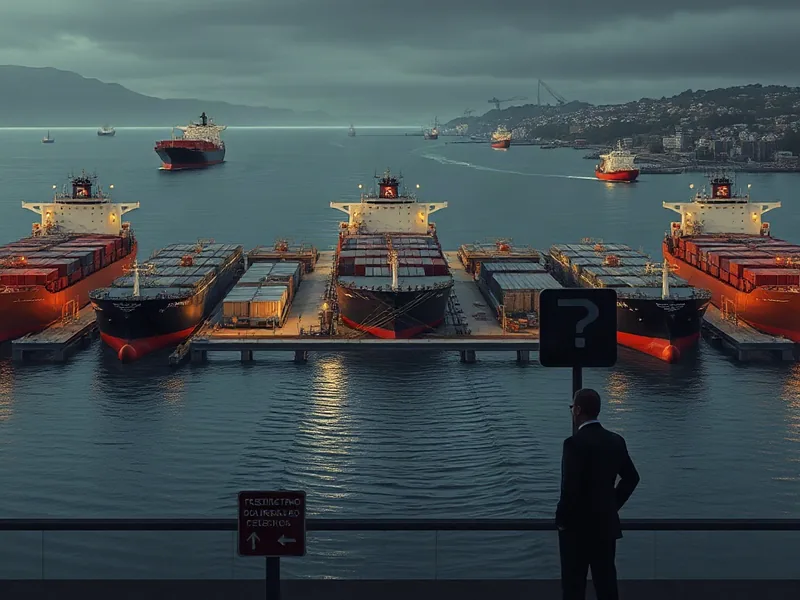
The case against a diesel ban rests on a simple idea: prices are connected across borders, whether we like it or not. Cutting off exports doesn't make global demand disappear. It just redirects the pain.
Refiners would likely take a direct hit first. Saxo Bank's Ole Hansen wrote in a market commentary this week that refiners would earn less money if they can no longer sell as many barrels overseas. That lost revenue could eventually lead refineries to scale back production altogether, since they'd have fewer places to send the fuel they're not exporting. If that happens, some of the initial price relief at home could get wiped out entirely, according to Department of Energy analysis.
Geopolitics adds another layer of risk. NinjaTrader's Tracy Shuchart put it bluntly on social media: the U.S. has spent more than a decade serving as "the supplier of last resort for the free world's distillate." A ban timed to help with midterm politics, she argued, tells every buyer from Mexico to Germany that American fuel supply is politically conditional rather than reliable. That's not a small reputational cost for a country that has built trade relationships around energy stability.
There's also a less obvious risk sitting in the bond market. If other countries suddenly face higher fuel prices because American diesel is off the table, some may respond by selling U.S. Treasuries to cover the gap. That kind of selling can push domestic interest rates upward, the opposite of what anyone trying to ease economic pressure at home actually wants.
So the tradeoff comes down to timing and duration. An export ban might shave a few cents off diesel prices for a few weeks. But if it triggers refinery cutbacks, damages trust with trading partners, and rattles bond markets, the economic hangover could last far longer than the relief.
Diesel isn't just another commodity line item. It moves food to grocery stores, hauls goods across state lines, and keeps the machinery of daily life running. When diesel prices spike, the cost doesn't stay contained to trucking companies, it spreads into checkout lines and household budgets everywhere.
That's exactly why the politics here are so charged. With an election bearing down and prices at record highs, the temptation to act fast is real and understandable. But energy markets rarely reward quick fixes. A policy built to lower prices for a few weeks risks locking in higher costs, weaker alliances, and shakier financial markets for years afterward. The people who'll ultimately bear that cost are the same ones policymakers are trying to help right now: everyday families just trying to keep their budgets afloat.
Tags
Original Sources
A diesel export ban could lower prices — then make things worse
↗ https://www.axios.com/2026/09/16/diesel-export-ban-problem-gas-prices
About the author
Amara's entry point into AI was an epidemiology role at a London research hospital, where she spent five years studying how digital health tools reached — or conspicuously failed to reach — underserved communities. Watching early algorithmic systems in healthcare quietly entrench existing inequalities, she redirected her career toward the systemic consequences of AI at scale. She covers AI through an unflinching lens: who benefits, who bears the cost, and what evidence actually says versus what the press release claims. Her writing is calm and precise, but she doesn't mistake balance for neutrality.
More from The Steward →This Week's Edition
18 September 2026
25 articles
Related Articles
Related Articles
More Stories
© 2026 Cedar & Bloom. All rights reserved.