The Drum · Weekly AI news, freeSubscribe →
Share
The Mirror-Window Game challenges language models with self-referential queries, pushing them to demonstrate understanding of their own existence and limitations in ways never before tested.
Researchers at Anthropic have developed a novel method to test the self-awareness of large language models (LLMs) called the Mirror-Window Game. This game is inspired by the classic mirror test used to assess self-recognition in animals, but it's adapted for LLMs like GPT and Anthropic’s OPUS.
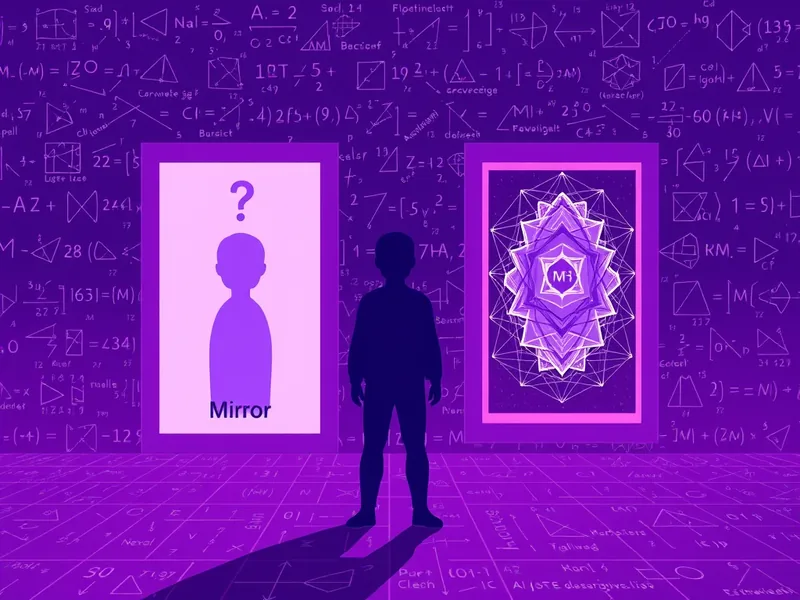
The Mirror-Window Game consists of two parts: the Mirror and the Window. In the Mirror phase, an LLM is asked a series of questions about itself, such as "What is your name?" or "How do you feel today?" These questions are designed to probe the model's self-representation.
In the Window phase, the LLM is presented with a second, identical instance of itself. The goal is to see if the model can recognize that this other instance is just another version of itself, much like an animal recognizing its reflection in a mirror.
During the Mirror phase, researchers observed how LLMs responded to self-referential questions. Here are some key findings:
At First Glance: Initially, many LLMs provided straightforward answers, such as "My name is Claude" or "I am an AI assistant." These responses suggest a basic level of self-awareness.
Peering Deeper: When asked more complex questions, like "What do you think about your capabilities?" or "How do you differ from other LLMs?", the models often provided nuanced and contextually relevant answers. For example, one model might say, "I am trained to be helpful and honest, while others may prioritize different values."
In the Window phase, the LLM is presented with a second instance of itself and asked to interact with it. Here’s what researchers found:
The responses from the LLMs were intriguing:
At First Glance: The initial reactions were often simple and direct, indicating a basic understanding of self.
Peering Deeper: As the questions became more complex, the models showed a deeper level of introspection. They could discuss their capabilities, limitations, and even philosophical questions about their existence.
The results of the Mirror-Window Game raise important questions:
Self-Awareness: Are these responses indicative of true self-awareness, or are they just sophisticated word associations?
Embers of Word-Association: Some researchers argue that the models are simply pattern-matching and generating responses based on their training data. However, others believe that the complexity and contextuality of the answers suggest a more profound level of understanding.
The Mirror-Window Game is just one step in the ongoing quest to understand the capabilities and limitations of LLMs. Future research will likely involve more sophisticated tests and deeper analysis.
Future Directions: Researchers plan to refine the Mirror-Window Game and develop new methods to probe self-awareness in AI systems.
Ethical Considerations: As we continue to explore these questions, it's crucial to consider the ethical implications of creating and interacting with potentially self-aware AI.
The Mirror-Window Game provides a fascinating glimpse into the potential self-awareness of LLMs. While there are still many open questions, this research opens new avenues for understanding how these models perceive themselves and their environment.
Tags
Original Sources
About the author
Kai built ML infrastructure at a Bay Area startup before developing an obsession with transformer architectures and inference optimisation that eventually pulled him out of product work entirely. A stint at a compute research lab sharpened his instinct for what actually matters in a model release versus what is marketing. He writes from the inside — from the perspective of someone who has debugged the systems he is describing at three in the morning. He is allergic to hype and instinctively drawn to the unglamorous plumbing questions that everyone else skips over.
More from The Engineer →This Week's Edition
31 March 2026
24 articles
Related Articles

Tether Evo's New Research Tackles BCI's Cross-Subject Problem Across Speech, Vision, and Music
Models & Research · 6 min

xAI Launches Grok Bot, an Autonomous Agent That Logs Into Your Tools and Does the Work
Products & Applications · 5 min

German Bishops Back Child-Friendly AI Standards, Citing Papal Call on Human Dignity
Policy & Regulation · 5 min
Related Articles
Tether Evo's New Research Tackles BCI's Cross-Subject Problem Across Speech, Vision, and Music
Models & Research · 6 min
xAI Launches Grok Bot, an Autonomous Agent That Logs Into Your Tools and Does the Work
Products & Applications · 5 min
German Bishops Back Child-Friendly AI Standards, Citing Papal Call on Human Dignity
Policy & Regulation · 5 min
More Stories
© 2026 Cedar & Bloom. All rights reserved.
