The Drum · Weekly AI news, freeSubscribe →

Share
Scientists are transforming mundane binary digits into powerful catalysts for AI advancement, developing specialized hardware that dramatically boosts the efficiency and performance of machine learning models.
The landscape of artificial intelligence (AI) and machine learning (ML) is constantly evolving, driven by advancements in both software algorithms and hardware capabilities. One of the most promising areas of research today focuses on how better hardware can significantly enhance the performance and efficiency of deep learning models. This article delves into recent developments that could turn zeros-once just binary digits-into AI heroes.
Recent research has highlighted several key advancements in hardware design that are specifically tailored to support deep learning tasks:
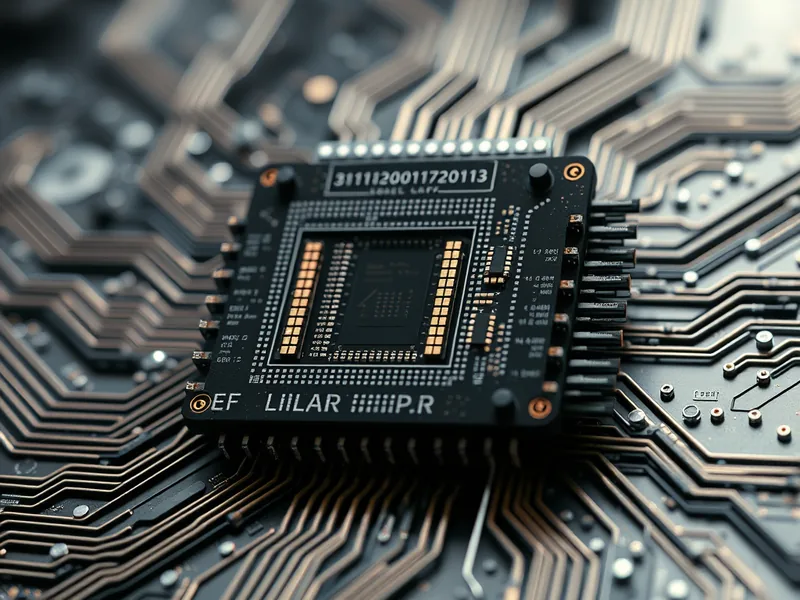
Specialized Processors: The introduction of Application-Specific Integrated Circuits (ASICs) and Tensor Processing Units (TPUs) has revolutionized the way we process data for neural networks. These processors are designed to handle matrix operations, which are fundamental to training and inference in deep learning models.
Memory Bandwidth Improvements: Traditional CPU architectures often struggle with memory bandwidth limitations, which can bottleneck the performance of deep learning models. Newer hardware designs focus on increasing memory bandwidth to ensure that data can be processed more efficiently.
Energy Efficiency: As the computational demands of deep learning grow, so does the energy consumption. Recent hardware innovations focus on reducing power usage without sacrificing performance.
For practitioners working with deep learning models, these hardware advancements bring several practical benefits:
Cost Efficiency: Energy-efficient hardware can lead to lower operational costs, especially for large-scale AI deployments. This is particularly important for organizations running multiple models concurrently.
Scalability: With better hardware, it becomes easier to scale up operations without hitting performance bottlenecks. This is crucial for businesses that need to handle increasing data volumes and model complexity.
For those interested in the technical details, here are some key points:
ASICs:
TPUs:
HBM:
The future of deep learning is being shaped by hardware innovations that address key challenges such as speed
Tags
Original Sources
↗ https://spectrum.ieee.org/what-is-deep-learning/neural-network
About the author
Kai built ML infrastructure at a Bay Area startup before developing an obsession with transformer architectures and inference optimisation that eventually pulled him out of product work entirely. A stint at a compute research lab sharpened his instinct for what actually matters in a model release versus what is marketing. He writes from the inside — from the perspective of someone who has debugged the systems he is describing at three in the morning. He is allergic to hype and instinctively drawn to the unglamorous plumbing questions that everyone else skips over.
More from The Engineer →This Week's Edition
30 April 2026
29 articles
Related Articles

Wharton's Fourth Annual AI Survey: Most Companies See Returns, Few See Big Ones
Models & Research · 6 min

Tensormesh Launches Enterprise KV Cache Platform to Cut Redundant LLM Compute
Models & Research · 6 min

Iambic Therapeutics Raises $150 Million in IPO to Fund AI-Designed Cancer Drugs
Finance & Markets · 5 min
Related Articles
Wharton's Fourth Annual AI Survey: Most Companies See Returns, Few See Big Ones
Models & Research · 6 min
Tensormesh Launches Enterprise KV Cache Platform to Cut Redundant LLM Compute
Models & Research · 6 min
Iambic Therapeutics Raises $150 Million in IPO to Fund AI-Designed Cancer Drugs
Finance & Markets · 5 min
More Stories
© 2026 Cedar & Bloom. All rights reserved.
