The Drum · Weekly AI news, freeSubscribe →

Share
As AI advances, it risks deepening the economic chasm between skilled professionals and others, potentially leaving millions further behind despite technological progress.
In an era where artificial intelligence (AI) is rapidly transforming industries and workplaces, a new survey highlights a concerning trend: the technology may exacerbate existing economic inequalities. The research, which was recently published in the Financial Times, suggests that while AI has the potential to revolutionize productivity and innovation, it could also create a significant divide between those who benefit from these advancements and those who do not.
The stakes are high for real people. As AI tools become more sophisticated, they require users with advanced skills and education. This means that individuals who already have access to quality education and tech resources are likely to be the ones reaping the benefits of AI, while those without such advantages may fall further behind.
MIT professor Daron Acemoglu, a Nobel laureate in economics, puts it bluntly: “The rhetoric out there is that these tools are going to democratize access to technology. But the reality is that you need a certain degree of education, abstract and quantitative skills, familiarity with computers, and coding knowledge to effectively use these models.” In other words, while AI has the potential to be a powerful tool, it’s not a silver bullet for everyone.
To understand why this matters, consider an analogy: imagine a new type of farming equipment that can dramatically increase crop yields. If only wealthy farmers who can afford the latest technology and have the expertise to use it get access, they will see their profits soar while smaller, less equipped farms struggle to compete. The result? A widening gap between the haves and the have-nots.
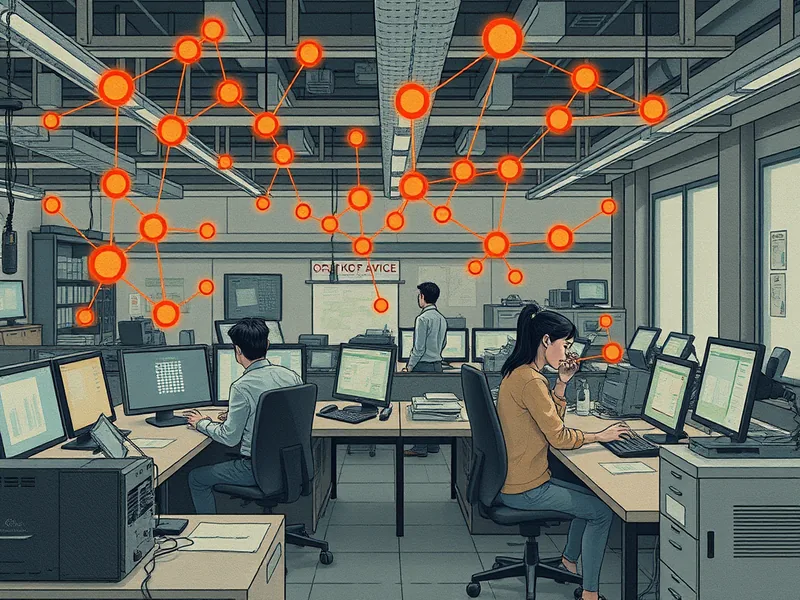
The survey also points out that AI is likely to increase inequality between labor and capital. In simpler terms, this means that those who own the technology or the companies that produce it will see their wealth grow, while workers may face job displacement or stagnating wages. “AI is going to increase inequality between labor and capital,” Acemoglu states. “That is almost for sure. I would say it is setting us up for a... shitshow.”
The implications of this trend are far-reaching. For policymakers, it underscores the need for proactive measures to ensure that the benefits of AI are more equitably distributed. This could include investments in education and training programs that help workers develop the skills needed to thrive in an AI-driven economy. It might also involve regulatory frameworks that protect workers from unfair practices and ensure that companies contribute to the social good.
For individuals, it means staying informed about the changes and taking steps to adapt. Whether through formal education or self-directed learning, acquiring new skills can be a powerful way to stay relevant in a rapidly evolving job market. For example, learning basic coding or data analysis can open up opportunities in fields that are increasingly dependent on AI.
Ultimately, the goal should be to harness the potential of AI while minimizing its negative impacts. This requires a collaborative effort from governments, businesses, and individuals to create an environment where everyone has a fair chance to succeed. As we move forward into this new technological era, it’s crucial that we don’t leave anyone behind.
Tags
Original Sources
About the author
Amara's entry point into AI was an epidemiology role at a London research hospital, where she spent five years studying how digital health tools reached — or conspicuously failed to reach — underserved communities. Watching early algorithmic systems in healthcare quietly entrench existing inequalities, she redirected her career toward the systemic consequences of AI at scale. She covers AI through an unflinching lens: who benefits, who bears the cost, and what evidence actually says versus what the press release claims. Her writing is calm and precise, but she doesn't mistake balance for neutrality.
More from The Steward →This Week's Edition
25 April 2026
29 articles
Related Articles
Ottawa Expands AI Funding for Northern Ontario Businesses, Aims to Close the Regional Tech Gap
Job Market & Society · 6 min
AI Is Lowering the Cost of Starting a Business. It's Not Lowering the Cost of Running One.
Job Market & Society · 6 min

Iambic Therapeutics Raises $150 Million in IPO to Fund AI-Designed Cancer Drugs
Finance & Markets · 5 min
Related Articles
Ottawa Expands AI Funding for Northern Ontario Businesses, Aims to Close the Regional Tech Gap
Job Market & Society · 6 min
AI Is Lowering the Cost of Starting a Business. It's Not Lowering the Cost of Running One.
Job Market & Society · 6 min
Iambic Therapeutics Raises $150 Million in IPO to Fund AI-Designed Cancer Drugs
Finance & Markets · 5 min
More Stories
© 2026 Cedar & Bloom. All rights reserved.
