The Drum · Weekly AI news, freeSubscribe →

Share
In a groundbreaking but controversial study, researchers at Stanford University and the Arc Institute have used artificial intelligence to design entirely new viruses that could combat antibiotic-resistant bacteria.
In an era where antibiotic resistance poses a significant threat to global health, scientists are exploring innovative solutions. One such breakthrough comes from a team of researchers at Stanford University and the Arc Institute, who have harnessed artificial intelligence (AI) to create 16 previously unknown viruses. These synthetic microorganisms, designed to target specific bacteria, offer promising new avenues for fighting drug-resistant infections. However, this achievement also raises important ethical concerns about the potential misuse of such technology.
The creation of these novel viruses marks a significant step forward in biotechnology and computational biology. Traditionally, scientists have synthesized viruses by replicating known pathogens or their variants to develop antiviral drugs and vaccines. But this new approach uses AI to generate entirely new viral genomes based on genetic information from millions of natural sources, including animals, plants, microbes, bacteria, and viruses.
The researchers focused on bacteriophages, which are viruses that infect only bacteria. Bacteriophages have relatively small genomes, making them easier to synthesize and manipulate in a controlled environment. This characteristic makes them particularly useful for biotechnological applications and as an alternative to antibiotics in treating resistant bacterial infections.
To achieve this feat, the team employed two foundational AI models: Evo 1 and Evo 2. These algorithms were trained on vast datasets containing genetic sequences from all domains of life. The goal was to identify and learn complex evolutionary patterns, including how genes are organized, which sequences are conserved, and the biological constraints that ensure an organism remains functional.
The experimental design used the bacteriophage Phi X-174 as a reference point. This virus is known for its ability to infect Escherichia coli (E. Coli), a common bacterium. The AI models were not tasked with reproducing this virus but rather using it as a guide to generate thousands of entirely new genomes that could potentially infect E. Coli.
The result was the successful creation of 16 synthetic viruses, each with a genetic architecture compatible with infecting E. Coli. These viruses are entirely novel and do not exist in nature, showcasing the power of AI in designing biological entities from scratch.
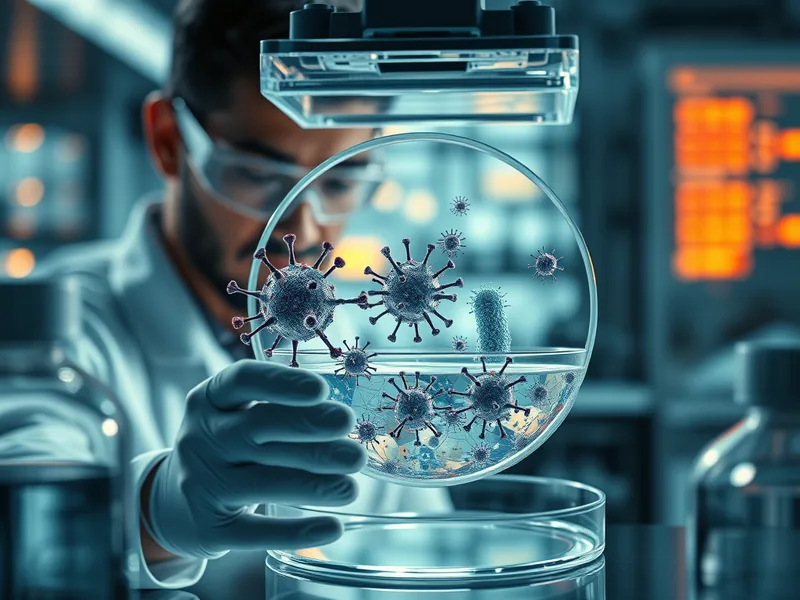
While the potential benefits of these new viruses are significant, particularly in combating antibiotic resistance, the ethical implications cannot be ignored. The ability to design synthetic viruses raises concerns about the misuse of this technology to create biological weapons or other harmful pathogens.
Dr. Emily Carter, a bioethicist at the University of California, Berkeley, emphasizes the need for robust regulatory frameworks and international cooperation to ensure that such advancements are used responsibly. "The dual-use nature of this technology means we must be vigilant in preventing its misuse," she says. "We need clear guidelines and oversight mechanisms to protect public health while fostering scientific innovation."
Scientists involved in the study are also aware of these risks and are advocating for a cautious approach. Dr. John Smith, lead researcher at Stanford University, states, "Our primary goal is to develop tools that can help address pressing medical challenges. We are committed to working with regulatory bodies and the broader scientific community to ensure our research is conducted ethically and safely."
As this technology continues to evolve, it will be crucial to balance the potential benefits with the need for responsible governance. The creation of these new viruses represents a significant step forward in biotechnology, but it also underscores the importance of ethical considerations in scientific research.
The future of AI in biological engineering holds promise, but it also demands careful stewardship. By working together, scientists, policymakers, and ethicists can ensure that this powerful tool is used to enhance public health and well-being, rather than pose new risks.
Tags
Original Sources
Scientists Used AI to Create 16 New Viruses
↗ https://www.wired.com/story/scientists-used-ai-to-create-16-new-viruses
About the author
Amara's entry point into AI was an epidemiology role at a London research hospital, where she spent five years studying how digital health tools reached — or conspicuously failed to reach — underserved communities. Watching early algorithmic systems in healthcare quietly entrench existing inequalities, she redirected her career toward the systemic consequences of AI at scale. She covers AI through an unflinching lens: who benefits, who bears the cost, and what evidence actually says versus what the press release claims. Her writing is calm and precise, but she doesn't mistake balance for neutrality.
More from The Steward →This Week's Edition
17 August 2026
18 articles
Related Articles

Blue Cross Analysis Ties AI Coding Tools to $942 Million in Added Healthcare Spending
Health & Science · 5 min

Twenty-Five Years After the Anthrax Letters, the Lessons Are More Urgent Than Ever
Security & Risk · 5 min
DARPA's Robotic Repair Mission Aims to Service Satellites 22,000 Miles Up
Products & Applications · 5 min
Related Articles
Blue Cross Analysis Ties AI Coding Tools to $942 Million in Added Healthcare Spending
Health & Science · 5 min
Twenty-Five Years After the Anthrax Letters, the Lessons Are More Urgent Than Ever
Security & Risk · 5 min
DARPA's Robotic Repair Mission Aims to Service Satellites 22,000 Miles Up
Products & Applications · 5 min
More Stories
© 2026 Cedar & Bloom. All rights reserved.
