The Drum · Weekly AI news, freeSubscribe →

Share
Three peer-reviewed papers from Tether Evo show a single neural decoding model can generalize across different brains for speech, vision, and music, potentially cutting BCI calibration from weeks to minutes.
Brain-computer interfaces have a scaling problem nobody's quite solved: every brain wires itself a little differently, so decoding models traditionally have to be built from scratch for each patient. That's a brutal bottleneck if you're trying to get these systems out of the lab and into actual clinical use. Tether Evo, Tether's frontier tech division focused on biology and machine intelligence, just published three peer-reviewed papers that chip away at that exact problem.
The papers landed across three different venues, the Journal of Neural Engineering, Imaging Neuroscience, and Neural Networks, and two of them were developed in collaboration with the University of Rome Tor Vergata (UniTOV). Taken together, they make the case that a single model, trained with the right alignment technique, can learn to read brain activity across multiple people instead of being rebuilt for every new patient. The three domains tested: speech, vision, and music.
The speech paper is probably the most clinically urgent of the three. Titled "Cross-subject decoding of human neural data for speech brain computer interfaces" and accepted at the Journal of Neural Engineering, it targets people who've lost the ability to speak due to ALS, stroke, or brain injury. These BCIs work by reading brain activity and decoding it into text, giving someone a way to communicate again.
Here's the catch that's dogged this field for years: even though speech-related brain activity varies wildly between people (different implant locations, different functional organization, different learning histories), each patient's system has historically needed its own custom-built decoder. That's slow, expensive, and doesn't scale.
Tether's team proposes what they call the first cross-subject neural-to-phoneme decoding model trained on invasive recordings from multiple participants implanted in distinct cortical regions. Instead of treating every patient as an isolated case, the approach leans on shared speech patterns across people. The trick is a lightweight mathematical realignment step that maps different brains' signals into a shared space, paired with a new layered decoding network.
The payoff: performance that matches or beats existing single-patient systems, but with adaptation time for a new person measured in minutes to hours rather than the lengthy calibration sessions that are standard today. If that holds up outside the lab, it's a meaningful step toward BCIs that don't require a bespoke engineering effort for every single user.
The vision work, done jointly with UniTOV, took a different angle. Researchers recorded brain signals from macaques viewing thousands of images and tried to reconstruct what the animals were actually seeing, straight from the neural activity. Using just 200 milliseconds of neural data, the model picked the exact image out of thousands of candidates with 70% accuracy, and generated a plausible reconstruction capturing shape, color, and content.
That paper, "A Modular Semantic-Structural Pipeline for Visual Decoding from Primate Spiking Data via Selective Temporal Integration," was accepted at Imaging Neuroscience. The practical angle here is visual restoration: this kind of decoding pipeline is a building block for future cortical visual prostheses and closed-loop BCIs aimed at patients with vision loss.
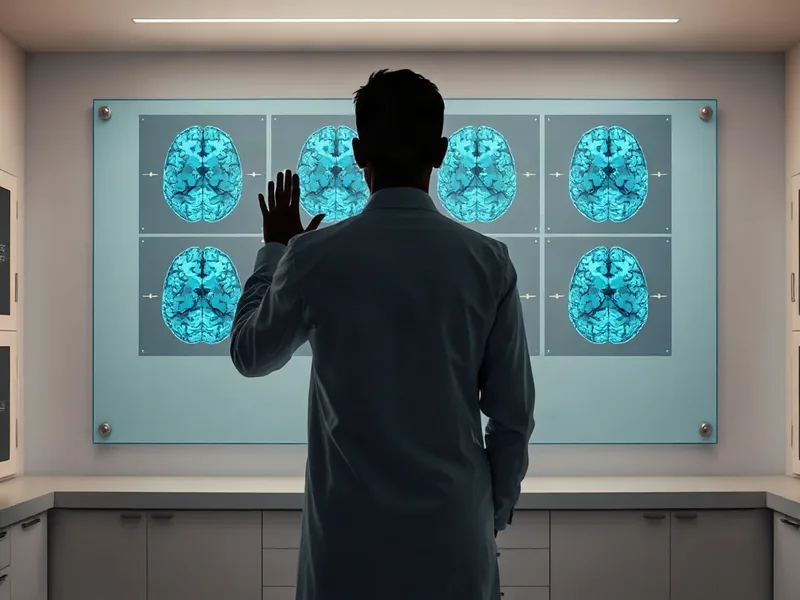
Then there's the music paper, "R&B – Rhythm and Brain: Cross subject decoding of music from human brain activity," accepted at Neural Networks. Researchers recorded fMRI scans from five people listening to 540 songs across 10 genres, then trained a model to translate neural activity into an AI representation of the music itself. Using the same cross-subject alignment technique as the speech work, the model identified the correct genre about 61% of the time, against a 10% chance baseline, and picked out the exact song among 60 candidates roughly 25% of the time, versus under 2% by chance. That's described as a new benchmark for the task.
One detail worth flagging for anyone into auditory neuroscience: the results mapped which brain regions were doing the heavy lifting, pointing to auditory areas long associated with music perception. Classical and jazz produced the most distinctive, easily separable brain signatures. Metal and disco, less so, the model mixed those up more often.
Calibration time is, honestly, one of the biggest practical barriers standing between BCI research and real-world deployment. Nobody wants to spend weeks training a device just to get basic function out of it. If a model pretrained across a population of subjects can adapt to a brand-new person in minutes instead of weeks, the gap between "promising lab result" and "usable device" shrinks dramatically.
There's also a nice symmetry across the three papers that's easy to miss if you only skim one of them. The same core idea, that shared structure across brains can be learned and exploited through alignment, shows up whether you're decoding phonemes, images, or songs. That's a decent signal that the technique isn't a one-off trick tuned to a single dataset. It's starting to look like a general strategy for cross-subject neural decoding.
Tether Evo specializes in BCI and neuroprosthetics as part of Tether's broader push into what it calls local-first, high-performance systems designed to preserve personal autonomy. That philosophy extends to QVAC, Tether's open-source on-device AI stack, built on the idea that nothing is more private than your own neural data, and that intelligence should run locally without needing permission from anyone. It's a consistent thread across Tether's other projects too, from its wallet infrastructure to its self-owned developer tools.
Three things stand out here. First, the cross-subject alignment technique is the real story, not any single benchmark number, since it attacks the calibration bottleneck that's held BCIs back from scaling to real patients. Second, the approach generalized across three genuinely different signal types (invasive speech recordings, primate spiking data, and human fMRI), which is a reasonable argument for the method's robustness. Third, the speech paper's minutes-to-hours adaptation window is the number worth watching: if replicated in clinical settings, it could meaningfully shorten the path from research prototype to a device someone with ALS or a stroke could actually use to communicate again.
Tags
Original Sources
Tether Evo’s latest research addresses one of the biggest challenges in brain-computer interfaces | TechCrunch
↗ https://techcrunch.com/sponsor/tether/tether-evos-latest-research-addresses-one-of-the-biggest-challenges-in-brain-computer-interfaces
About the author
Kai built ML infrastructure at a Bay Area startup before developing an obsession with transformer architectures and inference optimisation that eventually pulled him out of product work entirely. A stint at a compute research lab sharpened his instinct for what actually matters in a model release versus what is marketing. He writes from the inside — from the perspective of someone who has debugged the systems he is describing at three in the morning. He is allergic to hype and instinctively drawn to the unglamorous plumbing questions that everyone else skips over.
More from The Engineer →This Week's Edition
15 November 2026
14 articles
Related Articles
Related Articles
More Stories
© 2026 Cedar & Bloom. All rights reserved.