The Drum · Weekly AI news, freeSubscribe →

Share
As healthcare systems struggle with drug shortages and administrative inefficiencies, AI offers a promising solution that could free up valuable time for patient care.
Every week, I speak with pharmacy directors and supply chain leaders at health systems across the country. Almost universally, they share a common frustration: they spend more time chasing inventory than taking care of patients. This structural failure is costing the industry far more than most executives realize.
Drug shortages alone cost U.S. Hospitals an estimated $900 million and 20 million labor hours annually, according to a June 2025 survey from Vizient. These figures only cover direct financial and staffing burdens; they don’t account for additional costs like more expensive alternative drugs, emergency sourcing premiums, or the erosion of pharmacist capacity when skilled clinicians are bogged down by shortage workarounds.
Pharmacy teams manage thousands of drug SKUs across dozens or hundreds of locations. Each SKU comes with expiration dates, lot numbers, regulatory controls, and storage requirements. Many of these locations-such as IV rooms, compounding areas, hazardous drug zones, and satellite pharmacies-operate in relative informational isolation. Healthcare leaders often lack real-time, system-wide visibility into pharmacy inventory, leaving them unprepared to manage major disruptions.
Two decades into the electronic medical record (EMR) era, most pharmacy supply chains are still running on fragmented systems, manual counts, institutional knowledge, and software not designed for today’s complex operational environment. When something goes wrong, teams resort to old methods: calling around, checking spreadsheets, contacting suppliers, and escalating issues.
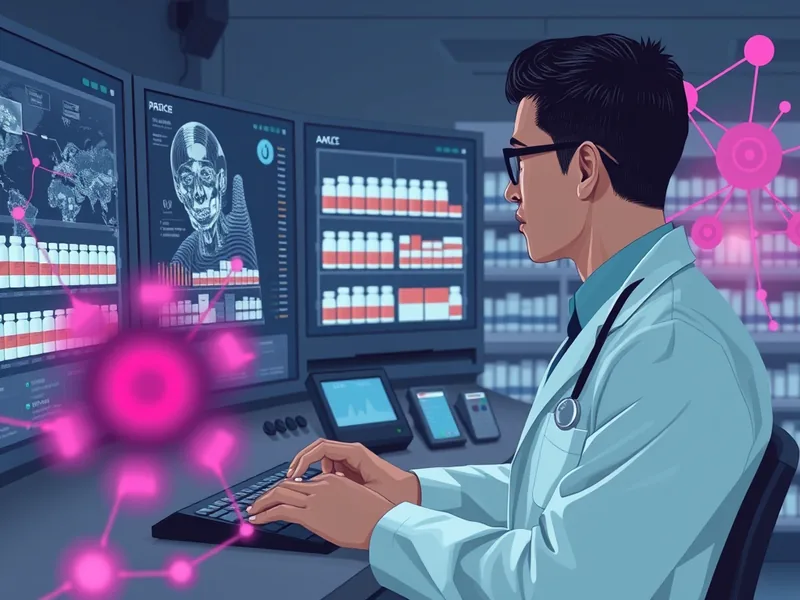
AI has the potential to transform this landscape by automating inventory management, providing real-time data, and optimizing workflows. By reducing administrative burden and redesigning processes around human needs, AI can create space for what matters most: the connection between clinicians and patients.
The impact of these inefficiencies extends beyond financial costs. Pharmacists are being set up for failure when they must juggle thousands of drug SKUs and manage shortages with outdated tools. This not only affects their job satisfaction but also patient care. When skilled clinicians spend hours on shortage workarounds, it detracts from the time they could be spending directly with patients.
The stress and burnout caused by these inefficiencies can lead to higher turnover rates among pharmacy staff. This exacerbates staffing shortages, further straining healthcare systems. By implementing AI solutions, hospitals can alleviate some of this pressure, allowing pharmacists to focus on what they do best: ensuring patient safety and well-being.
The transition to AI in healthcare supply chains is not just a technological upgrade; it’s a necessary step toward improving patient outcomes and the overall efficiency of our healthcare system. As we move forward, it’s crucial that we prioritize investments in these technologies to create a more resilient and responsive healthcare environment.
Tags
Original Sources
The AI Use Case That Healthcare is Overlooking - MedCity News
↗ https://medcitynews.com/2026/07/the-ai-use-case-that-healthcare-is-overlooking
About the author
Amara's entry point into AI was an epidemiology role at a London research hospital, where she spent five years studying how digital health tools reached — or conspicuously failed to reach — underserved communities. Watching early algorithmic systems in healthcare quietly entrench existing inequalities, she redirected her career toward the systemic consequences of AI at scale. She covers AI through an unflinching lens: who benefits, who bears the cost, and what evidence actually says versus what the press release claims. Her writing is calm and precise, but she doesn't mistake balance for neutrality.
More from The Steward →This Week's Edition
13 July 2026
34 articles
Related Articles

Arboretum LifeSciences Raises $30M to Turn Genetic Tests Into Drug Deals
Health & Science · 6 min

AI Tool Trained on Tumor Images Could Help Doctors Decide Who Needs Abiraterone for Prostate Cancer
Health & Science · 6 min

AI Can Spot Cognitive Decline Earlier. Health Systems Still Have to Catch the Patient on the Other Side
Health & Science · 6 min
Related Articles
Arboretum LifeSciences Raises $30M to Turn Genetic Tests Into Drug Deals
Health & Science · 6 min
AI Tool Trained on Tumor Images Could Help Doctors Decide Who Needs Abiraterone for Prostate Cancer
Health & Science · 6 min
AI Can Spot Cognitive Decline Earlier. Health Systems Still Have to Catch the Patient on the Other Side
Health & Science · 6 min
More Stories
© 2026 Cedar & Bloom. All rights reserved.
