The Drum · Weekly AI news, freeSubscribe →
Share
Artificial intelligence is revolutionizing biopharma, offering new hope for patients with rare diseases. But how are these technologies being put into practice?
For the millions of people living with rare diseases, the journey to diagnosis and treatment can be long and arduous. Many conditions remain undiagnosed or misdiagnosed for years, leaving patients and their families in a state of uncertainty and frustration. However, the advent of artificial intelligence (AI) is beginning to change this narrative by accelerating research and development processes.
At STAT’s Breakthrough West Summit in San Francisco, BioMarin Chief Digital and Information Officer Arpit Davé discussed how his company is leveraging AI to make meaningful strides in rare disease treatment. With 95% of rare diseases still lacking an FDA-approved cure, the stakes are high. But with the right tools and a clear mission, there is hope for significant progress.
BioMarin has been at the forefront of rare disease research for years, but the integration of AI into their workflow marks a new chapter in their story. According to Davé, who joined BioMarin four months ago, the company's approach to AI is rooted in a deep commitment to improving patient outcomes.
"AI is not just about technology; it’s about how we can use this tool to better serve our patients," Davé said during his presentation at the summit. "For us, it’s about accelerating the discovery process, enhancing collaboration among scientists, and ultimately bringing therapies to market faster."
One of the key areas where AI is making a difference is in data analysis. Rare diseases are often under-researched due to their low prevalence, which means that the available data can be sparse and scattered. AI algorithms can help researchers sift through vast amounts of data from various sources, identifying patterns and insights that might otherwise go unnoticed.
"Think of it like a digital detective," Davé explained. "AI can comb through medical records, genetic data, and research papers to find connections that human researchers might miss. This can significantly speed up the process of identifying potential targets for new therapies."
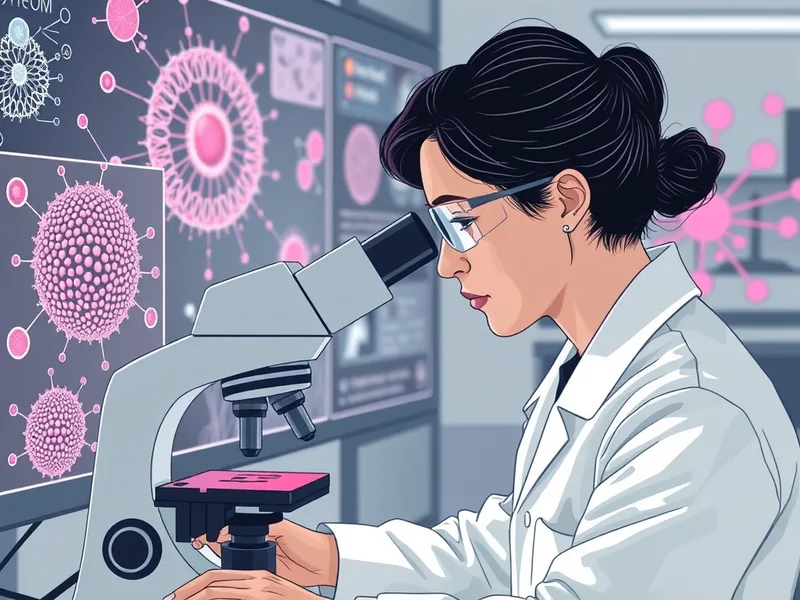
Another area where AI is proving invaluable is in clinical trials. By using machine learning to predict patient outcomes and optimize trial design, BioMarin can ensure that their studies are more efficient and effective. This not only saves time and resources but also increases the likelihood of successful outcomes.
The impact of AI on rare disease research extends beyond just scientific advancements; it has profound implications for public health and patient advocacy. For patients and families who have been waiting for years for a diagnosis or treatment, the promise of faster, more targeted therapies is a beacon of hope.
Davé emphasized that while the technology itself is exciting, the true measure of success lies in how it improves lives. "At the end of the day, our goal is to make a real difference for patients," he said. "We want to ensure that every step we take with AI brings us closer to that goal."
The integration of AI into rare disease research also highlights the importance of collaboration and data sharing. By working together and pooling resources, researchers can overcome some of the challenges posed by the scarcity of data. This collaborative approach is essential for making progress in a field where time is often of the essence.
As AI continues to evolve, its potential to transform rare disease research is only beginning to be realized. For patients like those BioMarin serves, this technology represents not just a scientific breakthrough but a lifeline. The road ahead may still be long, but with AI as a powerful ally, there is reason to believe that the future holds more cures and fewer mysteries.
Tags
Original Sources
AI's growing role in rare disease research
↗ https://www.statnews.com/sponsor/2026/06/29/ais-growing-role-in-rare-disease-research
About the author
Amara's entry point into AI was an epidemiology role at a London research hospital, where she spent five years studying how digital health tools reached — or conspicuously failed to reach — underserved communities. Watching early algorithmic systems in healthcare quietly entrench existing inequalities, she redirected her career toward the systemic consequences of AI at scale. She covers AI through an unflinching lens: who benefits, who bears the cost, and what evidence actually says versus what the press release claims. Her writing is calm and precise, but she doesn't mistake balance for neutrality.
More from The Steward →This Week's Edition
6 July 2026
28 articles
Related Articles
Blue Shield of California Signals Commercial Expansion of Medicare's ACCESS Chronic Care Model
Health & Science · 5 min
HHS Directs Nearly $250 Million Toward Addiction Treatment and Overdose Prevention
Health & Science · 5 min
UVM Wins $38 Million to Build AI Digital Twins for ICU Patients
Health & Science · 6 min
Related Articles
Blue Shield of California Signals Commercial Expansion of Medicare's ACCESS Chronic Care Model
Health & Science · 5 min
HHS Directs Nearly $250 Million Toward Addiction Treatment and Overdose Prevention
Health & Science · 5 min
UVM Wins $38 Million to Build AI Digital Twins for ICU Patients
Health & Science · 6 min
More Stories
© 2026 Cedar & Bloom. All rights reserved.
