The Drum · Weekly AI news, freeSubscribe →

Share
As hospitals rush to implement AI tools to reduce nurse burnout, early successes at Advocate Health highlight both the potential and the pitfalls of technology designed without input from those on the front lines.
For most nurses, the end of a shift marks the beginning of another task: hours spent reconstructing patient care notes. Tracy Breece and Bradley Goettl, industry experts, share a story from Atrium Health Union in Monroe, North Carolina, where a nurse described her after-work burden as the real challenge. However, on one particular shift, this changed dramatically. Using an AI-powered, hands-free tool, she was able to chart in real-time, freeing up her evening and allowing her to go home on time.
This experience is not unique. Hospitals across the country are exploring ambient AI tools to alleviate the documentation burden that contributes significantly to nurse burnout. The promise is tantalizing: less typing, more patient care, and a potential solution to an ongoing crisis in the nursing profession. However, if these technologies are designed without input from nurses themselves, they could exacerbate the very issues they aim to solve.
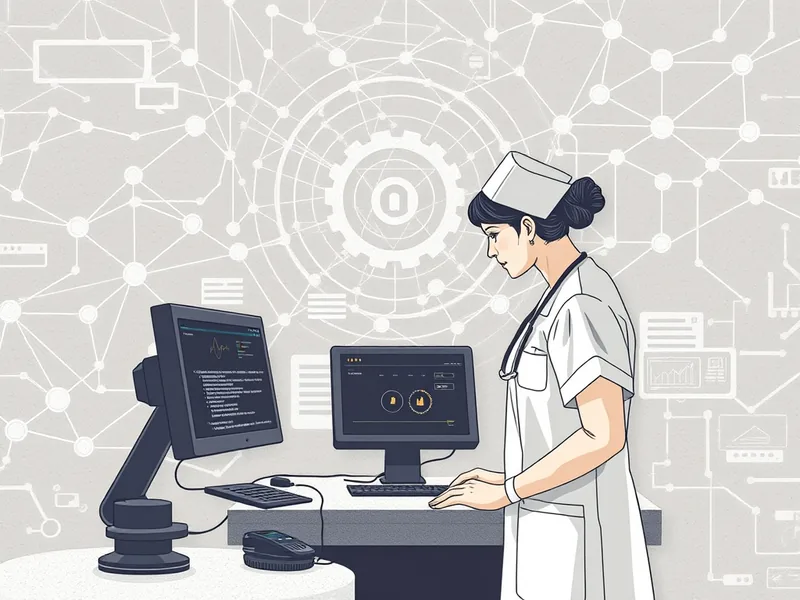
At Advocate Health, one of the largest nonprofit health systems in the U.S., the approach to AI has been different. Instead of designing tools for the system and hoping nurses will adapt, Advocate Health has involved nurses in every step of the process. The result is an ambient AI documentation tool that reduces charting time and keeps nurses at the bedside where they belong.
Sixty-five percent of nurses using the tool now activate it six or more times per shift-a level of voluntary use that is rare for any clinical software. More than 80 percent report meaningful time savings, and after-hours charting has decreased significantly. Patients also notice a difference; they feel their nurses are more present and attentive.
The success at Advocate Health is not just about the technology itself but about how it was developed. Nurses were involved in designing the tool, ensuring it met their needs and addressed their pain points. This collaborative approach is crucial because AI does not replace clinical judgment. The ambient tools capture and organize data, but nurses retain full control over the final documentation.
The stakes are high. Nurse burnout affects more than just individual healthcare workers; it impacts patient care, hospital efficiency, and the overall health of communities. According to a survey by the American Nurses Association, 60 percent of nurses report feeling burned out, leading to higher turnover rates and staffing shortages. These issues can have serious consequences, from increased medical errors to longer patient wait times.
The integration of AI in nursing has the potential to alleviate some of these pressures, but only if it is done right. The Provider Perspective 2026 report by Husl Digital highlights the importance of involving healthcare providers in technology decisions. Revenue cycle leaders from leading health systems emphasize that successful AI implementations require a deep understanding of clinical workflows and the needs of those using the tools.
At Advocate Health, this approach has paid off. By putting nurses at the center of the design process, they have created a tool that not only reduces burnout but also enhances patient care. This model serves as a blueprint for other healthcare systems looking to leverage AI responsibly.
The future of nursing and healthcare depends on finding solutions that support both patients and providers. As hospitals continue to explore AI tools, it is essential to remember that technology should serve the people who use it, not the other way around. The success of these innovations will ultimately depend on whether they are designed with the input and well-being of nurses in mind.
Tags
Original Sources
Industry Voices—AI won’t fix nurse burnout. Nurses will
↗ https://www.fiercehealthcare.com/ai-and-machine-learning/industry-voices-ai-wont-fix-nurse-burnout-nurses-will
About the author
Amara's entry point into AI was an epidemiology role at a London research hospital, where she spent five years studying how digital health tools reached — or conspicuously failed to reach — underserved communities. Watching early algorithmic systems in healthcare quietly entrench existing inequalities, she redirected her career toward the systemic consequences of AI at scale. She covers AI through an unflinching lens: who benefits, who bears the cost, and what evidence actually says versus what the press release claims. Her writing is calm and precise, but she doesn't mistake balance for neutrality.
More from The Steward →This Week's Edition
17 August 2026
113 articles
Related Articles
Related Articles
More Stories
© 2026 Cedar & Bloom. All rights reserved.