The Drum · Weekly AI news, freeSubscribe →

Share
As the AI industry surges, chip workers at Samsung are leaving in droves for rival SK Hynix, lured by higher pay and better incentives.
The semiconductor industry is undergoing a seismic shift as the AI boom accelerates. At the heart of this transformation lies a fierce talent war between two South Korean giants: Samsung and SK Hynix. For Lee, an engineer at Samsung’s semiconductor division, the decision to seek greener pastures was not difficult. Despite his dedication to the company, he now spends his evenings crafting job applications for SK Hynix, sharing tips with colleagues on how to write compelling personal statements.
The exodus of skilled workers from Samsung to SK Hynix is driven by a significant disparity in bonuses and career opportunities. SK Hynix, flush with record profits from producing high-bandwidth memory (HBM) chips that power Nvidia’s AI accelerators, is offering its employees a staggering $476,000 bonus. This figure dwarfs the incentives available at Samsung, leading to widespread demoralization among Samsung's workforce.
“My team lead tells us all to jump ship to SK Hynix,” Lee reveals. He and his colleagues are feeling the strain of working long hours with little financial reward compared to their counterparts at SK Hynix. The allure of better compensation is hard to resist, especially when even upper management encourages the move.
Lee’s entire team of 30 people, save for two team leads, has applied to SK Hynix. This mass exodus underscores the growing discontent among Samsung employees and highlights the competitive pressures in the semiconductor industry. Despite their efforts, Lee and a colleague with eight years of experience at Samsung were initially rejected from entry-level positions at SK Hynix but remain hopeful for future opportunities.
The competition between Samsung and SK Hynix is not just about retaining talent; it’s about securing the future of AI chip production. As demand for high-performance computing grows, both companies are employing aggressive recruiting tactics, including courtroom injunctions to prevent key employees from joining competitors. This legal maneuvering underscores the high stakes involved in the race to dominate the next generation of HBM chips.
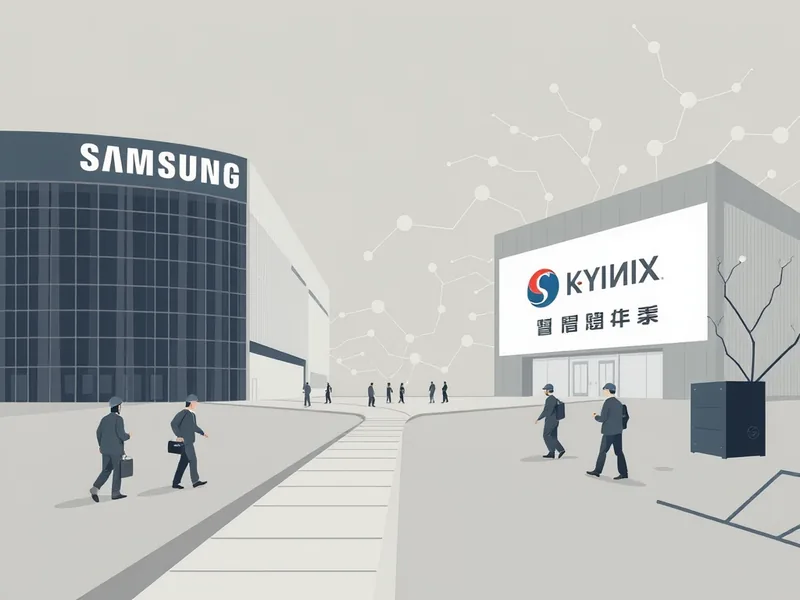
Samsung has not been idle in its efforts to retain and attract talent. After prolonged negotiations with its labor union, Samsung struck a deal that includes improved working conditions and higher bonuses. However, these measures have yet to stem the tide of departures. According to the Samsung union, more than 200 members moved to SK Hynix after April, contributing to SK Hynix’s addition of 2,152 people in the first half of the year alone.
The financial implications are significant. While Samsung reported a robust $58.4 billion in Q2, SK Hynix raised $26.5 billion in what is being called the biggest foreign IPO to date. This influx of capital has allowed SK Hynix to invest heavily in research and development, further widening the gap between the two companies.
The mass exodus from Samsung to SK Hynix is not just a corporate story; it’s a human one. For engineers like Lee, the decision to leave a stable job for an uncertain future at a rival company is fraught with anxiety and hope. The pressure to excel in a highly competitive field while balancing personal well-being is intense.
The broader implications of this talent shift are also significant. As more skilled workers move from Samsung to SK Hynix, the balance of power in the semiconductor industry could tilt, potentially affecting global supply chains and technological advancements. For now, the focus remains on the individuals making these difficult choices, driven by a desire for better opportunities and fairer compensation.
The semiconductor industry’s future is closely tied to the success of companies like Samsung and SK Hynix. As they continue to vie for top talent, the landscape of AI chip production will undoubtedly evolve, shaping the technologies that power our world for years to come.
Tags
Original Sources
Samsung’s chip workers are jumping ship to rival SK Hynix
↗ https://www.technologyreview.com/2026/07/28/1140853/samsung-chip-workers-exodus-sk-hynix
About the author
Amara's entry point into AI was an epidemiology role at a London research hospital, where she spent five years studying how digital health tools reached — or conspicuously failed to reach — underserved communities. Watching early algorithmic systems in healthcare quietly entrench existing inequalities, she redirected her career toward the systemic consequences of AI at scale. She covers AI through an unflinching lens: who benefits, who bears the cost, and what evidence actually says versus what the press release claims. Her writing is calm and precise, but she doesn't mistake balance for neutrality.
More from The Steward →This Week's Edition
6 August 2026
25 articles
Related Articles

Global Survey: Most People Expect AI to Destroy More Jobs Than It Creates
Job Market & Society · 6 min

When Employees Let AI Say What They Can't: The Rise of "Safety by Proxy" at Work
Job Market & Society · 6 min

Edmonton Machine Shop Fined $217,000 After Worker's Fatal Entanglement in Lathe
Job Market & Society · 5 min
Related Articles
Global Survey: Most People Expect AI to Destroy More Jobs Than It Creates
Job Market & Society · 6 min
When Employees Let AI Say What They Can't: The Rise of "Safety by Proxy" at Work
Job Market & Society · 6 min
Edmonton Machine Shop Fined $217,000 After Worker's Fatal Entanglement in Lathe
Job Market & Society · 5 min
More Stories
© 2026 Cedar & Bloom. All rights reserved.
