The Drum · Weekly AI news, freeSubscribe →

Share
In his acceptance speech for a prestigious engineering award, AI guru Yann LeCun forecasts radical improvements in robotics and autonomous vehicles, suggesting current tech falls short of future needs.
Yann LeCun, one of the "godfathers" of modern artificial intelligence and chief AI scientist at Meta, has predicted a significant revolution in AI technology by the end of the decade. According to LeCun, current systems are too limited to create domestic robots and fully automated cars, indicating that new breakthroughs are necessary for these advancements.
LeCun's comments come as part of his acceptance speech for the £500,000 Queen Elizabeth prize for engineering, which he received alongside six other engineers recognized for their contributions to machine learning. Despite recent advancements like OpenAI’s ChatGPT, which has garnered over 100 million users, LeCun emphasizes that current AI systems are still far from matching human or animal intelligence.
LeCun believes that the limitations of current AI systems will drive another revolution within the next three to five years. This new wave of innovation is crucial for developing applications like domestic robots and fully autonomous cars, which require a deep understanding of the real world.
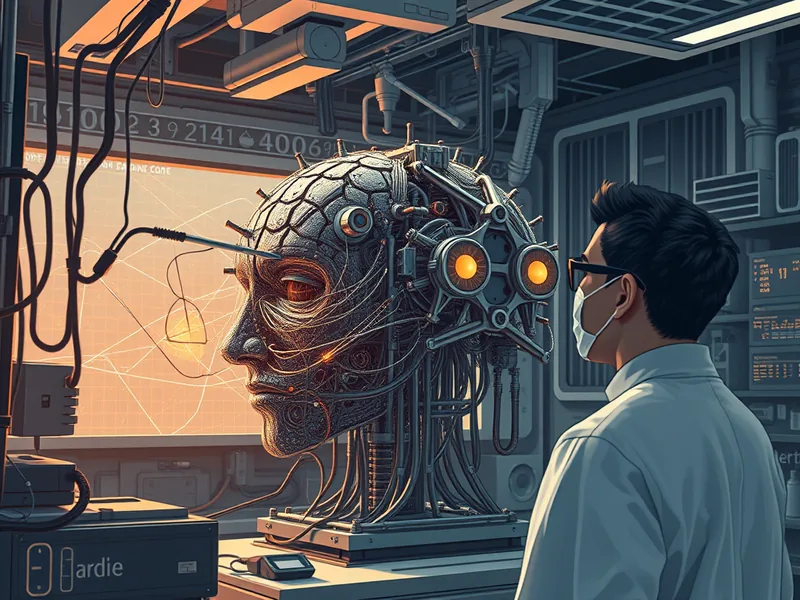
While LeCun is optimistic about the future of AI, he acknowledges that matching human-level intelligence remains a distant goal. The focus for now is on addressing the immediate limitations and pushing the boundaries of what current systems can achieve.
Yann LeCun's predictions highlight the ongoing journey of AI research. While current systems have made remarkable strides, particularly in language processing, they still fall short in critical areas like physical world understanding. The next few years are poised to bring significant advancements, driven by the need to overcome these limitations and unlock new applications that can transform our daily lives.
Tags
Original Sources
About the author
Kai built ML infrastructure at a Bay Area startup before developing an obsession with transformer architectures and inference optimisation that eventually pulled him out of product work entirely. A stint at a compute research lab sharpened his instinct for what actually matters in a model release versus what is marketing. He writes from the inside — from the perspective of someone who has debugged the systems he is describing at three in the morning. He is allergic to hype and instinctively drawn to the unglamorous plumbing questions that everyone else skips over.
More from The Engineer →This Week's Edition
13 February 2025
29 articles
Related Articles

Wharton's Fourth Annual AI Survey: Most Companies See Returns, Few See Big Ones
Models & Research · 6 min
Tensormesh Launches Enterprise KV Cache Platform to Cut Redundant LLM Compute
Models & Research · 6 min

Iambic Therapeutics Raises $150 Million in IPO to Fund AI-Designed Cancer Drugs
Finance & Markets · 5 min
Related Articles
Wharton's Fourth Annual AI Survey: Most Companies See Returns, Few See Big Ones
Models & Research · 6 min
Tensormesh Launches Enterprise KV Cache Platform to Cut Redundant LLM Compute
Models & Research · 6 min
Iambic Therapeutics Raises $150 Million in IPO to Fund AI-Designed Cancer Drugs
Finance & Markets · 5 min
More Stories
© 2026 Cedar & Bloom. All rights reserved.
