The Drum · Weekly AI news, freeSubscribe →

Share
Tech titans like Microsoft’s Satya Nadella are sounding off on the burgeoning impact of AI in coding, revealing how these tools are not just aids but significant contributors to software creation at major firms.
The rapid integration of artificial intelligence (AI) into software development is reshaping the tech industry, with significant implications for both current and aspiring programmers. At a time when AI-generated code is becoming more prevalent, leaders from some of the world's largest tech companies are offering insights that highlight both the opportunities and challenges this trend presents.
During the recent LlamaCon conference, Microsoft CEO Satya Nadella provided a candid look at how deeply AI has influenced modern software development. "I'd say maybe 20 percent, 30 percent of the code that is inside of our repos today and some of our projects are probably all written by software," he stated. This revelation underscores a significant shift in how tech companies approach coding, with AI taking on an increasingly prominent role.
Nadella's comments were part of a broader discussion with Meta CEO Mark Zuckerberg about the evolving role of AI in the tech industry. Both leaders emphasized that AI is not just a futuristic concept but a practical tool already reshaping software development. Nadella asked Zuckerberg what percentage of Meta's code is generated by AI, to which Zuckerberg responded that while he didn't have an exact number, Meta is actively working on developing an AI system capable of creating future versions of its Llama models.
Zuckerberg's vision for the near future is ambitious: "Our bet is sort of that in the next year probably … maybe half the development is going to be done by AI, as opposed to people, and then that will just kind of increase from there." This projection highlights a trend where AI is expected to play an even more significant role in the development process.
Microsoft and Meta are not alone in this shift. Last year, Google CEO Sundar Pichai revealed that AI generates about 25 percent of new code at the tech giant. Similarly, Shopify CEO Tobi Lütke recently informed staff that teams must demonstrate why AI cannot accomplish a task before seeking approval to add more employees. This move underscores a growing emphasis on justifying human roles in an increasingly automated environment.
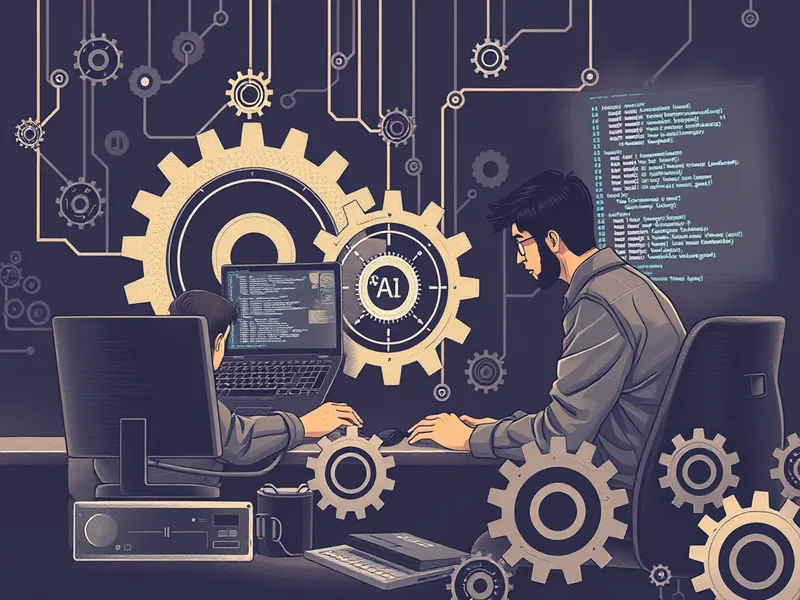
Duolingo, the popular language-learning platform, is also making significant changes. In a company-wide memo, CEO Luis von Ahn announced that Duolingo will gradually reduce its reliance on contractors for tasks that can be automated, as part of a shift to an "AI-first" approach. This strategy reflects a broader industry trend where companies are leveraging AI to optimize their operations and reduce costs.
The rise of AI in code generation raises important questions about the future of programming jobs. While AI is becoming more adept at writing code, it also opens up new opportunities for programmers to focus on higher-level tasks that require human judgment and creativity. For instance, while AI can automate routine coding tasks, it still struggles with complex problem-solving and innovation, areas where human skills are indispensable.
Moreover, the integration of AI in software development can lead to more efficient and scalable solutions, potentially benefiting both companies and consumers. However, it also poses challenges, such as ensuring that AI-generated code is secure, maintainable, and aligned with ethical standards. As AI continues to evolve, it will be crucial for tech leaders and policymakers to address these concerns proactively.
In conclusion, the increasing use of AI in software development marks a significant shift in the tech industry. While it presents both opportunities and challenges, it also underscores the importance of human skills and judgment in an increasingly automated world. As we move forward, it will be essential to strike a balance that leverages the strengths of both humans and machines.
Tags
Original Sources
About the author
Amara's entry point into AI was an epidemiology role at a London research hospital, where she spent five years studying how digital health tools reached — or conspicuously failed to reach — underserved communities. Watching early algorithmic systems in healthcare quietly entrench existing inequalities, she redirected her career toward the systemic consequences of AI at scale. She covers AI through an unflinching lens: who benefits, who bears the cost, and what evidence actually says versus what the press release claims. Her writing is calm and precise, but she doesn't mistake balance for neutrality.
More from The Steward →This Week's Edition
15 May 2025
29 articles
Related Articles

Ottawa Expands AI Funding for Northern Ontario Businesses, Aims to Close the Regional Tech Gap
Job Market & Society · 6 min

AI Is Lowering the Cost of Starting a Business. It's Not Lowering the Cost of Running One.
Job Market & Society · 6 min

Iambic Therapeutics Raises $150 Million in IPO to Fund AI-Designed Cancer Drugs
Finance & Markets · 5 min
Related Articles
Ottawa Expands AI Funding for Northern Ontario Businesses, Aims to Close the Regional Tech Gap
Job Market & Society · 6 min
AI Is Lowering the Cost of Starting a Business. It's Not Lowering the Cost of Running One.
Job Market & Society · 6 min
Iambic Therapeutics Raises $150 Million in IPO to Fund AI-Designed Cancer Drugs
Finance & Markets · 5 min
More Stories
© 2026 Cedar & Bloom. All rights reserved.
