The Drum · Weekly AI news, freeSubscribe →

Share
With a binding agreement on the Pathways Plus carbon capture project due in weeks, rural landowners and Indigenous communities say consultation promises have gone unmet, raising questions about consent, safety, and who gets a seat at the table.
Imagine finding out that a 650-kilometre pipeline carrying pressurized carbon dioxide could soon run near your farm, your water source, or your community, and that the companies and governments behind it have had two years to talk to you but haven't. That's the situation facing Albertans living along the proposed route of the Pathways Plus carbon capture project, a $20 billion industry-led proposal now barreling toward a November 15 deadline for binding commitments.
"Industry and government have had two years to answer our questions, and they still haven't," said Amil Shapka of No CO2 Pipelines Alberta, a grassroots coalition opposing the project. Shapka's group was among roughly two dozen protesters who gathered outside the Carbon Capture Canada convention in Edmonton in September, Canada's largest gathering of carbon capture industry players and government officials.
The irony wasn't lost on protesters. Inside the convention center, speakers repeatedly emphasized the importance of consulting Indigenous and non-Indigenous communities before moving forward with carbon capture infrastructure. Outside, the people who say they'll actually live with the consequences were left standing in the parking lot.
"We're standing outside this convention today because our homes, our farms, our health and our water are what's actually on the line here," Shapka said. "The people who'll actually live with the disastrous impacts of this pipeline can't even get into the room."
Carbon capture and storage, often shortened to CCS or CCUS, works something like this: industrial facilities capture carbon dioxide before it escapes into the atmosphere, compress it, and then pipe it to an underground site where it's injected deep into rock formations for long-term storage. Think of it as trying to put the genie back in the bottle after it's already escaped the lamp, except the bottle in this case is a geological formation near Cold Lake, Alberta, and the genie travels there through hundreds of kilometres of new pipeline.
The Pathways Plus project ties this carbon capture infrastructure to a new oil pipeline running to Canada's Pacific coast. It's backed by the Oil Sands Alliance, an industry consortium representing Canada's five largest oil sands producers, formerly known as the Pathways Alliance. On July 2, 2026, the federal government, the Alberta government, and the Oil Sands Alliance signed a Memorandum of Understanding setting November 15 as the date for binding obligations to move the project forward.
That's a tight timeline for a project of this scale, and it's one reason communities along the route feel rushed. A project fact sheet published by the Oil Sands Alliance in March 2026 mentions public consultation a dozen times, describing it as essential to building trust with affected communities. The same document lists the consultation process as "ongoing." Alain Moore, the Oil Sands Alliance's director of communications, did not respond to DeSmog's request for comment on why residents say that process hasn't reached them.
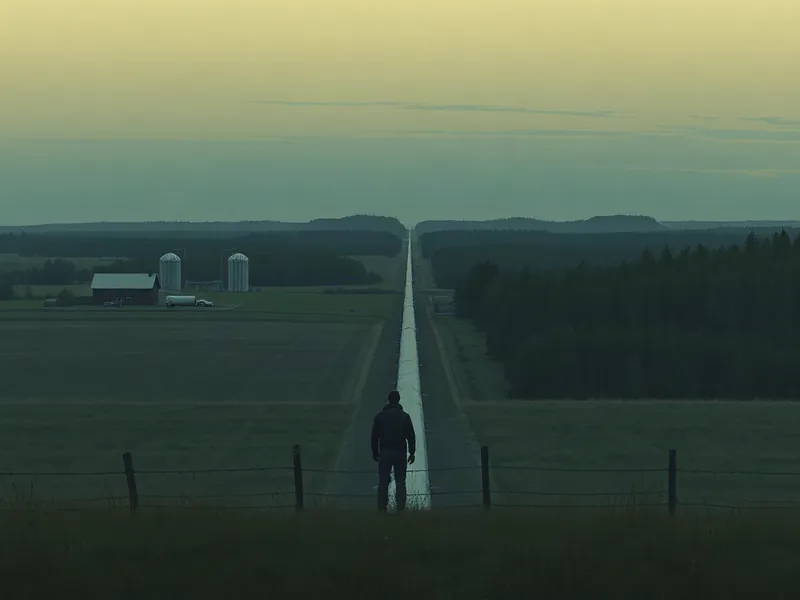
Rural landowners and Indigenous members of the No CO2 Pipelines coalition told DeSmog they've received little information about the project and have heard nothing since the MOU was announced in July. Jesse Cardinal, executive director of Keepers of the Water, said her organization had to initiate contact with the federal government just to schedule a meeting. "We have had no response," she said. "We are going to Ottawa next month to speak with some government representatives about CCUS and will have a better idea of a response then."
Nigel Robinson, a representative of Keepers of the Water and No CO2 Pipelines Alberta, framed the stakes in starker terms. "This is a decision that could trample Treaty rights and bulldoze the consent of the Indigenous communities whose land this pipeline would cross," he said. Treaty rights in Canada are constitutionally protected agreements between the Crown and First Nations, and projects crossing treaty land typically require a documented process of consultation, not just a mention in a fact sheet.
The fear of pipeline failure isn't hypothetical. In 1986, a rare limnic eruption at Cameroon's Lake Nyos released between 100,000 and 300,000 tonnes of concentrated carbon dioxide gas, killing nearly 1,800 people and roughly 3,500 cattle within a 25-kilometre radius. Closer to home, a ruptured carbon dioxide pipeline near Satartia, Mississippi, released over 31,000 barrels of CO2 in February 2020, hospitalizing more than 40 people and forcing the evacuation of around 300 residents. Carbon dioxide is heavier than air and can displace oxygen in low-lying areas, which is part of why a leak or rupture poses such acute risk to nearby communities. The No CO2 Pipelines coalition says Pathways Plus currently lacks a cleanup plan and has not undergone an environmental assessment.
Money adds another layer of uncertainty. The project's cost has climbed from an original estimate of $16.5 billion CAD to a current range of $20 to $30 billion CAD. Oil Sands Alliance president Kendall Dilling told Reuters the companies involved are targeting a final investment decision by late 2027, well after the November deadline for binding commitments. Dilling also acknowledged a significant reduction in the project's anticipated carbon capture capacity, though he described it to conference attendees as only "slightly smaller" and later told DeSmog it was more a matter of timing than scale.
Outside experts aren't convinced the technology will deliver on its promises regardless of how the consultation process unfolds. "Carbon capture and storage (CCS) projects in the oil and gas sector are highly expensive and often underperform," said Steven Haig, a policy advisor with the International Institute for Sustainable Development's Energy Program. "Despite decades of experience with the technology, the sector has not demonstrated that it can scale CCS as promised. Given that oil and gas production is currently Canada's largest source of carbon pollution, CCS projects cannot be relied on to significantly offset emissions from the industry now or in the future."
Consultation isn't a procedural box to check. It's the mechanism by which people who will live alongside industrial infrastructure get a say in whether, and how, that infrastructure gets built. When that process stalls while a binding deadline approaches, the people with the most at stake, their land, their water, their safety, are left to watch decisions happen around them rather than with them. Whether Pathways Plus ultimately gets built remains genuinely uncertain, given its ballooning costs and the industry's own admission that a final investment decision won't come until 2027. But the question of who gets heard before November 15 is being decided right now, and for the communities along that proposed route, that timeline feels like it's already running out.
Tags
Original Sources
‘People’s Rights Are Being Signed Away,’ Claim Albertans Near Proposed Carbon Capture Project
↗ https://www.desmog.com/2026/10/01/peoples-rights-are-being-signed-away-claim-albertans-near-proposed-carbon-capture-project
About the author
Amara's entry point into AI was an epidemiology role at a London research hospital, where she spent five years studying how digital health tools reached — or conspicuously failed to reach — underserved communities. Watching early algorithmic systems in healthcare quietly entrench existing inequalities, she redirected her career toward the systemic consequences of AI at scale. She covers AI through an unflinching lens: who benefits, who bears the cost, and what evidence actually says versus what the press release claims. Her writing is calm and precise, but she doesn't mistake balance for neutrality.
More from The Steward →This Week's Edition
2 October 2026
28 articles
Related Articles

White House Begins Mailing $500 Checks to Nearly a Million ACA Enrollees
Policy & Regulation · 5 min
Trump Administration Appeals Block on Visa Rule That Could Disrupt Physician Training
Policy & Regulation · 5 min

California Draws New Lines Around AI in Patient Care, Even as Washington Pushes Back
Policy & Regulation · 5 min
Related Articles
White House Begins Mailing $500 Checks to Nearly a Million ACA Enrollees
Policy & Regulation · 5 min
Trump Administration Appeals Block on Visa Rule That Could Disrupt Physician Training
Policy & Regulation · 5 min
California Draws New Lines Around AI in Patient Care, Even as Washington Pushes Back
Policy & Regulation · 5 min
More Stories
© 2026 Cedar & Bloom. All rights reserved.
