The Drum · Weekly AI news, freeSubscribe →

Share
As the EU rolls out digital identity wallets to hundreds of millions of citizens, cryptographers are racing to prove you can verify who someone is without ever seeing their personal data.
Imagine having to hand over your entire wallet, driver's license, passport, medical card, and all, just to prove you're old enough to buy a beer. That's roughly how most digital identity verification works today. You share far more than the question actually requires. Europe is now betting on a different approach, one that could reshape how nearly 450 million people prove who they are online.
The European Union is in the process of deploying digital identity wallets under its eIDAS 2.0 regulation, a framework meant to give citizens a single, secure way to verify their identity across borders and services. The ambition is enormous: a digital credential that works whether you're opening a bank account in Lisbon or renting a car in Warsaw. But ambition this large comes with risk. Centralizing identity data, even with good intentions, creates a tempting target for hackers and a quiet expansion of surveillance potential if not designed carefully.
That's where a cryptographic technique called zero-knowledge proofs comes in. The concept sounds almost like a magic trick, but it's grounded in decades of mathematical research. A zero-knowledge proof lets one party prove a fact to another without revealing any of the underlying data that makes the fact true. Think of it like proving you know a secret password without ever saying the password out loud, and without the other person being able to guess it from your proof. Applied to digital identity, it means a person could prove they're over 18, or that they're a licensed driver, or that they're a citizen of a particular country, without exposing their birth date, their license number, or any other detail beyond the single fact being verified.
This matters because the current model of identity verification is built on oversharing. When you show a physical ID to buy alcohol, the bartender sees your exact birthdate, your address, your photo, and a government ID number, when all they actually needed to know was a yes or no answer. Digitize that same habit without rethinking it, and you've simply made the oversharing faster and easier to aggregate at scale. Zero-knowledge proofs offer a way to digitize identity verification while actually shrinking, not expanding, the amount of personal data that changes hands.
Building this into a system meant to serve hundreds of millions of people is not a small engineering task. Zero-knowledge proofs have existed in academic cryptography for years, but implementing them at the scale the EU is attempting, across different countries, legal systems, and technical infrastructures, is largely untested territory. The computational overhead of generating and verifying these proofs needs to be manageable on ordinary smartphones, not just powerful servers. The protocols need to be standardized enough that a credential issued in one EU member state can be trusted and verified in another.
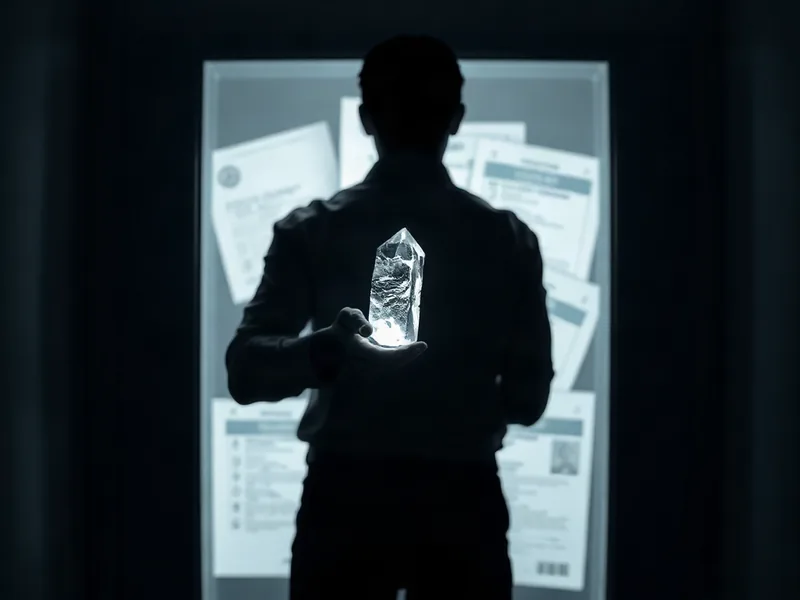
There's also the matter of who controls the underlying infrastructure. Even a system built on zero-knowledge principles can be undermined if the servers issuing credentials, or the apps storing them, aren't themselves secure and trustworthy. Cryptography can guarantee that a specific proof reveals nothing extra. It can't guarantee that the broader system around it is free of bugs, backdoors, or bad actors. Security researchers working on eIDAS implementation have flagged this as a genuine concern: the strength of the cryptographic math is only as good as the software and institutions built around it.
Standards bodies, including IEEE, have a role to play here too. Establishing common technical benchmarks for how zero-knowledge proofs should be implemented, tested, and audited across the EU's digital wallet ecosystem is essential if the system is going to earn public trust rather than just regulatory compliance. Without shared standards, you risk a patchwork where some countries' implementations are genuinely privacy-preserving and others are privacy theater, offering the appearance of protection without the substance.
There's a legitimate tension worth naming honestly. Privacy advocates have long worried that digital identity systems, however well-intentioned, tend to expand government and corporate visibility into citizens' daily lives over time. Zero-knowledge proofs are, in part, a direct response to that worry, an attempt to build privacy protection into the architecture itself rather than relying on policy promises that can shift with political winds. But the technology is also new enough, at this scale, that nobody can yet say with certainty how it will hold up against real-world attacks, edge cases, or simple implementation errors.
What happens in the EU's digital identity rollout won't stay contained to Europe. Governments and companies around the world are watching closely, because the technical and policy choices made here will likely become a template, for better or worse. If zero-knowledge proofs prove robust and usable at scale, they could become the default expectation for identity systems everywhere, finally breaking the habit of oversharing that has defined digital verification since its inception. If the rollout stumbles, through bugs, inconsistent standards, or public distrust, it could set back the case for privacy-preserving identity tech for years.
For ordinary people, the stakes are concrete rather than abstract. A well-built system means you could prove your age, your citizenship, or your professional credentials without creating a permanent, traceable record of every time you did so. A poorly built one means a new, centralized honeypot of sensitive data, dressed up in the language of privacy but vulnerable underneath. The cryptography exists to do this right. Whether the implementation lives up to that promise is the question Europe, and eventually the rest of us, will be answering in real time.
Tags
Original Sources
EU Digital Wallets Promise Privacy but Leave Cryptographic Crumbs
↗ https://spectrum.ieee.org/europe-digital-id-security-cryptography
About the author
Amara's entry point into AI was an epidemiology role at a London research hospital, where she spent five years studying how digital health tools reached — or conspicuously failed to reach — underserved communities. Watching early algorithmic systems in healthcare quietly entrench existing inequalities, she redirected her career toward the systemic consequences of AI at scale. She covers AI through an unflinching lens: who benefits, who bears the cost, and what evidence actually says versus what the press release claims. Her writing is calm and precise, but she doesn't mistake balance for neutrality.
More from The Steward →This Week's Edition
15 November 2026
14 articles
Related Articles

Why the Woman Who Fired Sam Altman Still Doesn't Trust AI's Boardrooms
Policy & Regulation · 5 min
Pakistan to Send Climate Minister to India for First High-Level Visit in Three Years
Policy & Regulation · 5 min

Trump, Xi and Putin May Meet in Shenzhen, but Smaller Nations Fear a New Yalta
Policy & Regulation · 6 min
Related Articles
Why the Woman Who Fired Sam Altman Still Doesn't Trust AI's Boardrooms
Policy & Regulation · 5 min
Pakistan to Send Climate Minister to India for First High-Level Visit in Three Years
Policy & Regulation · 5 min
Trump, Xi and Putin May Meet in Shenzhen, but Smaller Nations Fear a New Yalta
Policy & Regulation · 6 min
More Stories
© 2026 Cedar & Bloom. All rights reserved.
