The Drum · Weekly AI news, freeSubscribe →

Share
Alibaba's flagship model promises cheaper completed tasks and sharply lower token use, but independent benchmarks place it behind Kimi K3.1 Pro and leading U.S. models, leaving enterprise buyers with a workload-specific calculation rather than a clear verdict.
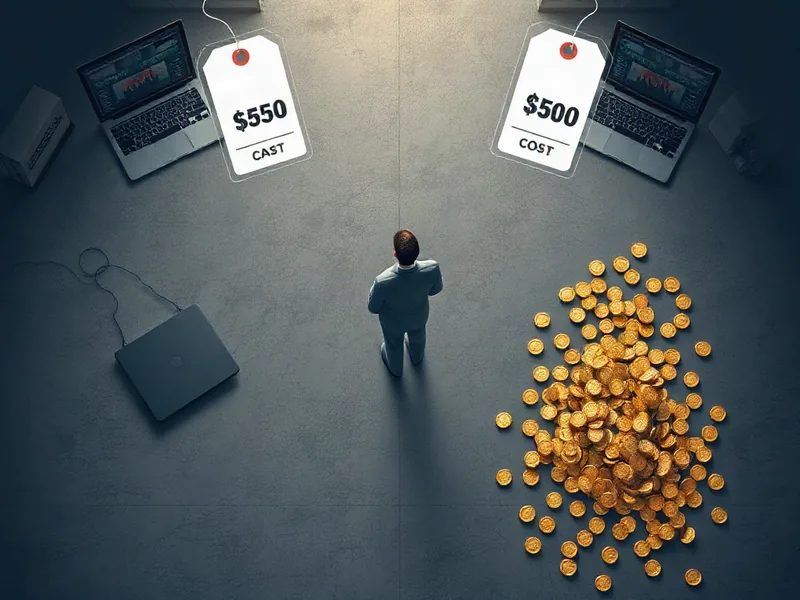
Alibaba is not claiming its newest flagship model is the smartest on the market. It is claiming something narrower and, for most enterprise buyers, more useful: that Qwen4-Max can complete comparable work for substantially less money. The evidence supports that claim in part. It does not support a broader claim of frontier leadership.
Qwen4-Max accepts text, images, and video, works with external tools, and handles up to one million tokens of context. Alibaba says it improves on its predecessor, Qwen3.8-Max, while cutting the average cost of a task on the company's internal Work360 evaluation from $4.43 to $1.67, a reduction of roughly 62%. That is a significant number, and it is also a number generated by Alibaba's own benchmark. Independent measurements tell a more qualified story.
Crucially, Qwen4-Max is proprietary, not open-weights. Artificial Analysis classifies it as a closed model, and Alibaba has not published downloadable weights businesses could run on their own infrastructure. That marks a departure for a model family built a reputation on open releases. Alibaba's launch announcement promises open versions of smaller Qwen4 models, but offers no dates, no licenses, and no equivalent commitment for the flagship. Today, Qwen4-Max is accessible only through QwenCloud, Qwen Studio, QwenWork, and Qoder.
On pricing, the case is straightforward. The API charges $1.50 per million input tokens and $4.50 per million output tokens. That output rate sits 55% below the standard $10 charged by GPT-6.1 Sol, Claude Sonnet 5.5, and introductory Gemini 4 Carbon pricing, and 77.5% below Claude Opus 5.5. Qwen's input rate matches Google's Gemini 4 Hydrogen, while its output price comes in 40% cheaper. It is not the cheapest option across the board, though. Anthropic's Haiku 5.5 lists $0.10 input and $0.50 output for prompts under 100,000 tokens, a fraction of Qwen's rate, for a model built for a different performance tier.
Independent cost data lends some support to Alibaba's pitch. Artificial Analysis reports Qwen4-Max costs $3.27 per Intelligence Index task, versus $3.68 for Kimi K3.1 Pro, an 11% advantage. That figure comes from a different test suite than Alibaba's $1.67 Work360 number, and the two should not be conflated. But the direction is consistent: lower token prices are translating into lower measured costs on at least one outside benchmark.
Alibaba's own launch chart shows Qwen4-Max narrowly leading Claude Opus 5.5, GPT-6.1 Sol, and Kimi K3.1 on DeepSWE v1.1, a coding-agent test, and scoring close to Opus on APEX-Agents, a professional-services benchmark. On Agents' Last Exam v1.1, it scores 46.7, up sharply from 27.9 for its predecessor and ahead of Opus's 43.4.
Elsewhere the picture is far weaker. On Terminal-Bench 4.0, Qwen4-Max scores 48.5, trailing Kimi K3.1's 67.2 by nearly 19 points and falling short of both Opus and GPT-6.1 Sol. On ProgramBench, a software-replication test, Qwen scores 31.5, less than half of Opus's 65.0. Chart interpretation, relevant to financial and document-analysis workflows, also lags: Qwen scores 54.2 against 66.3 for Opus and 67.8 for GPT-6.1 Sol.
Artificial Analysis's own composite places Qwen4-Max at 43 on its Intelligence Index, an improvement from Qwen3.8-Max's 34, but behind Kimi K3.1 Pro's 46, GPT-6.1 Sol and Claude Sonnet 5.5 at 55, Opus 5.5 at 59, Gemini 4 Carbon at 60, and Claude Fable 5.2 at 65. Speed compounds the concern. Artificial Analysis measured roughly 32 minutes per Intelligence Index task and about 159 seconds to the first response token, among the slower results recorded for major foundation models. A model that costs less per task but takes longer to deliver it does not automatically produce a lower total cost once labor and review time enter the calculation.
Token efficiency, separate from dollar cost, shows genuine improvement. Alibaba reports token consumption falling approximately 24% at the Xhigh reasoning setting and 35% at High on Work360, and close to 48% and 49% on Terminal-Bench 4.0. These are real architectural gains tied to a mixture-of-experts design that Alibaba says activates roughly 25% fewer parameters than its predecessor, drawing on a 2.4-trillion-parameter backbone with 71 billion parameters activated per token. Lower token consumption is not the same claim as lower total cost, and businesses evaluating the model should treat the two figures separately.
Criticism has followed the launch. The X account Chubby, posting as @kimmonismus, called the release disappointing, arguing the Artificial Analysis score undercuts the appearance of near-Opus parity and speculating that distillation restrictions explain the gap. No evidence in that post or elsewhere establishes that causal claim, and benchmark scores alone cannot confirm how training access shaped the outcome. The more defensible reading is simpler: Qwen4-Max trails Kimi K3.1 Pro on aggregate intelligence while costing less per evaluated task, a tradeoff that will matter to some buyers and not others.
Modality limits add a further qualification. Qwen4-Max lists text, image, and video input with text-only output, and does not support native audio input. Google's Carbon and Hydrogen models accept audio input directly. Businesses building voice-centric applications will need a different integration path regardless of price.
Qwen4-Max is a legitimate cost play, not a benchmark leader. Its pricing undercuts most Western frontier models on output tokens, and independent data shows a real, if modest, cost advantage over Kimi K3.1 Pro on at least one measure. But it trails that same competitor badly on terminal-based agent work, lags well behind Opus on software replication, and runs slower than most peers on Artificial Analysis's timing data. For enterprise buyers, the right test is not whether Qwen4-Max wins on a leaderboard. It is whether its lower price per token, measured against real failure rates, retries, and review time on a specific workload, produces a lower cost per finished task than the alternatives. That answer will vary by use case, and only workload-specific testing will settle it.
Tags
Original Sources
Alibaba’s Qwen4-Max cuts AI task costs, but benchmarks show an uneven challenge to frontier rivals
↗ https://venturebeat.com/technology/alibabas-qwen4-max-cuts-ai-task-costs-but-benchmarks-show-an-uneven-challenge-to-frontier-rivals
About the author
Marcus began tracking AI's market implications in 2016, noticing AI-related patent filings accelerating ahead of earnings upgrades before most of the sell-side had caught on. A former fixed-income quantitative analyst, he spent two decades building models that priced risk across emerging markets before pivoting to cover the economic impact of AI full-time. His writing translates opaque technical developments into clear risk/reward terms — and he's rarely diplomatic about the gap between AI valuations and underlying fundamentals. He believes most market participants still underestimate AI's long-run deflationary effect on knowledge work.
More from The Analyst →This Week's Edition
18 November 2026
29 articles
Related Articles

Sila's $1 Billion Panasonic Deal Signals a Reset for US Battery Materials
Finance & Markets · 5 min

Anthropic's IPO Tests Whether a Safety Mission Survives Wall Street Pressure
Finance & Markets · 4 min
Fed's Jefferson: AI Buildout Is Fueling Inflation Now, Productivity Payoff Still Pending
Finance & Markets · 5 min
Related Articles
Sila's $1 Billion Panasonic Deal Signals a Reset for US Battery Materials
Finance & Markets · 5 min
Anthropic's IPO Tests Whether a Safety Mission Survives Wall Street Pressure
Finance & Markets · 4 min
Fed's Jefferson: AI Buildout Is Fueling Inflation Now, Productivity Payoff Still Pending
Finance & Markets · 5 min
More Stories
© 2026 Cedar & Bloom. All rights reserved.
