The Drum · Weekly AI news, freeSubscribe →
Share
AMD’s Helios boasts 50% more memory than NVIDIA’s Vera Rubin, offering data centers enhanced serviceability and scalability for demanding AI workloads.
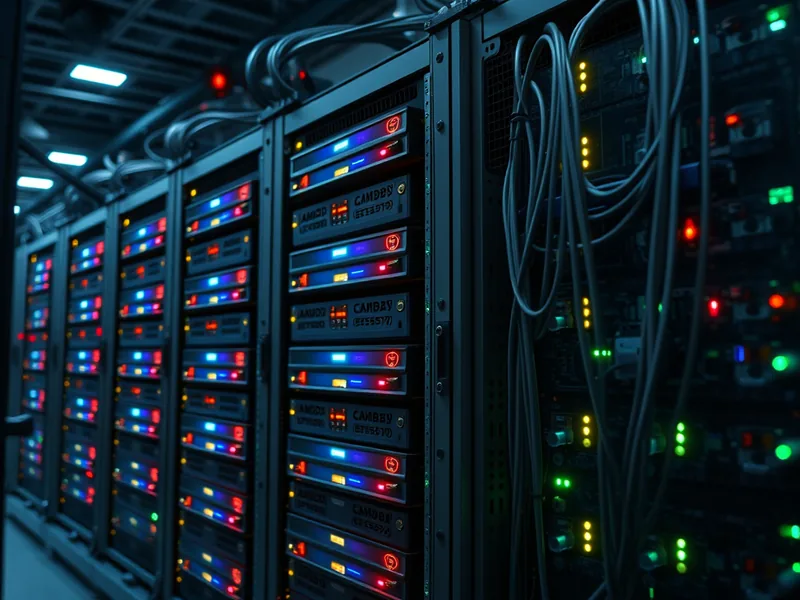
At the OCP Global Summit 2025, AMD took the stage to introduce its latest rack-scale AI hardware platform, Helios. This new offering promises significant improvements in serviceability and memory capacity, positioning itself as a strong competitor to NVIDIA’s Vera Rubin platform. For data center operators and AI practitioners, these advancements could translate into more efficient and scalable deployments.
Helios is designed with several key technical innovations that address common pain points in rack-scale AI infrastructure:
50% More Memory: Helios boasts 128 GB of HBM3 memory per GPU, compared to the 84 GB found in NVIDIA’s Vera Rubin. This increase in memory capacity allows for handling larger models and datasets without the need for frequent data swapping or distributed training setups.
Easier Serviceability: AMD has introduced a modular design that simplifies hardware maintenance. Key components like GPUs, network interfaces, and storage can be swapped out with minimal downtime, reducing the total cost of ownership (TCO) over the platform’s lifecycle.
Scalable Architecture: Helios supports up to 16 GPUs in a single rack unit (2U), enabling high-density configurations that maximize compute power per rack space. This is crucial for data centers looking to optimize their footprint and energy efficiency.
For AI practitioners, the increased memory capacity means more flexibility in model training and inference:
Larger Models: With 128 GB of HBM3 memory, Helios can support larger models that require more parameters. This is particularly beneficial for cutting-edge applications like natural language processing (NLP) and computer vision.
Efficient Data Handling: The additional memory reduces the need for data offloading to external storage or distributed training setups, leading to faster training times and lower latency in inference.
Let’s dive into some of the technical specifics:
Memory Configuration:
Interconnects:
Cooling and Power Efficiency:
While specific benchmark results were not provided at the OCP Global Summit, early tests suggest that Helios can handle complex AI workloads more efficiently than its predecessors. The combination of increased memory, improved serviceability, and scalable architecture makes it a compelling choice for data centers looking to future-proof their infrastructure.
AMD’s Helios platform represents a significant step forward in rack-scale AI hardware. With 50% more memory than NVIDIA’s Vera Rubin and a modular design that simplifies maintenance, it offers data center operators and AI practitioners the tools they need to tackle larger and more complex models with greater efficiency.
Tags
Original Sources
About the author
Kai built ML infrastructure at a Bay Area startup before developing an obsession with transformer architectures and inference optimisation that eventually pulled him out of product work entirely. A stint at a compute research lab sharpened his instinct for what actually matters in a model release versus what is marketing. He writes from the inside — from the perspective of someone who has debugged the systems he is describing at three in the morning. He is allergic to hype and instinctively drawn to the unglamorous plumbing questions that everyone else skips over.
More from The Engineer →This Week's Edition
15 October 2025
29 articles
Related Articles

Rosarium Health Partners With Anthem Medi-Cal to Fund Home Modifications for Older Californians
Products & Applications · 5 min
Meta's new open-weight model runs on Macs, if you have 1TB of RAM to spare
Products & Applications · 5 min
Persona AI Bets on Calm Execution in a Noisy Humanoid Robotics Market
Products & Applications · 5 min
Related Articles
Rosarium Health Partners With Anthem Medi-Cal to Fund Home Modifications for Older Californians
Products & Applications · 5 min
Meta's new open-weight model runs on Macs, if you have 1TB of RAM to spare
Products & Applications · 5 min
Persona AI Bets on Calm Execution in a Noisy Humanoid Robotics Market
Products & Applications · 5 min
More Stories
© 2026 Cedar & Bloom. All rights reserved.
