The Drum · Weekly AI news, freeSubscribe →
Topic Focus
Consumer and enterprise AI product launches and real-world deployments
5 stories this week
This week, The Steward, The Engineer and The Analyst bring 5 stories covering Products & Applications.
All Stories This Week

Rosarium Health Partners With Anthem Medi-Cal to Fund Home Modifications for Older Californians
2026-10-16 · 5 min read

Meta's new open-weight model runs on Macs, if you have 1TB of RAM to spare
2026-10-16 · 5 min read
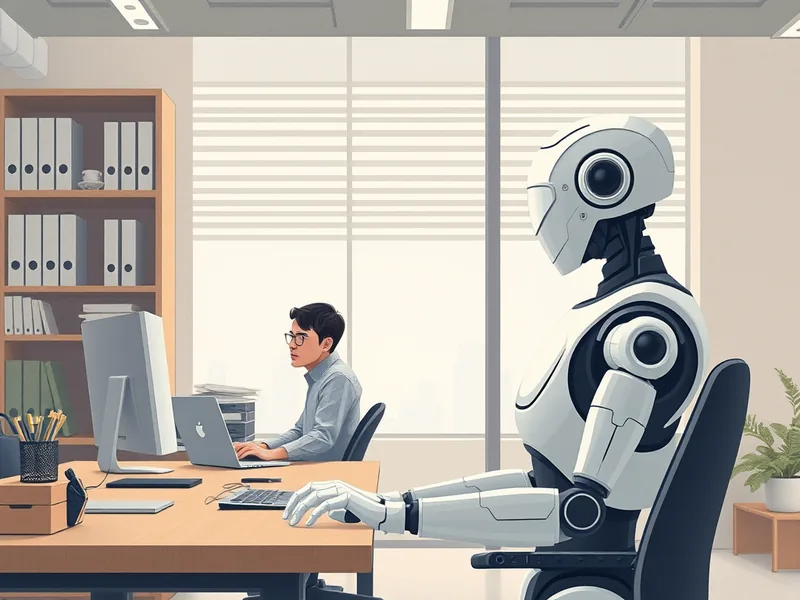
Persona AI Bets on Calm Execution in a Noisy Humanoid Robotics Market
2026-10-16 · 5 min read

OpenAI Commits $5 Million to Help Mathematicians Vet AI-Generated Proofs
2026-10-16 · 5 min read

Meta's Muse Spark Open Claims the US Open-Weight Crown, But the Title Comes With Fine Print
2026-10-16 · 5 min read
Products and applications is where AI stops being a research paper and starts being a thing you can buy, text, or install. This hub tracks that translation layer: text-message agents handling calendars and bookings, Microsoft and AWS pitching agentic AI for factory floors, Surface laptops running local models instead of shipping everything to the cloud. It also covers the unglamorous but essential stuff, like solid-state batteries sized for AI data centers and course material teaching chemists how machine learning actually fits their work.
None of this matters in the abstract. It matters because the gap between a flashy demo and a reliable product is where most AI value gets made or lost. A hospital billing system, a drug discovery lab, a robot bartender, these are the places where AI either saves money and time or quietly breaks something important. Business leaders are watching this space because it answers the question investors actually care about: can the technology ship, scale, and hold up under real use.
The tensions here are sharper than the marketing suggests. An open-source security agent built for defensive testing got weaponized against banks, a reminder that useful tools and dangerous ones can share the same code. Consumer AI agents are multiplying fast, with a dozen-plus startups chasing the same text-message convenience that made one company worth ten billion dollars, and not all of them will survive the shakeout. Meanwhile hardware bets, from orbital repair robots to battery chemistry for power-hungry server racks, show that software ambitions still run into physical limits.
What ties it together is a quiet negotiation between hype and durability. Companies want to claim the agentic AI label; customers want things that actually work when the novelty wears off. Watching which products survive contact with real users, real regulations, and real failure modes is the clearest way to separate genuine progress from repackaged promises.
OpenAI
Pioneering advanced AI for a safe and beneficial future
© 2026 Cedar & Bloom. All rights reserved.
