The Drum · Weekly AI news, freeSubscribe →
Share
AMIE, the AI agent developed by Google researchers, now integrates visual and verbal data to enhance medical diagnoses, potentially revolutionizing how doctors interact with patients and interpret symptoms.
In a world where medical accuracy and patient care are paramount, the integration of advanced technology can make a significant difference. A recent breakthrough by researchers at Google DeepMind and Google Research brings us closer to this goal with the development of a new AI agent called AMIE (Articulate Medical Intelligence Explorer). This latest iteration of AMIE is designed to conduct diagnostic conversations that incorporate visual medical information, marking a crucial step forward in multimodal medical diagnostics.
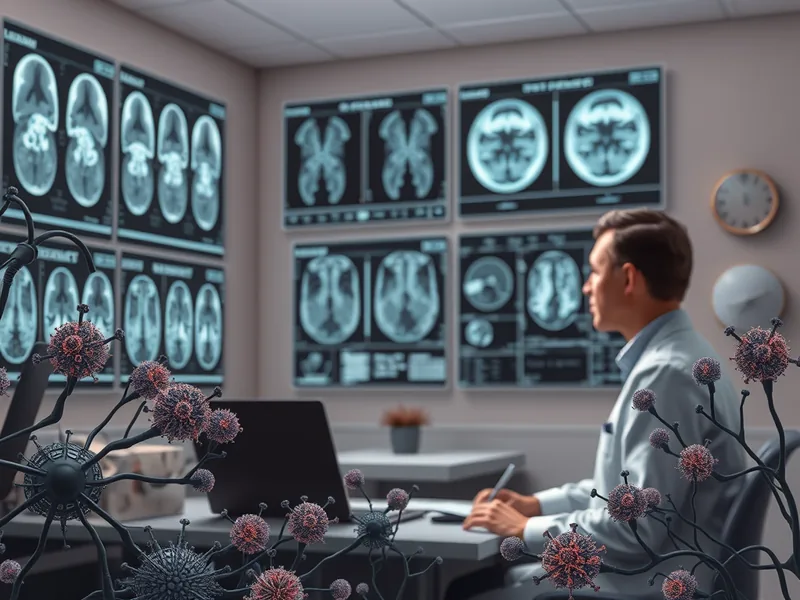
Imagine you're visiting a doctor's office for an unfamiliar symptom. The doctor not only listens to your description but also examines X-rays, MRI scans, and other test results to form a comprehensive diagnosis. Now, imagine if an AI could assist in this process by understanding both your verbal descriptions and visual medical data. This is the promise of AMIE's latest capabilities.
AMIE, initially introduced as a text-based diagnostic conversational AI, has now been enhanced to integrate visual information. This means that during a consultation, AMIE can request, interpret, and reason about images such as X-rays or MRI scans, much like a human doctor would. The system uses advanced language models and multimodal capabilities to make this possible.
The core of this advancement lies in the use of Gemini 2.0 Flash, a powerful multimodal model developed by Google. This model allows AMIE to optimize its responses based on the phase of the conversation and its evolving uncertainty about the underlying diagnosis. For example, if AMIE is unsure about a particular symptom, it can request additional visual data to clarify.
In their recent work, Khaled Saab and Jan Freyberg demonstrated how AMIE can handle complex medical scenarios more effectively by incorporating visual information. They found that this multimodal approach significantly improved the accuracy of diagnostic conversations. This is particularly important in medicine, where tests and investigations are essential for effective care.
The benefits of this technology are clear. For patients, it could lead to faster and more accurate diagnoses, reducing the time spent waiting for test results and consultations. For healthcare providers, it can serve as a valuable tool to support their decision-making process, potentially leading to better patient outcomes.
However, there are also risks to consider. The reliance on AI for medical diagnosis raises concerns about privacy and data security. Ensuring that patient information is handled securely and ethically is crucial. Additionally, while AMIE is designed to assist doctors, it's important that it does not replace human judgment entirely. The ultimate goal is to enhance the diagnostic process, not to take over it.
The development of AMIE with multimodal capabilities represents a significant step forward in medical AI. As this technology continues to evolve, it has the potential to transform how we approach medical diagnostics and patient care. However, ongoing research and rigorous testing are necessary to ensure that these tools are safe, effective, and ethically sound.
The integration of visual information into diagnostic conversations is a game-changer in the field of medical AI. AMIE's new capabilities not only enhance its diagnostic accuracy but also provide a more comprehensive and efficient patient care experience. As we move forward, it's essential to balance the benefits of this technology with the need for ethical considerations and human oversight.
Tags
Original Sources
About the author
Amara's entry point into AI was an epidemiology role at a London research hospital, where she spent five years studying how digital health tools reached — or conspicuously failed to reach — underserved communities. Watching early algorithmic systems in healthcare quietly entrench existing inequalities, she redirected her career toward the systemic consequences of AI at scale. She covers AI through an unflinching lens: who benefits, who bears the cost, and what evidence actually says versus what the press release claims. Her writing is calm and precise, but she doesn't mistake balance for neutrality.
More from The Steward →This Week's Edition
9 May 2025
29 articles
Related Articles
Related Articles
More Stories
© 2026 Cedar & Bloom. All rights reserved.