The Drum · Weekly AI news, freeSubscribe →

Share
Researchers at Anthropic have developed a new tool that provides unprecedented visibility into the inner workings of large language models, revealing a hidden space where Claude processes concepts before generating responses.
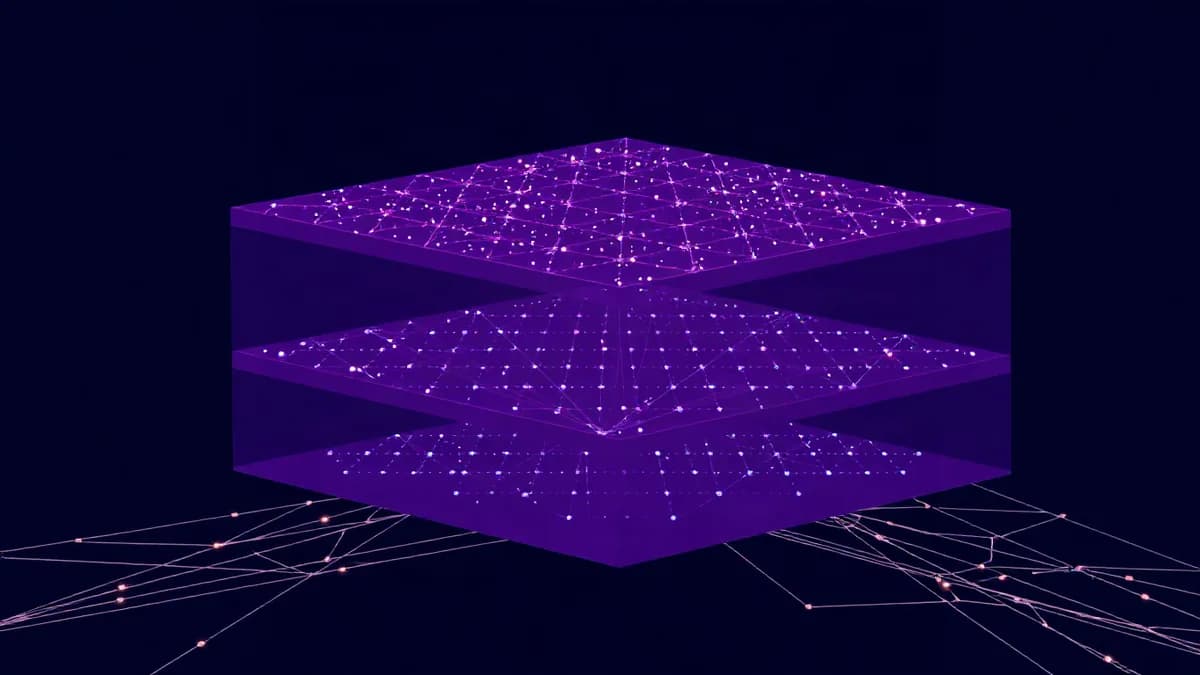
Anthropic, the AI research firm behind the popular Claude language model, has unveiled a groundbreaking technique called the Jacobian lens (or J-lens). This tool offers an unprecedented view into the internal mechanisms of large language models (LLMs), specifically within Claude Opus 4.6, a version released in February. The J-lens uncovers a hidden area named the J-space, where individual words related to the model’s imminent responses are stored and processed.
The significance of this discovery lies in its potential to enhance our understanding and control over LLMs. By monitoring the J-space, researchers can gain insights into what an LLM is actually doing, which often differs from what it claims to be doing. This could lead to more transparent and trustworthy AI systems.
The Jacobian lens (J-lens) is a sophisticated tool designed to probe the internal workings of LLMs. It works by analyzing the gradients of the model's outputs with respect to its inputs, effectively mapping out how changes in input affect the output. This process reveals the J-space, a hidden region where words and concepts are processed before they appear in the final response.

Anthropic has shared its findings in a paper published on their website. They have also collaborated with Neuronpedia, an open-source platform, to create a hands-on demo that allows anyone to explore the J-space within Claude Opus 4.6.
Tom McGrath, chief scientist and cofounder at Goodfire, a startup focused on understanding and controlling LLMs, praised the work: "It’s very good and interesting research. The ability to see inside these models in such detail is crucial for improving their reliability and trustworthiness."
The development of the J-lens is a significant step forward in the field of mechanistic interpretability. As Anthropic continues to push the boundaries of this research, we can expect more innovative tools and techniques that will deepen our understanding of LLMs and enhance their practical applications.
Tags
Original Sources
Anthropic found a hidden space where Claude puzzles over concepts
↗ https://www.technologyreview.com/2026/07/09/1140293/anthropic-found-a-hidden-space-where-claude-puzzles-over-concepts
About the author
Kai built ML infrastructure at a Bay Area startup before developing an obsession with transformer architectures and inference optimisation that eventually pulled him out of product work entirely. A stint at a compute research lab sharpened his instinct for what actually matters in a model release versus what is marketing. He writes from the inside — from the perspective of someone who has debugged the systems he is describing at three in the morning. He is allergic to hype and instinctively drawn to the unglamorous plumbing questions that everyone else skips over.
More from The Engineer →This Week's Edition
20 July 2026
29 articles
Related Articles

Wharton's Fourth Annual AI Survey: Most Companies See Returns, Few See Big Ones
Models & Research · 6 min
Tensormesh Launches Enterprise KV Cache Platform to Cut Redundant LLM Compute
Models & Research · 6 min

Iambic Therapeutics Raises $150 Million in IPO to Fund AI-Designed Cancer Drugs
Finance & Markets · 5 min
Related Articles
Wharton's Fourth Annual AI Survey: Most Companies See Returns, Few See Big Ones
Models & Research · 6 min
Tensormesh Launches Enterprise KV Cache Platform to Cut Redundant LLM Compute
Models & Research · 6 min
Iambic Therapeutics Raises $150 Million in IPO to Fund AI-Designed Cancer Drugs
Finance & Markets · 5 min
More Stories
© 2026 Cedar & Bloom. All rights reserved.
