The Drum · Weekly AI news, freeSubscribe →
Share
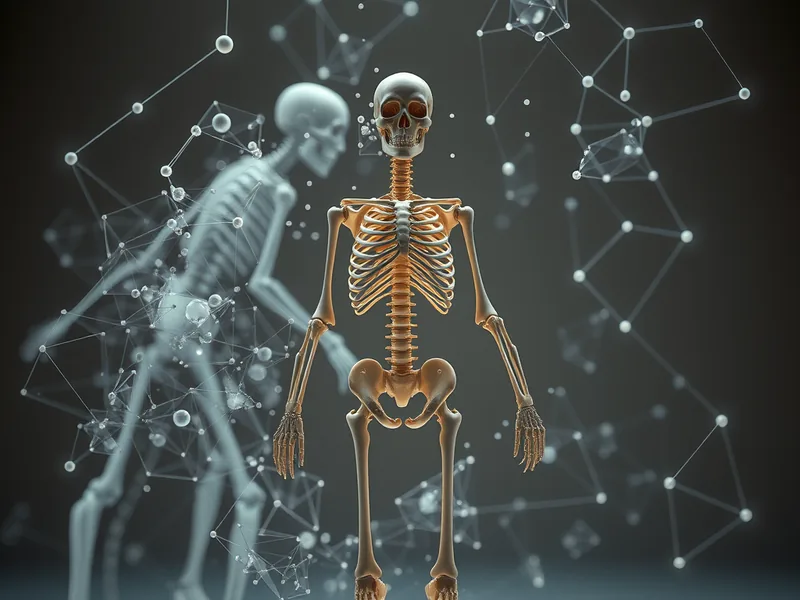
NVIDIA's Articulated Kinematics Distillation marries skeleton-based animation with video diffusion models, synthesizing realistic and physically plausible motions that push the boundaries of character animation fidelity.
In a significant leap forward for character animation, NVIDIA Research has introduced Articulated Kinematics Distillation (AKD), a framework that merges the precision of skeleton-based animation with the generative power of video diffusion models. AKD is designed to create high-fidelity animations by efficiently synthesizing realistic motions while maintaining structural integrity and physical plausibility.
AKD's core innovation lies in its approach to motion synthesis, which leverages articulated skeletons to reduce the complexity of motion generation. Instead of dealing with the full 4D neural deformation fields that can struggle with shape consistency, AKD focuses on a low-dimensional parameterization using joint angles for articulated bones. This method allows the model to concentrate on higher-level motion modes rather than local deformations.
One of the key strengths of AKD is its compatibility with physics-based simulations. After synthesizing a motion sequence, AKD can project this sequence into a physics-based environment to ensure that the movements are physically plausible.
NVIDIA has provided several compelling demos to showcase the capabilities of AKD:
AKD not only handles a broad spectrum of characters but also supports diverse motion types for the same character. For example:
These demonstrations highlight AKD's ability to generate both consistent and varied motions, making it a versatile tool for animation in various applications.
Articulated Kinematics Distillation represents a significant advancement in the field of character animation. By combining the strengths of skeleton-based representation and video diffusion models, AKD offers a powerful solution for generating high-fidelity, physically plausible animations. This approach not only enhances the realism of synthesized motions but also ensures that they are consistent and structurally sound.
Tags
Original Sources
↗ https://research.nvidia.com/labs/dir/akd/?utm_source=tldrai
About the author
Kai built ML infrastructure at a Bay Area startup before developing an obsession with transformer architectures and inference optimisation that eventually pulled him out of product work entirely. A stint at a compute research lab sharpened his instinct for what actually matters in a model release versus what is marketing. He writes from the inside — from the perspective of someone who has debugged the systems he is describing at three in the morning. He is allergic to hype and instinctively drawn to the unglamorous plumbing questions that everyone else skips over.
More from The Engineer →This Week's Edition
4 April 2025
29 articles
Related Articles
Wharton's Fourth Annual AI Survey: Most Companies See Returns, Few See Big Ones
Models & Research · 6 min
Tensormesh Launches Enterprise KV Cache Platform to Cut Redundant LLM Compute
Models & Research · 6 min

Iambic Therapeutics Raises $150 Million in IPO to Fund AI-Designed Cancer Drugs
Finance & Markets · 5 min
Related Articles
Wharton's Fourth Annual AI Survey: Most Companies See Returns, Few See Big Ones
Models & Research · 6 min
Tensormesh Launches Enterprise KV Cache Platform to Cut Redundant LLM Compute
Models & Research · 6 min
Iambic Therapeutics Raises $150 Million in IPO to Fund AI-Designed Cancer Drugs
Finance & Markets · 5 min
More Stories
© 2026 Cedar & Bloom. All rights reserved.
