The Drum · Weekly AI news, freeSubscribe →

Share
Satellite warnings that once gave Ukrainians ten minutes to reach shelter appear to have gone quiet. Behind the silence sits a messy tangle of election politics, energy diplomacy, and a war that refuses to pause.
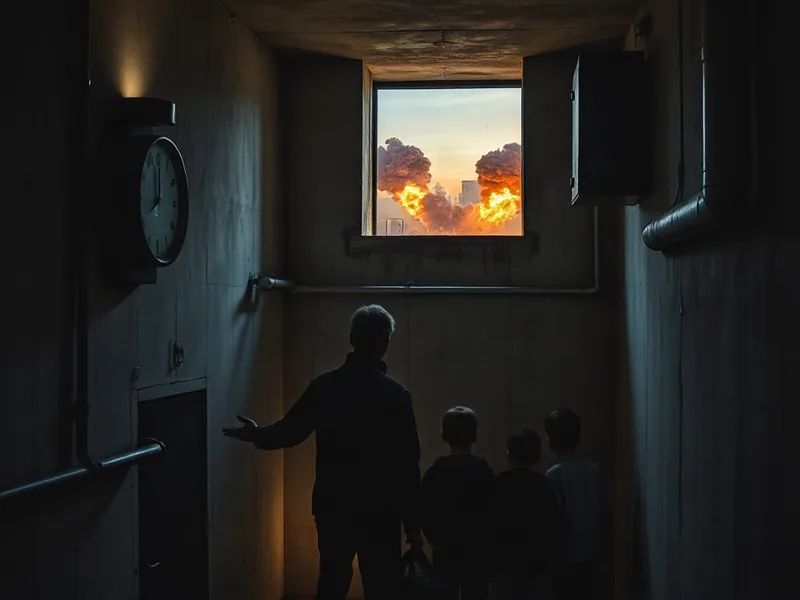
Ten minutes doesn't sound like much. But if you're a parent in Kyiv trying to get your kids down to a basement before a ballistic missile hits, it's the difference between life and death. That's the window Ukrainians say they've relied on for years, thanks to early-warning data from NATO satellites that can spot the heat flare of a Russian missile launch within seconds. This week, Ukrainian officials say that window closed, right as the strikes got worse.
At least 15 people were killed and dozens wounded in nightly Russian bombardments this week, part of a grinding pattern of attacks on apartment buildings, power plants and warehouses that has defined this war for years. What made this round different, according to President Volodymyr Zelenskyy, is that the satellite data Ukraine normally receives from its partners simply wasn't there.
Zelenskyy didn't name the United States directly. He didn't need to. President Donald Trump has denied that Washington halted intelligence sharing, but the timing has raised alarm bells in Kyiv regardless. Without that early warning, Ukraine is left relying on ground-based radar, which can only detect these missiles once they're already screaming toward their targets at speeds of 6,000 to 12,000 kilometres per hour, too fast and too late for the kind of advance notice that saves lives.
"That's what helps prevent the killings," Zelenskyy said of the satellite warnings. It's a blunt way of putting it, but an honest one. Air raid sirens and emergency text alerts only work if people get them before the missile arrives, not after.
Ukrainian officials and analysts have a theory, and it isn't a flattering one for Washington. Lieutenant-General Ihor Romanenko, the former deputy head of Ukraine's general staff, told Al Jazeera that Trump is leaning on Kyiv to accept an "energy ceasefire" with Moscow, in part to help Republicans heading into midterm elections by driving down global oil prices.
Think of it like a landlord threatening to cut off a tenant's utilities to force a lease renegotiation. The leverage isn't subtle, and the tenant has few options.
"Trump pressures our president, pressures Ukraine" to gain advantage "by any means necessary in the election campaign," Romanenko said. He added that the loss of intelligence data "significantly affects the effectiveness of air defence, we don't have time to respond." It also hampers Ukraine's own strikes deep inside Russia, he said, since drones and missiles lose precision without that same satellite guidance.
On Sunday, Trump announced the ceasefire on social media, declaring it effective immediately and warning both sides not to break it. The problem is that nobody seems to have signed off cleanly. Kyiv said the announcement caught it off guard. Moscow wouldn't confirm it backed the idea at all, and kept hitting Ukrainian energy infrastructure anyway.
Kyiv-based analyst Igar Tyshkevych sees a broader strategy at play. Trump, he argues, needs the peace talks to succeed, even if the terms tilt toward Russia, because "he needs peace talks to succeed. Ideally, it is a certain unblocking of the peace settlement process, when Kyiv shows more willingness to agree with Russia's demands." The pressure, Tyshkevych said, will continue "until Kyiv shows readiness for a compromise and concessions towards Russia." Meanwhile, he said, Moscow is exploiting the pause in warnings to escalate its own attacks.
There's a bitter irony buried in the timeline. Ukraine had actually held off striking Russian oil refineries for three days as a gesture of good faith. It wasn't until Wednesday that Ukrainian drones hit refineries in Russia's Saratov and Ryazan regions, according to Russian Deputy Prime Minister Aleksander Novak. The restraint didn't buy Kyiv any apparent relief.
Not everyone agrees the refinery strategy was worth defending in the first place. Nikolay Mitrokhin, a researcher at Germany's Bremen University who has written extensively on the conflict, argues that Kyiv's focus on oil refineries has been largely ineffective. Russia adapted, he said, by rerouting fuel through Siberian refineries and exporting via Belarus and Kazakhstan. No economic collapse followed. No mass unemployment, no street protests. Russia kept bombing, and even added new jet-powered drones that resemble cruise missiles and are harder for Ukraine's air defences to shoot down.
"What is the basis for Kyiv's and its backers' conviction that strikes on oil refineries and depots will lead to Russia's strategic defeat before Ukraine is defeated? I don't understand," Mitrokhin said. He argues Ukrainian strikes on data centres, bridges and drone-assembly factories have done more damage, pointing to recent hits on Russian tech giant Yandex and state-run Sberbank that disrupted online payment, food delivery and taxi services, not just inside Russia but in former Soviet republics that rely on Yandex's platforms.
Layered on top of the intelligence question is a separate dispute over satellite internet. Ukraine's drone czar, Serhiy Beskrestnov, accused Elon Musk's SpaceX this week of throttling Starlink terminals tied to the military-grade Starshield system, specifically limiting service for terminals mounted on drones flying faster than 160 kilometres per hour. That's a serious problem for interceptor drones that depend on speed to catch incoming threats. Presidential adviser Serhii Sternenko said the move followed a request from Trump himself. Musk, for his part, said the White House owns and controls Starshield, and that any speed limits are decisions made by Trump, not SpaceX.
This isn't the first time Starlink access has become a bargaining chip. Reuters reported that in September 2022, Musk quietly ordered engineers to cut Starlink coverage over Russia-occupied Kherson, undermining a Ukrainian push to retake the region. In 2023, he threatened to cut off Ukrainian military access entirely unless the Pentagon covered the costs, which it eventually did, alongside Poland and other European allies.
Some Ukrainian military analysts worry the current throttling could be a precursor to a full shutdown. Andriy Pronin, speaking to Al Jazeera, sounded resigned rather than panicked. "But we were getting ready for everything," he said. "We already know it may happen, that's why we're ready for any turn of events."
Wars are fought with weapons, but they're sustained by information, and information has quietly become one of the most contested resources in this conflict. When a satellite warning arrives ten minutes before impact, it isn't a luxury, it's the gap between a sheltered family and a funeral. Whether the pause in intelligence sharing is a deliberate lever in ceasefire negotiations or simply a casualty of shifting priorities in Washington, the effect on the ground is the same: less warning, more deaths, and a civilian population left wondering whether its allies' patience has a price tag attached.
Tags
Original Sources
Ukrainians fear US intelligence cuts as Russian strikes intensify
↗ https://www.aljazeera.com/news/2026/10/15/ukrainians-fear-us-intelligence-cuts-as-russian-strikes-intensify
About the author
Amara's entry point into AI was an epidemiology role at a London research hospital, where she spent five years studying how digital health tools reached — or conspicuously failed to reach — underserved communities. Watching early algorithmic systems in healthcare quietly entrench existing inequalities, she redirected her career toward the systemic consequences of AI at scale. She covers AI through an unflinching lens: who benefits, who bears the cost, and what evidence actually says versus what the press release claims. Her writing is calm and precise, but she doesn't mistake balance for neutrality.
More from The Steward →This Week's Edition
16 October 2026
29 articles
Related Articles

States Race to Write the Rules for AI Sandboxes in Health Care, and Lobbyists Are Racing Right Alongside Them
Policy & Regulation · 5 min

DOJ Moves to Reward Health Care Companies That Report Their Own Fraud
Policy & Regulation · 5 min

Australia's Parliament Wraps Marathon AI Hearings, Writes to the Prime Minister
Policy & Regulation · 5 min
Related Articles
States Race to Write the Rules for AI Sandboxes in Health Care, and Lobbyists Are Racing Right Alongside Them
Policy & Regulation · 5 min
DOJ Moves to Reward Health Care Companies That Report Their Own Fraud
Policy & Regulation · 5 min
Australia's Parliament Wraps Marathon AI Hearings, Writes to the Prime Minister
Policy & Regulation · 5 min
More Stories
© 2026 Cedar & Bloom. All rights reserved.
