The Drum · Weekly AI news, freeSubscribe →

Share
A Joint Committee on Artificial Intelligence has spent weeks hearing evidence across Canberra, Sydney and Melbourne, and has now taken the unusual step of writing directly to the Prime Minister. Here's what the hearings reveal about Australia's AI policy direction.
If you've ever wondered who is actually deciding how artificial intelligence gets used in your hospital, your child's school, or your workplace, the answer right now runs through a conference room in Canberra. Australia's Joint Committee on Artificial Intelligence has spent the better part of two months doing something that sounds procedural but matters enormously: listening. Between mid-September and late October 2026, the committee held a string of public hearings in Canberra, Sydney, and Melbourne, gathering testimony that will shape how the country regulates a technology already reshaping daily life.
This isn't a side project. The Joint Committee on Artificial Intelligence is a formal parliamentary body, drawing members from both the Senate and the House of Representatives, tasked with digging into how AI is being developed, deployed, and governed across Australia. Think of it as a fact-finding mission with legislative teeth. Committees like this one don't pass laws themselves, but their findings often become the blueprint for bills that do.
The hearing schedule tells its own story about the scale of this inquiry. On 18 September, the committee sat in Canberra. Then came a dense run through early-to-mid October: Sydney on the 6th and 7th, East Melbourne on the 8th and 9th, back to Canberra on the 14th. More sessions followed on 16, 20, 21, and 22 October, moving between Canberra, Sydney, and Melbourne again. Each hearing generated a program and, where available, a formal Hansard transcript, published in both HTML and PDF so the public record is accessible rather than locked behind technical formatting.
That volume of sessions, eight documented hearings across roughly five weeks, signals that this inquiry is not a box-ticking exercise. Committees that intend to produce a light-touch report don't usually need nine separate hearing days spread across three cities. Something substantial is being built here.
Public submissions to the inquiry closed before this final hearing phase began, which means the testimony being heard now largely comes from witnesses responding to a terms-of-reference document the committee established earlier. That matters for anyone trying to understand the inquiry's priorities. The committee isn't just fishing for opinions anymore. It's testing specific questions against expert and industry input, the kind of questions that determine whether future AI rules protect people without strangling useful innovation.
The format itself deserves a word of explanation for readers unfamiliar with how Australian parliamentary committees work. A public hearing is essentially a structured conversation. Witnesses, who might be academics, industry representatives, civil society advocates, or government officials, appear before committee members and answer questions on the record. Unlike a closed-door briefing, everything said becomes part of the permanent Hansard record, searchable by anyone through the parliament's online archive. That transparency is the whole point. It lets journalists, researchers, and ordinary citizens check what was actually said, rather than relying on secondhand summaries.
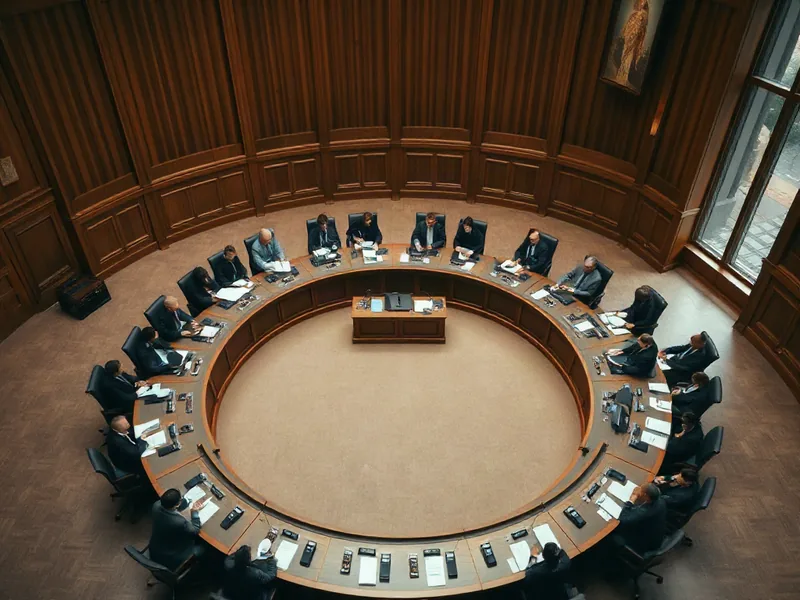
Perhaps the most telling development in this inquiry is not a hearing at all. On 12 October 2026, partway through the hearing schedule, the committee sent a formal letter to the Prime Minister. Parliamentary committees don't write to the head of government casually. A letter like this usually signals one of two things: either the committee has uncovered something urgent enough to warrant executive attention before the final report is finished, or it is seeking clarification or direction on a matter within the government's purview that falls outside the committee's own authority.
Without the text of that letter publicly summarized in the source material, we can't say definitively which it is. But the timing, mid-inquiry rather than at its conclusion, suggests the committee felt something couldn't wait for the final report. That's worth watching closely as the inquiry wraps up.
For everyday Australians, the stakes in this inquiry are not abstract. AI systems already influence decisions about loan approvals, job applications, insurance pricing, and in some sectors, medical triage. The gap between how these systems are supposed to work and how they actually perform in practice is often where harm creeps in, particularly for people who don't have the resources to challenge an automated decision. A parliamentary inquiry that takes the time to hear from a wide range of voices, across multiple cities rather than just the capital, has a better chance of catching those gaps before they become entrenched in law or left ungoverned entirely.
It's also worth noting what this process represents structurally. Committee hearings are one of the few points in the legislative pipeline where ordinary citizens and advocacy groups get a genuine hearing, pun intended, before policy hardens into statute. The accessibility provisions mentioned in the committee's own materials, including a direct line for people with accessibility requirements to contact the secretariat, reflect an institutional recognition that AI governance conversations need to include people who are often left out of tech policy discussions: disability advocates, aged care representatives, and others whose lives are directly affected by automated systems but who rarely get invited to the table in Silicon Valley-style tech debates.
The committee's next formal output will likely be a report, informed by the submissions gathered before the hearings closed and the testimony collected across the nine hearing days. Given the breadth of cities involved and the unusual mid-inquiry letter to the Prime Minister, expect that report to carry real weight in shaping Australia's broader AI legislative agenda. For readers tracking AI governance globally, Australia's approach, methodical, geographically distributed, and committed to a public record, offers a useful contrast to jurisdictions moving faster and with less visibility. Whether that patience translates into stronger protections, or simply a slower rollout of the same risks, will become clear once the committee's findings are finally tabled.
Tags
Original Sources
Public Hearings
↗ https://www.aph.gov.au/Parliamentary_Business/Committees/Joint/Artificial_Intelligence/ArtificialIntelligence/Public_Hearings
About the author
Amara's entry point into AI was an epidemiology role at a London research hospital, where she spent five years studying how digital health tools reached — or conspicuously failed to reach — underserved communities. Watching early algorithmic systems in healthcare quietly entrench existing inequalities, she redirected her career toward the systemic consequences of AI at scale. She covers AI through an unflinching lens: who benefits, who bears the cost, and what evidence actually says versus what the press release claims. Her writing is calm and precise, but she doesn't mistake balance for neutrality.
More from The Steward →This Week's Edition
16 October 2026
29 articles
Related Articles

States Race to Write the Rules for AI Sandboxes in Health Care, and Lobbyists Are Racing Right Alongside Them
Policy & Regulation · 5 min

DOJ Moves to Reward Health Care Companies That Report Their Own Fraud
Policy & Regulation · 5 min

As US Intelligence Sharing Wavers, Ukrainians Lose Precious Minutes Against Russian Missiles
Policy & Regulation · 6 min
Related Articles
States Race to Write the Rules for AI Sandboxes in Health Care, and Lobbyists Are Racing Right Alongside Them
Policy & Regulation · 5 min
DOJ Moves to Reward Health Care Companies That Report Their Own Fraud
Policy & Regulation · 5 min
As US Intelligence Sharing Wavers, Ukrainians Lose Precious Minutes Against Russian Missiles
Policy & Regulation · 6 min
More Stories
© 2026 Cedar & Bloom. All rights reserved.
