The Drum · Weekly AI news, freeSubscribe →

Share
As AI scribes and documentation tools spread through general practice, the doctors who will use them longest are finally getting a seat at the design table, before habits and expectations get set in stone.
Think about the first tools you ever learned to use at a new job. The habits you form early tend to stick, for better or worse. That's the logic behind a new partnership in Australian general practice, one that puts GP trainees, not just senior doctors or hospital executives, at the center of decisions about how clinical AI gets built and used.
General Practice Registrars Australia, the independent peak body representing around 22,000 GP trainees, has partnered with Lyrebird Health to co-design clinical AI tools and set standards for their safe use. The centerpiece of the deal is a new national working group that will advise on how AI shows up in day-to-day general practice, from note-taking to referral letters.
It's a small but telling shift in how healthcare technology gets developed. Too often, clinical software is built by engineers, tested by senior clinicians, and then handed down to junior doctors who have the least power to push back if something doesn't work. This partnership flips part of that script.
"They are forming the clinical and technology habits that will shape how medicine is practised for decades to come," said Dr Ray Boyapati, a spokesperson for Lyrebird. His point is straightforward: trainees today are the senior GPs of 2040. Whatever they learn to expect from AI now, whether it's trustworthy, whether it saves time, whether it gets in the way of patient care, will likely define how an entire generation of doctors relates to the technology.
"We'll be working with GPRA members to understand what they actually need from clinical AI and what genuinely works in everyday practice," Boyapati added.
GPRA said it will soon open expressions of interest, inviting members across Australia to apply for the national working group. From 2027, GPRA members will also get 12 months of free access to Lyrebird Pro, the company's AI scribe product, along with what the partnership calls an "AI-confidence curriculum." That curriculum will cover AI-safe practice, billing confidence, and portfolio careers, essentially a crash course in using AI tools responsibly without losing the clinical judgment that makes a good doctor good.
Out of the working group, Lyrebird plans to select up to nine GPRA members as ambassadors, described as "clinical champions." These trainees will act as peer educators, helping shape both the training curriculum and Lyrebird's actual AI products through structured feedback sessions. GPRA said working group members will get direct access to Lyrebird's clinicians, engineers, and staff, plus mentorship and a credential tied to portfolio careers, the increasingly common practice of GPs splitting their time across clinical work, teaching, research, or leadership roles.
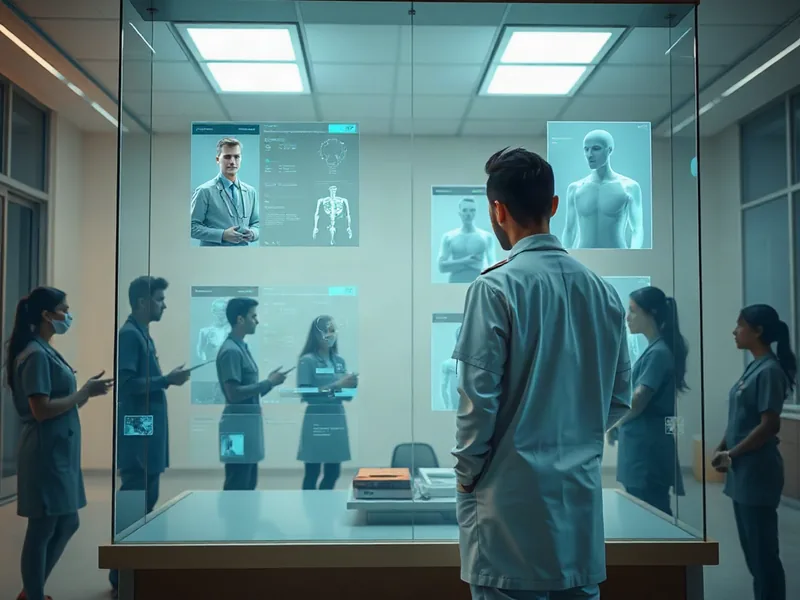
What makes this interesting isn't just the access, it's the specificity of what the working group will actually evaluate. Lyrebird said the group will focus on "the everyday realities of clinical documentation and the admin around it." That includes questions like how a clinical note reads and structures for a GP or registrar seeing a wide range of patient presentations, and how well documentation captures a complex, multi-problem consultation without losing important nuance. It's one thing for an AI scribe to summarize a straightforward checkup. It's another for it to accurately capture a consult where a patient presents with three unrelated issues that all need separate follow-up.
The group will also look at how supporting outputs, referral letters, care plans, patient summaries, hold up in real clinical use, and how integrations like Lyrebird's connection to Best Practice, a widely used practice management system, fit into a consultation without pulling a clinician's attention away from the patient in front of them. That last point matters more than it might sound. One of the quiet risks of AI scribes is that a tool meant to reduce administrative burden can end up creating a new kind of distraction, if a doctor is half-watching a screen to make sure the AI got things right instead of watching the patient.
Lyrebird has already published a framework for evaluating AI-generated clinical notes, and that framework will inform how the working group tests tools and provides structured feedback going forward. The partnership also includes co-published research, with GPRA credited alongside Lyrebird, a detail that signals both organizations want the collaboration to produce evidence, not just marketing material.
This isn't Lyrebird's or GPRA's first move in this space. Late last year, GPRA struck a separate partnership with MediRecords, giving members access to a cloud-based practice management system built to support more flexible models of care, particularly relevant for registrars working across rural and regional placements where connectivity and continuity of care can be genuinely difficult.
There's a real tension sitting underneath all of this. AI scribes and documentation tools promise to hand back time to doctors, time currently lost to typing notes, chasing referral templates, and managing the endless paperwork that surrounds every patient visit. That's a genuine benefit, especially for trainees who are already stretched thin learning clinical skills while adapting to a new health system.
But tools built without frontline input have a habit of solving problems nobody actually has, while missing the ones that matter most. A note-taking AI that produces tidy summaries but flattens the nuance of a complicated consult isn't saving anyone time, it's creating new risk that shows up later, when a missed detail affects patient care.
Involving trainees early doesn't eliminate those risks, but it does mean the people using these tools every day for the next several decades get to flag problems before they become entrenched. That's the kind of quiet, structural work that rarely makes headlines, but tends to matter enormously for the doctors and patients who live with the consequences.
Tags
Original Sources
GP trainees tapped to co-design clinical AI
↗ https://www.healthcareitnews.com/news/anz/gp-trainees-tapped-co-design-clinical-ai
About the author
Amara's entry point into AI was an epidemiology role at a London research hospital, where she spent five years studying how digital health tools reached — or conspicuously failed to reach — underserved communities. Watching early algorithmic systems in healthcare quietly entrench existing inequalities, she redirected her career toward the systemic consequences of AI at scale. She covers AI through an unflinching lens: who benefits, who bears the cost, and what evidence actually says versus what the press release claims. Her writing is calm and precise, but she doesn't mistake balance for neutrality.
More from The Steward →This Week's Edition
25 September 2026
31 articles
Related Articles

Medicare Advantage Covers Most Seniors Now. Can It Be Trusted to Serve Them Well?
Health & Science · 6 min

Patients Are Building Their Own Medical Records With AI, and Doctors Should Pay Attention
Health & Science · 6 min

Why Venus Has No Moon: A New Study Suggests the Planet Slowly Swallowed Its Own
Health & Science · 6 min
Related Articles
Medicare Advantage Covers Most Seniors Now. Can It Be Trusted to Serve Them Well?
Health & Science · 6 min
Patients Are Building Their Own Medical Records With AI, and Doctors Should Pay Attention
Health & Science · 6 min
Why Venus Has No Moon: A New Study Suggests the Planet Slowly Swallowed Its Own
Health & Science · 6 min
More Stories
© 2026 Cedar & Bloom. All rights reserved.
